


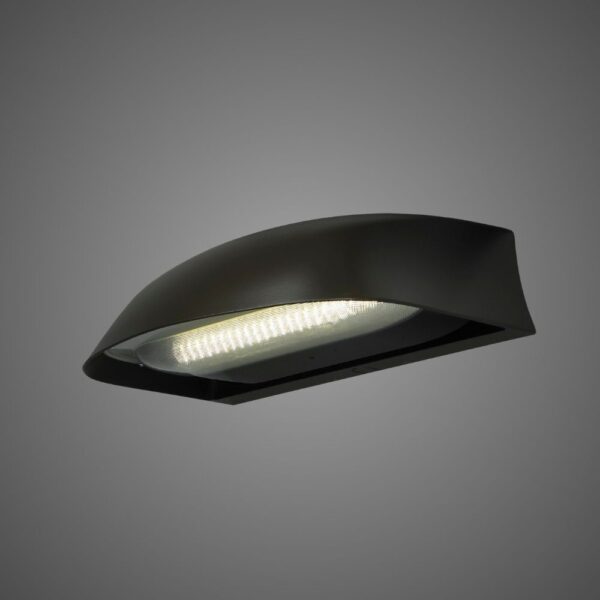







A streetlight serviceability checklist starts with a repairable streetlight: a roadway luminaire that is designed and documented so a qualified service provider can evaluate and replace appropriate supported components without automatically replacing the entire fixture. For cities and transportation agencies, repairability is not a promise made by LED life alone; it depends on access, compatible parts, current instructions, and the applicable product, warranty, and project requirements.
Procurement teams often evaluate light output, controls, and rated life. Those are important considerations, but they do not answer a practical maintenance question: when a luminaire no longer performs as intended, what can be diagnosed and serviced without creating a new compliance, warranty, or operating problem? A clear serviceability requirement makes that question part of the specification instead of leaving it to a future failure event.
Review five areas before specifying a repairable streetlight: supported access, identified components, compatible replacement parts, current service documentation, and manufacturer support terms. This compact checklist gives streetlight serviceability a practical definition without assuming that a component can be replaced in every configuration.
Key takeaways
- Long LED life does not, by itself, establish whole-luminaire serviceability.
- Repairable streetlights need documented access, identified components, compatible replacements, and supported procedures.
- An RFP should request evidence and decision criteria, rather than presume that a component can be replaced.
- The exact model, configuration, warranty terms, listing implications, and agency requirements should be checked before service work is authorized.
SPECIFICATION CHECK
Five records that make serviceability reviewable
Request evidence for the exact luminaire configuration before assuming a repair is supported.
Why long LED life does not settle the maintenance question
LEDs changed expectations for outdoor lighting, but an LED luminaire is more than its light source. The U.S. Department of Energy explains that useful LED life is commonly described by the point at which light output reaches 70% of its initial level. It also notes that a luminaire can experience catastrophic failure, typically from electronics, before the LEDs have degraded to that point. DOE’s LED Basics is a useful starting point for separating lumen depreciation from whole-product reliability.
That distinction matters in a municipal asset portfolio. A luminaire may be operating below its intended light level, or it may stop operating because of an issue elsewhere in the system. Neither condition automatically tells an agency whether a repair is supported, whether a part is available, or whether the product will still meet the project’s requirements after service.
Treat the luminaire as a system
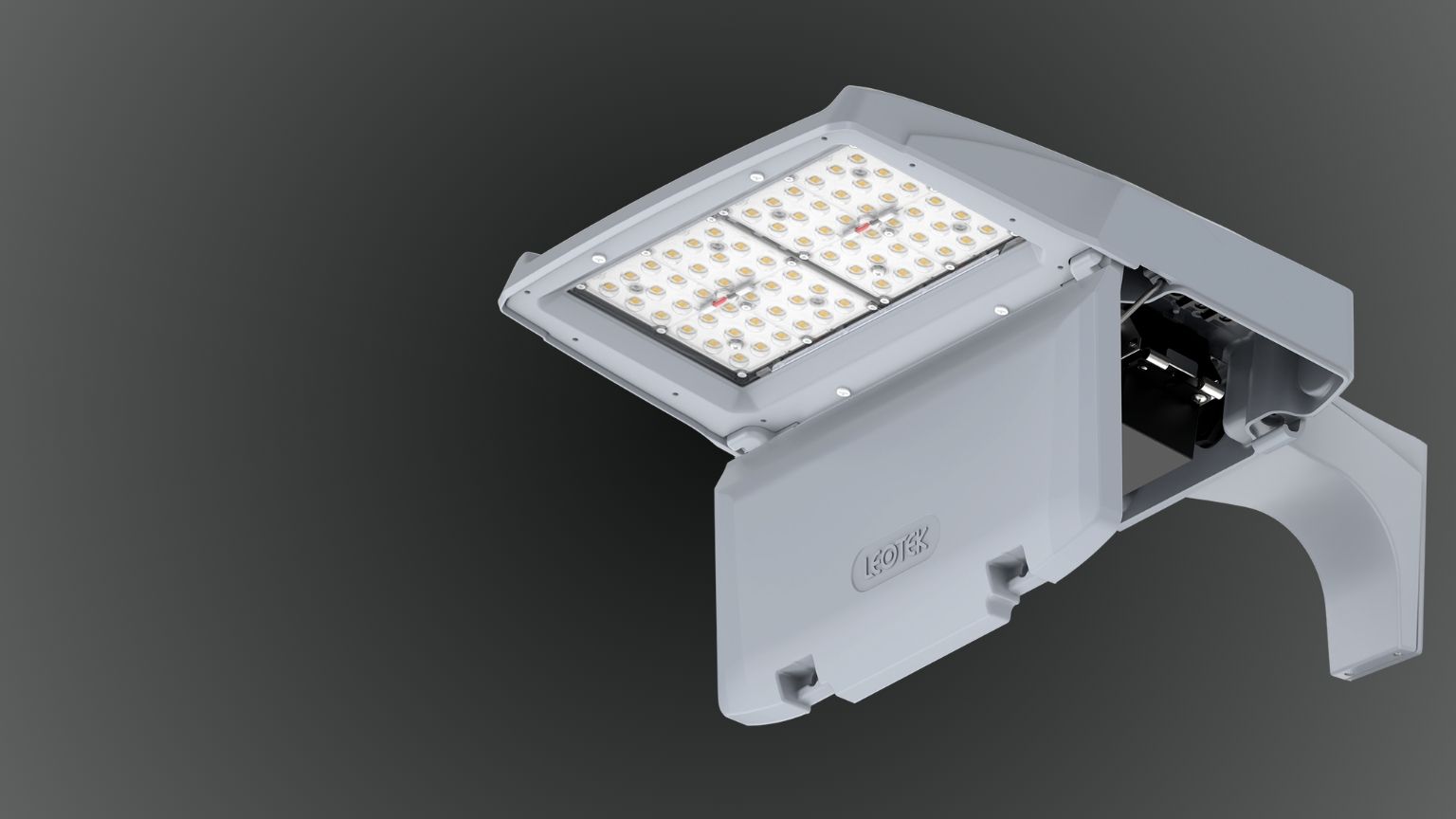
For a serviceability discussion, it helps to consider the luminaire as a group of elements rather than as a single black box. Depending on the design, those elements can include the LED assembly, driver or power supply, thermal path, controls interface, surge-protection element, optics, seals, and housing.
This is an editorial framework, not a list of universally replaceable parts. A component can be visible or physically reachable without being approved for field replacement. Whether an element is serviceable depends on the exact model and configuration, the manufacturer’s current documentation, compatible replacement parts, and the work conditions established by the agency and applicable authorities.
A rated life is not a repair plan
A rated life informs planning, but it does not specify a failure mode or a corrective action. DOE also notes that electricity use and lighting performance depend on the LED device, fixture design, power-supply efficiency, and other features. In other words, a serviceability review should not be limited to the LED source.
For agencies, the useful question is not “Can this kind of component be replaced?” It is “What evidence supports service of this exact product in this exact installation?” That change in framing keeps a maintenance decision grounded in documents and conditions that can be reviewed before procurement.
What makes a streetlight repairable in a specification?
Repairability is best treated as a set of verifiable requirements. The goal is not to demand that every part be field-replaceable. The goal is to make the supplier identify what can be serviced, under what conditions, with which parts, and with what documentation.
Ask how supported components are accessed
An RFP or submittal review can ask the manufacturer to describe how a qualified technician accesses any supported serviceable component. Relevant evidence may include a service-access drawing, an exploded view, tool requirements, and any instructions related to reassembly.
The review should also ask whether the procedure affects seals, environmental protection, mounting, optics, or other project requirements. Those questions do not imply that a repair will preserve a particular rating or performance characteristic. They identify what must be confirmed for the specific product and project.
When enclosure protection is relevant, confirm the exact product documentation and project requirements. General educational material does not establish an IP rating, service method, or post-service condition for a particular luminaire.
Require component identity and compatibility
A serviceable component needs more than a generic description such as “driver” or “control module.” Request the current part number, permitted revisions, compatibility limits, and the documents that govern substitution. If firmware, a control interface, or a commissioning step is relevant, ask the supplier to identify those dependencies in writing.
This is particularly important for controls. In a DOE study of 23 LED streetlights that claimed 0-10V dimmability, the agency found variation in market-available LED-driver performance. The study does not establish a universal controls problem, but it does support a cautious procurement practice: obtain documentation for expected interface behavior and compatible equipment rather than assuming similar labels guarantee identical results. See DOE’s 0-10V streetlight study.
Request procedures and post-service verification
Service instructions should be current, product-specific, and suitable for the type of work contemplated. A procurement package can request the manufacturer’s requirements for isolation, access, reassembly, functional checks, and any inspection or testing expected after a supported service action.
The article is not a repair procedure, and it should not be used as one. Electrical work, work at height, traffic control, equipment isolation, and product-specific service steps require qualified personnel and the requirements that apply to the installation. The practical value of the specification is that it identifies the documents and approvals needed before a field decision is made.
Use a serviceability checklist in RFPs and submittals
The following checklist gives procurement and engineering teams a way to turn “repairable streetlights” into reviewable evidence. It is a request for documentation, not an approval to modify a listed product.
| Requirement to request | Evidence to receive | Decision question |
|---|---|---|
| Supported serviceable-component list | Product-specific component descriptions and part numbers | Which items, if any, are approved for service on this configuration? |
| Service access | Current drawing, exploded view, and required tools | Can a qualified technician access the supported item without undocumented disassembly? |
| Replacement compatibility | Compatible part numbers, revision limits, and control/firmware constraints where applicable | Is the proposed replacement supported for this luminaire and controls arrangement? |
| Service documentation | Current installation and service instructions, including document revision | Does the available procedure cover the intended work? |
| Effect on product obligations | Written explanation of warranty, listing, sealing, photometry, or other project implications | What must be confirmed or revalidated after service? |
| Support and obsolescence terms | Contractual parts-support, lead-time, or end-of-support information, if offered | What evidence supports the agency’s maintenance plan? |
| Technician and verification requirements | Required qualifications, isolation practices, and post-service checks | Who may perform the work, and what result must be documented? |
| Asset records | Model, configuration, installed date, document revision, and repair history | Will the agency have the information needed to make a future decision? |
The checklist should sit alongside, not replace, the rest of the roadway-lighting evaluation. Readers comparing broader application needs can review outdoor lighting applications, while the exact product’s documents remain the basis for technical decisions.
Keep evidence tied to the exact configuration
A product-family page, a generic certification explainer, or an old cut sheet may be useful for orientation. They are not enough to establish that a particular luminaire can be opened, repaired, relisted, or returned to service under a particular set of conditions. Ask for the current model identifier, configuration, document date, and revision.
The same care applies to supplier claims about performance or service. The DesignLights Consortium’s current SSL V6.0 and LUNA V2.0 framework includes requirements and reporting related to performance, controllability, safety, warranty, sustainability, and documentation. That can help a team understand the kinds of evidence that matter, but a qualification framework is not proof that a product is repairable or appropriate for a project. Review the applicable record and DLC technical requirements in context.
Control the documents, not just the parts
For agencies researching LED luminaire maintenance design, document control is part of serviceability. Store the model identifier, installed configuration, approved part identity, service-document revision, and post-service verification record together. If a proposed replacement relies on a different document revision or configuration than the installed asset, pause the decision until the manufacturer’s current evidence resolves the difference.
This is not paperwork for its own sake. A clear record lets an engineer, maintenance supervisor, or procurement team determine whether the documentation actually applies to the asset in question. It also prevents a generic product-family statement from being mistaken for authorization to service a specific installed luminaire.
Questions to ask before specifying a streetlight
Before finalizing a roadway-luminaire specification, ask:
- Which components, if any, does the manufacturer identify as serviceable for the exact configuration?
- What current document describes access, compatible parts, and the supported procedure?
- What parts, controls interfaces, firmware dependencies, or revisions are permitted?
- What does the manufacturer say about the effect of service on warranty, listing, sealing, optical performance, and other project requirements?
- What inspection or functional verification is required after a supported service action?
- What asset data will the agency retain so a future team can validate the same information?
For a technical-evaluation workflow, use LEOTEK technical documents to locate current product specifications and related resources, then verify the exact model, revision, and project applicability before relying on any document.
Compare repair and replacement case by case
The point of serviceability is not to make repair the automatic answer. It is to give an agency enough evidence to make a defensible choice when a maintenance issue occurs.
When a component-level evaluation may be appropriate
A component-level evaluation may be worth considering when the failure mode has been identified, the manufacturer supports a compatible replacement, and current instructions cover the intended work. The team should also know what verification is needed afterward and whether any project requirement, warranty condition, or product obligation changes as a result.
Labor access and operating conditions matter as well. A supported component may still be impractical to service at a particular location because of traffic management, equipment access, weather exposure, or the condition of the luminaire. Those are project decisions, not universal conclusions about a product category.
When replacement may be more supportable
Replacement may be the more supportable path when a compatible part is unavailable, the manufacturer does not support the proposed work, the housing or sealing is damaged, control dependencies cannot be verified, or current service documentation is absent. It may also be appropriate when the post-service condition cannot be evaluated against the applicable project requirements.
This is not a claim that replacement is always faster, safer, less expensive, or less wasteful. Those outcomes depend on site conditions, labor, parts, contracts, and the baseline used for comparison. A well-written specification lets the agency evaluate those factors with evidence instead of assumptions.
Build serviceability into asset management
Serviceability decisions are better supported when the information needed for a decision remains available years after installation. That does not require a connected-lighting platform. It requires disciplined records that connect a field asset to its configuration and supporting documents.
Capture the records a future team will need
At acceptance and after service events, retain the luminaire model and configuration, installed date, current document revision, observed failure symptoms, action taken, replacement-part identity when applicable, and verification result. These records make it easier to distinguish a recurring issue from an isolated event and to confirm what documentation was in effect for the work.
They also help procurement teams write better future requirements. If an agency cannot identify the installed configuration or the revision of its service documents, it will have difficulty evaluating compatible parts or the effect of a proposed change.
Keep lifecycle claims evidence-based
Designing for repair can be a legitimate lifecycle objective, but it does not guarantee lower cost or less material use for every installation. A meaningful comparison needs a documented baseline and project-specific assumptions about failure mode, labor, access, parts, verification, and replacement conditions.
That measured approach is especially useful for public infrastructure. It lets an agency state its objective, request the evidence needed to evaluate it, and avoid turning a general sustainability or cost claim into a promise that the available evidence cannot support.
Frequently asked questions
Are LED streetlights repairable?
Some LED streetlights may have manufacturer-supported serviceable components, but LED technology or a long rated life does not establish that a specific roadway luminaire can be repaired. Confirm the exact model documentation, compatible parts, supported procedure, and applicable requirements.
Can a failed LED driver be replaced in a streetlight?
It depends on the luminaire configuration, the supported compatible part, manufacturer instructions, warranty and listing conditions, and agency requirements. A generic driver-replacement instruction is not a substitute for product-specific documentation and qualified service work.
What should a city request in a streetlight serviceability submittal?
Request current service documentation, a supported component list, compatible part numbers, access requirements, support terms, and the stated effect of service on warranty, listing, sealing, photometry, controls, and required verification. Review those materials against the exact configuration and project requirements.
Does a third-party lighting qualification prove a luminaire is repairable?
No. A qualification program can provide useful performance and documentation context, but it does not by itself prove that a particular product has a supported repair path. Confirm the current product-specific evidence.
References
- U.S. Department of Energy, DOE’s LED Basics.
- U.S. Department of Energy, DOE’s 0-10V streetlight study.
- LEOTEK, outdoor lighting applications.
- designlights.org, DLC technical requirements.
- LEOTEK, LEOTEK technical documents.