

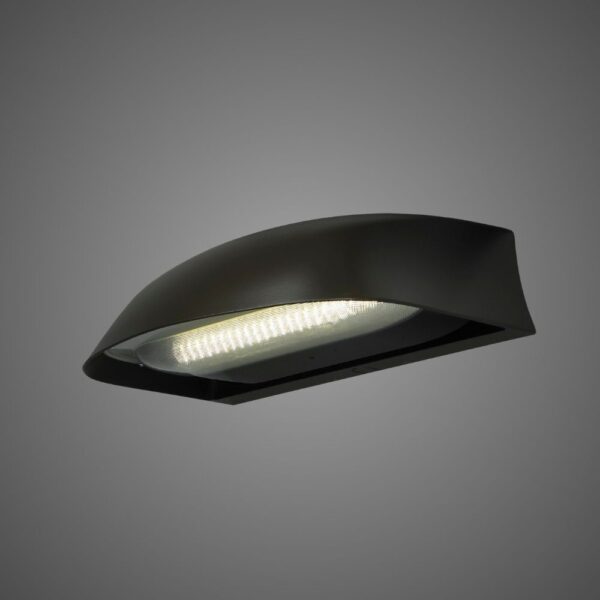






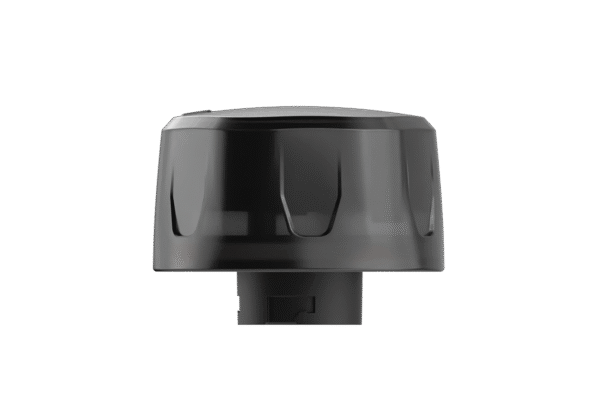

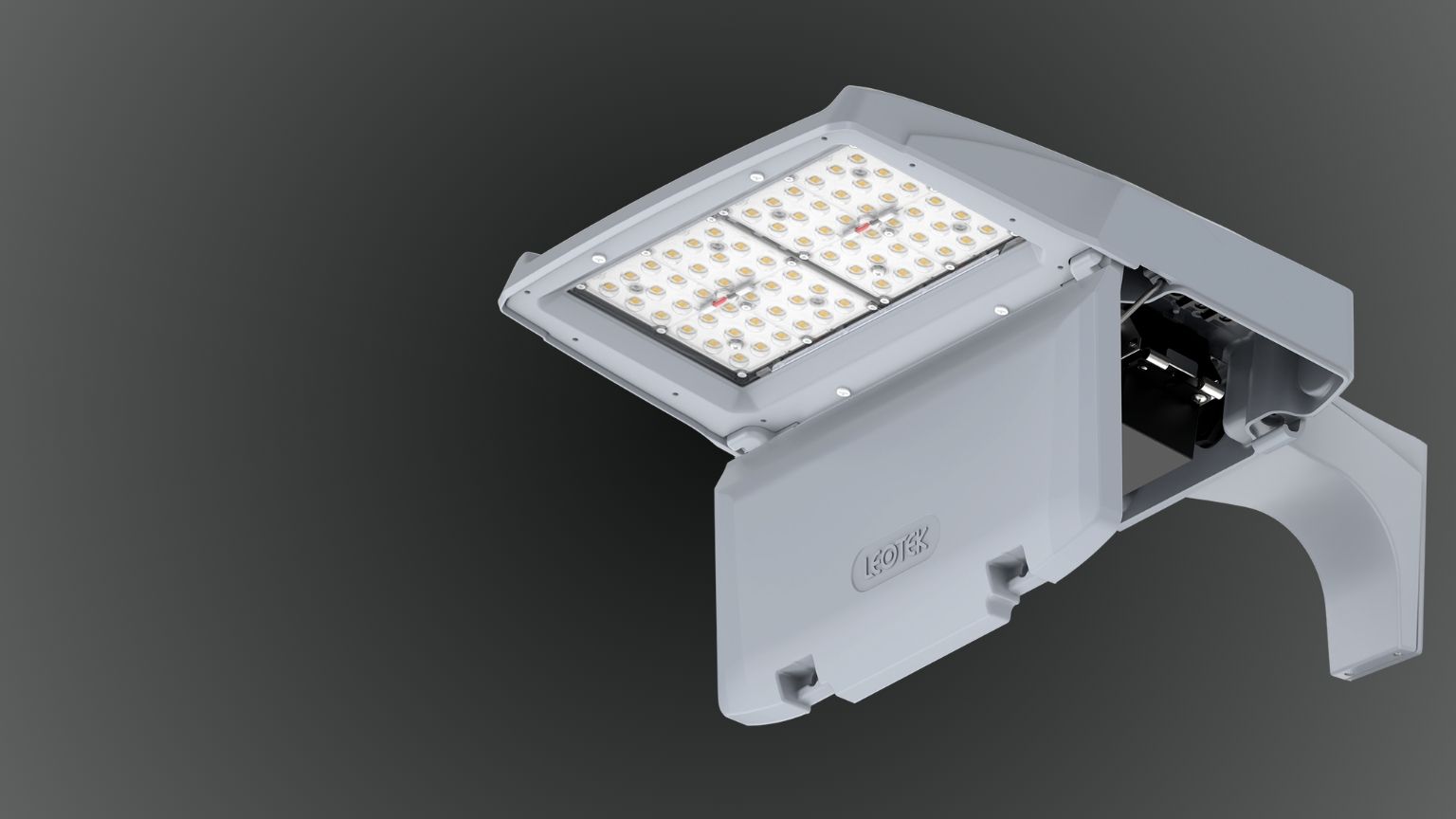
The VTLOR Power Door (PWRD) is an optional serviceability feature, not a blanket claim that every luminaire component is field-replaceable. For roadway agencies, “serviceable LED streetlight design” is most useful when it points to a documented component and a defined configuration. LEOTEK’s VersaTEK® Large OFF-Roadway VTLOR provides a concrete example: its current product documentation describes tool-free access to electrical components and an optional removable PWRD Power Door. Those are specific design features. They do not, by themselves, establish that every optic, LED assembly, controller or complete luminaire can be exchanged in the field.
This guide shows what the VTLOR documentation supports, what an agency should still verify, and how to turn a circular-design aspiration into a practical submittal review. For the separate decision about when to repair an installed fixture instead of replacing it, use an asset-condition and lifecycle analysis; this article focuses on product design and evidence.
Three levels of evidence
VTLOR has tool-free electrical access.
The removable PWRD Power Door must be specified in the selected configuration.
Part compatibility, optical service, controls, warranty and post-service tests need their own evidence.
Evidence map based on the VTLOR product page and its listed V8 specification sheet; always check the current document for the ordered model.
What VTLOR’s service design actually shows
Tool-free access and the optional Power Door
The VTLOR product page identifies tool-free electrical access and the optional PWRD Power Door, which carries serviceable electrical components on a removable door. The page identifies its specification basis as the VTLOR Spec Sheet (10.1.26 V8). A purchasing team should confirm the PWRD code appears on its actual catalog configuration; a general family description is not an order confirmation.
The distinction matters operationally. Access to an electrical compartment, removal of a door assembly, and replacement of an individual driver are three different claims. The current service and parts documents should establish which action is supported, which part is compatible, who may perform the work, and what checks follow reassembly. “Tool-free” describes access; it is not a waiver of electrical safety procedures.
Optics and LED light engines require a separate answer
VTLOR offers multiple optical distributions, but an ordering choice is not proof that an installed optic or LED engine is field-replaceable. If a project requires that capability, ask LEOTEK for the current part identification and approved procedure for the exact version ordered. Confirm the resulting IES file, distribution, color characteristics, seal integrity and thermal conditions. Do not infer exchangeability from a diagram or from the fact that several optics are sold in the series.
Controls are a configuration, not a generic accessory
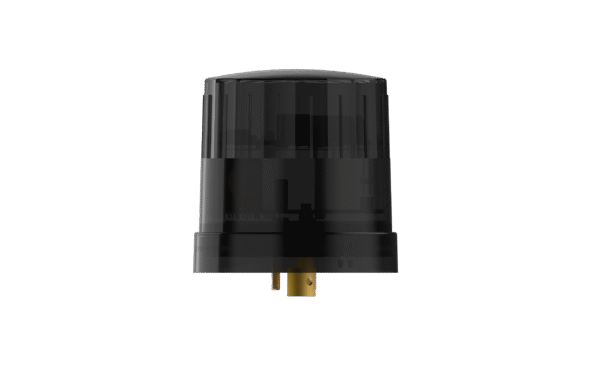
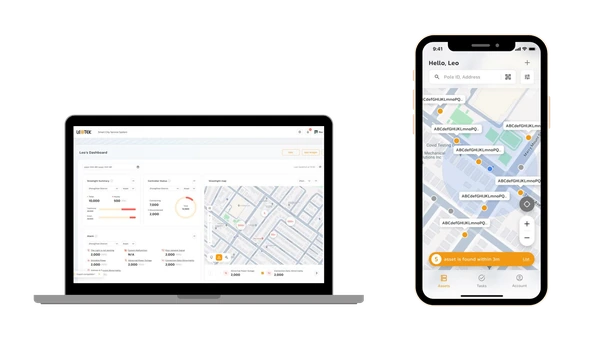
The VTLOR page lists LEOLink NB01-Plus as an external node option with the required PCR7CR controls-ready receptacle and standard 0–10V driver. It separately describes D4i/DALI configurations and restrictions. A controls submittal therefore needs the luminaire catalog code, receptacle and driver choice, node model, voltage, commissioning plan and warranty terms. The physical ability to attach a node does not prove that every control combination or future software change is supported.
A submittal table a city can actually use
Use one row per proposed service action. Record “not documented” where the current product package does not answer a question; that is more useful than a broad claim that the fixture is modular.
| Service question | Evidence to request | Decision point |
|---|---|---|
| Electrical access | Exact VTLOR catalog code, current service instructions and qualified work procedure | Does the ordered unit include only tool-free access or the PWRD option? |
| Power Door / components | PWRD option, compatible assembly and part revision, connector and restoration instructions | Is the proposed field action approved for this configuration? |
| Optics / LED engine | Approved replacement part, procedure and post-service photometric evidence | Can required roadway performance be verified after the change? |
| External controls | Driver, receptacle, node and commissioning documentation | Will dimming, reporting and asset identity work in the chosen system? |
| Warranty and supply | Current warranty, parts availability and service authorization | Who bears the cost and responsibility over the planned service horizon? |
For the financial side, feed the supported labor, parts and access assumptions into LEOTEK’s streetlight total-cost-of-ownership guide. Do not convert a fast-access feature into a universal cost-saving percentage; project geometry, maintenance practice and failure history determine the comparison.
Where circular design starts and where the claim stops
The U.S. Department of Energy’s luminaire design and circular-economy research discusses replaceable or upgradeable light sources, optics and drivers as design strategies. This is an industry design framework, not certification that a particular LEOTEK model provides every strategy. A useful circular-design claim names the material or component, the approved disassembly or replacement path, the evidence for continued performance, and the end-of-life route.
For VTLOR, the Power Door is a documented serviceability feature when specified. Claims about a particular driver swap, optical-module swap, parts support duration, recyclability percentage or carbon saving need current model-specific evidence. Separate those claims in procurement documents so engineers can accept, qualify or reject each one independently.
Questions to send with a VTLOR request for quotation
- Which exact VTLOR catalog code and option package is proposed, and does it include PWRD?
- Which electrical components or assemblies have approved replacement parts for that configuration? Provide part numbers, revisions and service instructions.
- What procedure verifies electrical function, seals, optics and controls after service?
- Which NB01-Plus, PCR7CR and driver combinations are supported if smart control is required?
- What are the applicable warranty, spare-parts and end-of-life terms for the ordered configuration?
Frequently asked questions
Does every VTLOR include the removable Power Door?
No. LEOTEK describes PWRD as an optional Power Door. Confirm that option in the final ordering code and current specification sheet.
Does tool-free access mean the optic or LED engine can be replaced?
No. Tool-free electrical access and optical-module replacement are separate capabilities. Ask for an approved procedure and compatible part for the exact configuration before specifying either one.
Does an external smart node make the luminaire circular?
An external node can separate a controls component from the luminaire, but circularity also depends on compatibility, commissioning, service documentation, parts support and responsible end-of-life handling. Confirm the node, receptacle and driver combination for the project.
Use the exact document set
Start at the VTLOR product page and download the current spec sheet listed there. If a serviceability requirement is important to the contract, request the matching service, parts and warranty documents from LEOTEK. Contact LEOTEK with the catalog code and the five questions above so the answer is tied to the actual project.
Sources
- LEOTEK, VersaTEK Large OFF-Roadway VTLOR product page, VTLOR Sell Sheet (10.1.26 V8) and VTLOR Spec Sheet (10.1.26 V8), available in its Resources section.
- U.S. Department of Energy, Luminaire Design to the Circular Economy.