BABA and Buy American Act (BAA) compliant configurations are available for select LEOTEK roadway and traffic lighting products.
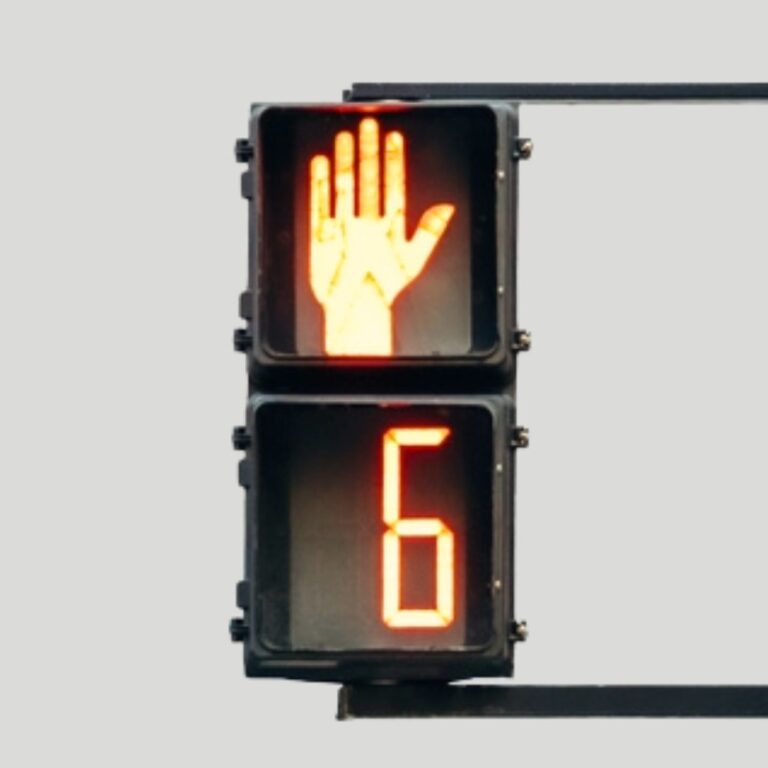
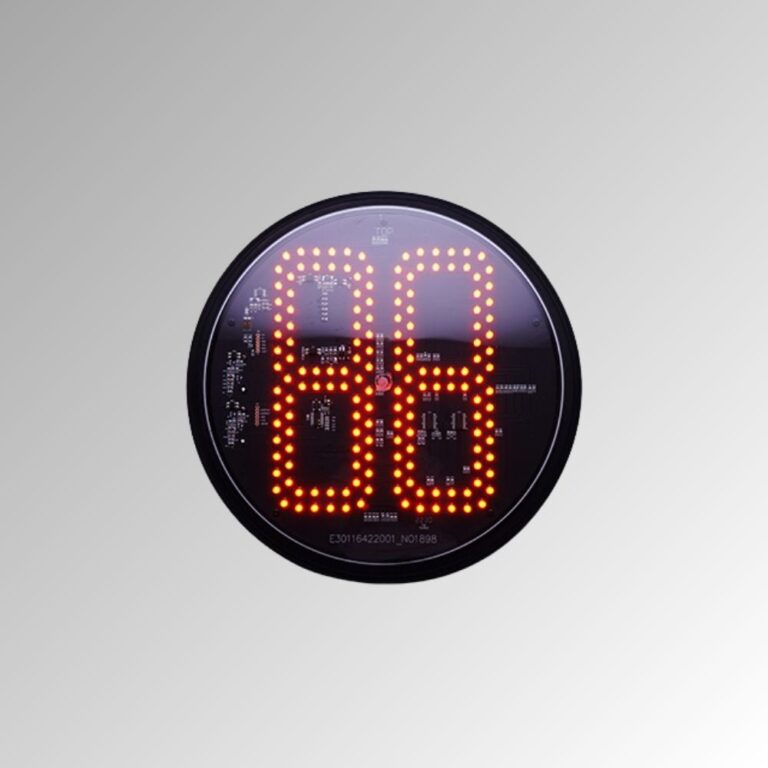
Countdown Signal Module
Hand & Person Overlap
Hand & Person Side by Side
External / Plug-and-Play Smart Node (Mounts externally to the fixture)
Integrable lighting products
Internal / Integrated Smart Node (Built directly inside the luminaire)
Integrable lighting products
The central AI management system (CMS) of the LEOlink Intelligent Lighting System.
Integrable lighting products
Frontier isn’t just a name—it’s a declaration. Born from the legacy of Dialight’s trusted traffic signal designs and reimagined by LEOTEK’s innovation-driven R&D and product management teams, Frontier stands as a symbol of reliability, evolution, and regional adaptation.
Explore LEOTEK CD Series pedestrian countdown signal modules, including Canadian models. Compare product specifications and download supporting documents.
Explore related applications: Pedestrian signal applications · All Pedestrian Signal products
Check our LEOLab pages to find more information.
If you need any service, please feel free to contact us!
PROJECT SUPPORT
Answers to common questions about product selection, installation and procurement.
CD displays countdown digits only. HM provides overlapping hand/person symbols; DIL places hand/person side by side; SPC combines hand/person/countdown in a 16 × 18-inch face. Select CD when the project needs a separate countdown display in a compatible housing. A CD module cannot supply the missing WALK and DON’T WALK symbols by itself.
Specifications & documents
CD-WM-HM-EH-Series 12-inch Pedestrian Signal Module Spec-Sheet · DIL Series 16” x 18” Pedestrian Signal Spec Sheet · SPC series 16 with18 pedestrian countdown signal module
Further reading
16-Inch Pedestrian Signal Modules: Size and Display Guide
The current square 12 × 12-inch specification lists TP12N-CD at 7.5W. The Canadian round product uses TSL-PED-12-CD-CR1 and lists 8.6W. Both are published for 80–135Vac, but format, model and approval evidence differ. For a U.S. bid, choose the appropriate square configuration unless the approved housing and project documents specifically require another format; a common nominal diameter is not enough.
Specifications & documents
CD-WM-HM-EH-Series 12-inch Pedestrian Signal Module Spec-Sheet · CD Series 12″ Countdown Signal Module (Canada)
Further reading
Traffic Signal Approval: ITE, ETL and DOT Lists
The current 12-inch square CD sheet gives a 9-inch digit height and Portland Orange countdown indication. It also includes dimension drawings for the face and depth. These define the module’s display and fit; they do not prescribe the intersection’s approved countdown sequence. Keep the matching drawing with the housing selection instead of relying only on a “12-inch countdown” label.
Specifications & documents
CD-WM-HM-EH-Series 12-inch Pedestrian Signal Module Spec-Sheet
Further reading
16-Inch Pedestrian Signal Modules: Size and Display Guide
The module displays the countdown within the connected system; its published electrical/optical sheet does not define every controller’s timing program or recovery behavior. Test the exact controller and cabinet through the agency-required pedestrian sequence, including required preemption/recovery conditions. Document the accepted configuration. Do not describe installing CD as an automatic correction of signal timing or accessibility.
Specifications & documents
CD-WM-HM-EH-Series 12-inch Pedestrian Signal Module Spec-Sheet
For TP12N-CD, the sheet specifies 80–135Vac, power factor above 0.90, THD below 20%, response under 75ms and turn-off voltage above 35Vac. Compare those with the actual cabinet/load-switch documentation and the required termination. A similar face dimension does not prove the electrical or monitoring behavior of a replacement circuit.
Specifications & documents
CD-WM-HM-EH-Series 12-inch Pedestrian Signal Module Spec-Sheet
Further reading
Traffic Signal Approval: ITE, ETL and DOT Lists
CD supplies a visual countdown indication. It does not provide the hand/person symbols, audible/vibrotactile indication or pushbutton functions of a complete accessible crossing. Specify those components and their controller interaction separately. Adding CD can improve the visual information available, but should not be represented as complete accessibility compliance for the intersection.
Specifications & documents
CD-WM-HM-EH-Series 12-inch Pedestrian Signal Module Spec-Sheet
Further reading
Pedestrian Countdown Displays and Accessible Pedestrian Signals
The current 12-inch square sheet lists a five-year limited warranty, −40°C to +74°C operation, UV-stabilized polycarbonate lens and O-ring sealing. Its 70% intensity-at-100,000-hours statement concerns light-output maintenance, not a warranty of that duration. Maintain the installed housing seal and keep the exact square/round model’s warranty and installation documents in the service record.
Specifications & documents
CD-WM-HM-EH-Series 12-inch Pedestrian Signal Module Spec-Sheet · CD Series 12″ Countdown Signal Module (Canada)
Further reading
Long-Life LED Traffic Signals: Replacement Cost and ROI
Record square versus round format, TP12N-CD versus the Canadian model, operating supply, connector/termination and accepted controller configuration. Use the actual energized countdown duration and the selected model’s wattage for energy comparison. Keeping these distinctions on the spare order prevents a matching-size but different-format countdown module from being dispatched to the wrong signal head.
Specifications & documents
CD-WM-HM-EH-Series 12-inch Pedestrian Signal Module Spec-Sheet · CD Series 12″ Countdown Signal Module (Canada)
Further reading
16-Inch Pedestrian Signal Modules: Size and Display Guide
Select countdown displays around the required indication, signal housing and approved intersection sequence. Match the exact module to the controller and cabinet used by the project.
Compare the cataloged square countdown module and round Canadian configuration. Match the required display format, electrical rating and applicable project approval documents to the exact model.
Check housing dimensions, internal clearance, retention hardware, wiring and supply voltage. Coordinate the countdown module with the existing pedestrian indications and the controller configuration.
Define the required countdown behavior and use the agency acceptance procedure to verify the proposed installation. Document the normal sequence and any required flash, preemption or recovery conditions.
Create a schedule of exact model numbers and required indications, electrical variants, quantities and spare units. Obtain current specifications, installation instructions, applicable approval documentation and written warranty terms. Record the installed configurations so maintenance teams can select the correct replacement.