












A streetlight’s asset tag tells staff which physical asset they are looking at. A device credential helps a network establish which endpoint is connecting. Those records should be linked, but they do different jobs.
In a certificate-based design, a digital certificate binds an identity to a public key. The receiving system still has to validate it and decide what the device is allowed to do. Recognizing a device and authorizing an action are separate steps.
Keep the identifiers separate
Consider this illustrative asset record. The labels are invented for the example; they contain no real device credentials.
| Record | Example | Purpose |
|---|---|---|
| Agency asset ID | SL-1042 | Identifies the streetlight in the agency’s asset model. |
| Controller serial | NODE-A017 | Identifies the installed hardware. |
| Credential reference | Certificate record C-021 | Links to issuer, validity and credential-management information. |
| Service record | Replacement work order | Explains when hardware and credential associations changed. |
If the controller is replaced, the agency may retain its streetlight asset ID while installing different hardware with a different credential. The cross-reference should show that change. Reusing the old association without review makes both troubleshooting and retirement harder.

What does a certificate establish?
RFC 5280 describes the Internet X.509 certificate and revocation-list profile. For a procurement discussion, the important point is the validation process: the system needs an appropriate trust basis and checks for the proposed certificate use.
A certificate file alone is not proof that a connecting device controls the corresponding private key. The authentication exchange and implementation matter. Even a successfully authenticated device should receive only the permissions assigned to its role.
Ask suppliers to identify which components use certificates, which use another mechanism and where authentication and authorization occur. A city does not need to prescribe one protocol for every component to ask those questions clearly.
Review three lifecycle events before commissioning
1. A new controller joins
Who approves enrollment? How does the system establish initial trust? Which asset record receives the device association? Request a demonstration that includes an unauthorized-device attempt as well as the successful path.
2. A credential needs renewal
Who sees approaching expiry, who initiates renewal and what happens if the device is offline? Have the supplier show the documented process and the point at which an operator must intervene. A renewal policy that assumes continuous connectivity needs special attention in a field network.
3. A controller is removed or suspected of compromise
Confirm how its access is withdrawn and how the asset inventory records the change. Distinguish normal retirement from a suspected key compromise; the required urgency and response may differ.
A handover record that maintenance can use
Keep the asset ID, controller identity, credential-management reference, responsible organization and lifecycle status in linked records. Store private keys and other secrets only in the system designed to protect them, not in a routine maintenance spreadsheet.
The handover should also name the owner for issuance, renewal, exceptions and incident escalation. “The vendor handles certificates” is incomplete if the city must approve changes or respond to an expired device.
Questions to resolve with the supplier
- Which trust anchors and credential types are used, and who controls them?
- What proves possession of the relevant key during authentication?
- Which roles or policies authorize device actions after authentication?
- How are renewal, replacement, loss of connectivity and retirement tested?
- What inventory and event records can the city retain?
NISTIR 8259A provides broader device-identification and cybersecurity context. It does not establish that a particular controller uses certificates.
Authentication is a relationship, not a sticker on the pole
The physical asset ID, controller serial number and cryptographic credential can all change on different schedules. A pole may remain in place for years while its controller is replaced and its credential is renewed. An asset record that stores only the latest serial number loses the history needed to explain which device controlled the light at an earlier time.
Use an effective-dated association: this controller and credential reference were assigned to this asset during this interval. That is an information-model recommendation, not a prescribed protocol. It allows a maintenance replacement to preserve the location's identity while recording the retirement of the old endpoint. FHWA's asset-management primer, Chapter 4 provides relevant asset-information context, while NISTIR 8259A treats device identification as a cybersecurity capability.
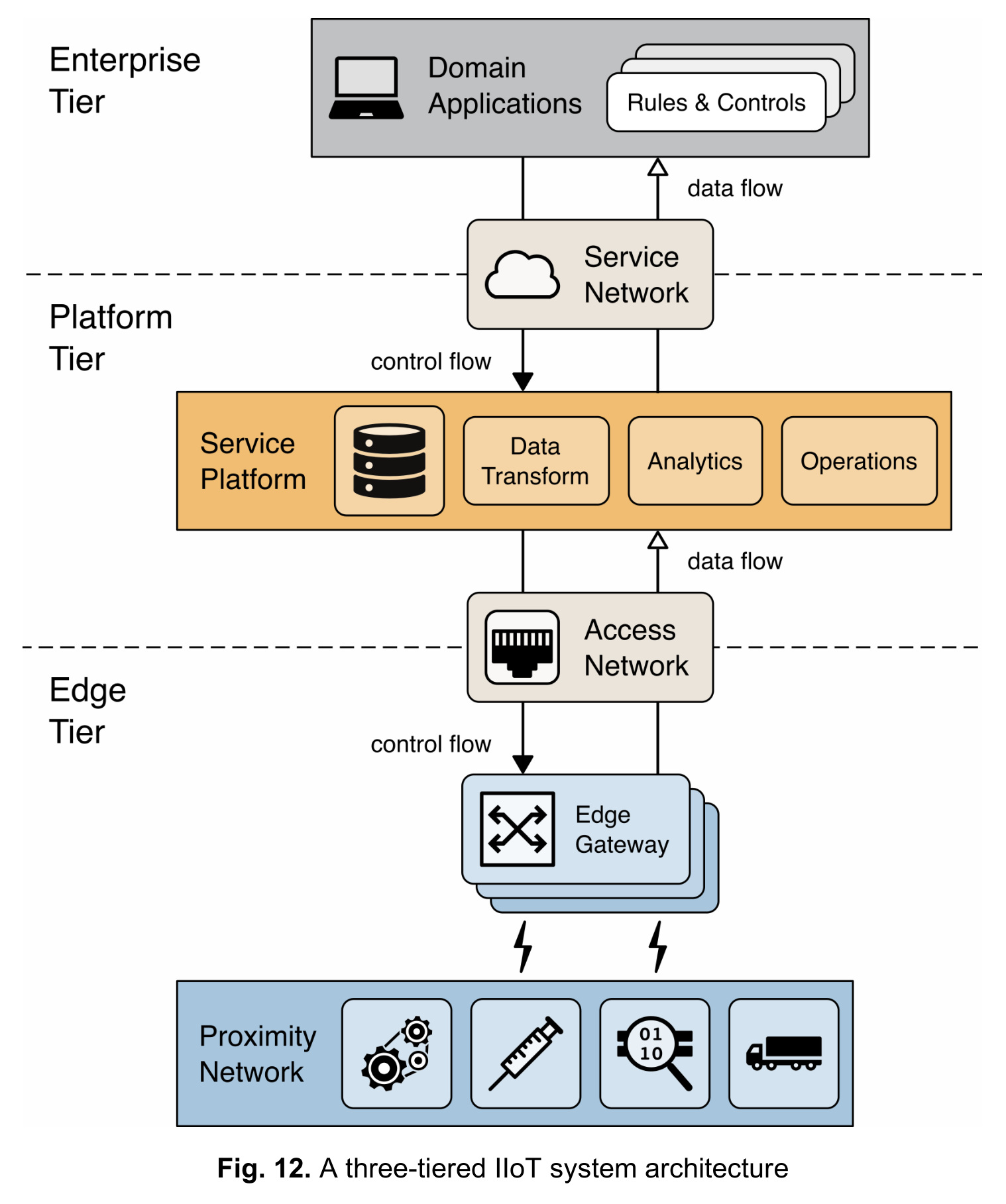
NIST’s logical model separates the edge, platform and enterprise tiers and marks data and control flows. Trace a controller replacement across those tiers: which service recognizes the new endpoint, which association still points to the old one, and where is the old device’s authority removed? Updating the asset label alone does not answer those questions.
Use the model to organize the supplier discussion. Its logical tiers do not prescribe a particular physical deployment or document LEOLink’s implemented authentication behavior.
What changes if someone copies the public certificate?
A certificate is not normally a secret equivalent to the private key. Its role includes binding an identity to a public key under an issuer's signature. A copied certificate does not by itself demonstrate possession of the matching private key. The authentication protocol and implementation must establish the required proof, and the receiving system must validate the certificate for the intended use. RFC 5280 provides the X.509 certificate and revocation-list profile underlying that discussion.
The review should therefore avoid both extremes: treating a visible certificate as a password leak, or assuming that the presence of a certificate makes impersonation impossible. The relevant questions concern private-key protection, trust establishment, validation and permissions. Ask for the supported architecture and test evidence, without collecting private keys or placing credentials in a routine inventory workbook.
In an illustrative procurement demonstration, a test device can present the wrong authorized identity or an untrusted credential under controlled conditions. The expected rejection and available audit record should be agreed in advance. This is an acceptance scenario to be implemented safely by the responsible team; it is not an instruction to experiment against an operational lighting network.
Expiry can become an operations problem long before replacement
Credential lifetime and equipment lifetime are different schedules. A controller that is physically healthy can still need credential renewal. An offline device can miss a normal renewal opportunity. The supplier should explain how approaching expiry is identified, what the renewal prerequisites are, and how the city handles an exception without losing accountability for the device.
Time handling deserves attention because certificate validity contains time boundaries. The actual trust and validation implementation determines the behavior when time is unavailable or wrong. Rather than prescribing a universal fallback, request the documented response and a supported test. A product that works during normal connectivity has not thereby demonstrated every extended-outage renewal scenario.
Define an owner for the renewal record and the associated asset information. If an external service manages issuance, the city still needs to understand what happens at service termination, supplier transition or emergency replacement. These questions make the certificate lifecycle part of the operating agreement instead of an invisible dependency.
Retirement should remove authority as well as hardware
Removing a controller from a pole does not automatically prove that its former credentials can no longer authenticate. Conversely, removing an account or credential association does not establish that all records of the asset should be deleted. Operational history and access authority have different retention purposes. The project should specify its supported withdrawal and record-retention processes.
For a planned replacement, record the old endpoint's disposition, the new endpoint's authorization and the effective handover time. For suspected compromise, use the incident process and supplier-supported response; normal retirement timing may be inappropriate. The useful handover is a traceable change in authority linked to a physical service event. It lets maintenance, IT and the supplier discuss the same asset without pretending that an asset tag, a certificate and a permission are interchangeable identifiers.
The certificate subject is only useful if it maps to the right asset
An authenticated endpoint still needs a reliable association with the physical equipment. If a controller is moved from one pole to another without updating the inventory, a valid credential can identify the controller correctly while the map identifies its location incorrectly. Cryptography cannot repair that operational record. Treat commissioning and replacement as both a credential event and an asset-association event.
For an illustrative replacement, retain the original pole asset ID, close the old controller's association at the effective time and create the new association. Keep the old history available for investigation. Overwriting one serial number with another can make earlier alarms appear to belong to the replacement controller. The difference matters when a city is investigating repeated faults, a disputed service visit or a credential used after equipment removal.
This also helps separate location authority from identity. A controller proving possession of its expected credential has established one part of the relationship. The management system must still determine which operations that endpoint or account may perform. A valid identity should not silently acquire access to every district merely because it is recognized. RFC 5280 provides certificate-validation context; the actual authorization policy belongs to the system design.
A renewal plan should include the unreachable devices
Renewal succeeds operationally only when the city can identify the exceptions. Ask for the population of credentials approaching expiry, the devices successfully renewed and those still pending. A dashboard percentage without the pending asset IDs leaves maintenance unable to plan intervention. Include devices that were offline or in storage during the ordinary renewal window in the agreed process.
A hypothetical fleet of 2,000 controllers with 99 percent renewed still has 20 unresolved devices. The risk is not described by the percentage alone. Are those devices powered down as warehouse spares, temporarily unreachable in the field or actively operating with an approaching deadline? Each condition suggests a different next action. Keep the reason and responsible party with the exception record rather than repeatedly restarting an unsuccessful fleet-wide task.
The process should also explain how credential status information is handled when connectivity is limited. Do not prescribe a universal behavior without knowing the architecture. Ask the supplier to document the supported validation and recovery approach, then test the relevant scenario. A city needs to understand the tradeoff between continued local operation and withdrawal of remote authority, rather than discovering it at expiry.
Commission the records as well as the connection
At handover, choose a small sample and follow the relationship from the map to the controller, credential record and authorized management actions. Check an ordinary installation, a replacement and a retired device. Those three cases reveal more than a screenshot showing that every device is online. They test whether the city can maintain identity through the events that actually change its fleet.
NISTIR 8259A establishes device identification as part of its capability baseline; it does not supply the city's asset model or operating procedure. The practical deliverable is a repeatable method for establishing, changing and withdrawing trust while retaining an intelligible physical history. That is what makes certificates useful to maintenance rather than a separate inventory understood only by the security team.
Device-identity FAQs
Is a serial number a secure device identity?
It is an identifier, but not necessarily an authenticator. Ask how the system verifies a connecting device rather than relying on the label alone.
How often should certificates be renewed?
Use the supported architecture, validity policy and operational requirements to set the schedule. Verify the renewal process before devices approach expiry.
Does every smart streetlight need a certificate?
Certificate-based identity is one approach. The requirement should specify the needed authentication and lifecycle outcomes, then evaluate the proposed mechanism.
Continue with the cybersecurity procurement checklist. For a LEOTEK technical review, include your identity policy and which organization will operate the network.