












A wildlife lighting schedule is a documented, site-specific seasonal dimming plan that changes roadway or public-area lighting timing and levels during recurring periods of wildlife sensitivity while retaining lighting needed for the location. It should be built from local habitat information, the purpose of the lighting, applicable requirements, field validation, and a review process, not from a universal preset.
For a city or transportation agency, this approach turns ecological dimming from a one-time fixture setting into an operating decision. The schedule can be reviewed as conditions change, while the responsible teams retain clear ownership of exceptions, maintenance, and site-specific engineering choices.
Key takeaways
- A wildlife lighting schedule is a management process, not a fixed percentage or curfew that can be copied from another site.
- Begin with the location, lighting task, habitat context, and locally verified seasonal trigger.
- Treat time, light level, aiming, shielding, and spectrum as separate decisions that may need different evidence.
- Use zones, test the programmed profiles in the field, and document exceptions before routine operation.
- Revisit the schedule with operations and ecological stakeholders each season or when site conditions change.
A useful five-step workflow is: (1) document the habitat trigger, (2) map lighting zones and constraints, (3) set site-specific profiles and exceptions, (4) commission the settings in the field, and (5) review each seasonal cycle.
Why a wildlife lighting schedule differs from ordinary nighttime dimming
A conventional late-night dimming profile may respond to lower activity during certain hours, but it does not necessarily account for a recurring condition in an adjacent habitat. A seasonal lighting-control plan adds a documented trigger, a defined area of concern, and a review cycle to the ordinary operating schedule.
That distinction matters because “wildlife-sensitive” does not describe one lighting task or one control response. A trailhead, a habitat-edge roadway, a parking area, and an active intersection can have different operational needs. The timing of a locally relevant migration, nesting, or breeding period can also differ from the date range used elsewhere.
The aim is not to make a universal claim that dimming will produce a particular ecological or roadway outcome. It is to give the agency a disciplined way to decide when lighting is needed, where it is needed, and how settings should be managed when a recurring environmental concern is identified.
This fits the responsible-outdoor-lighting principles described by DarkSky International: light should be useful, targeted, low level, controlled, and warm-colored where possible. Those principles are planning guidance, not a substitute for project engineering, local requirements, or species-specific review. They do, however, provide a useful structure for deciding what the schedule must address.
On small screens, swipe the diagram sideways to read its labels, or open the full-size image below.
Open full-size diagram
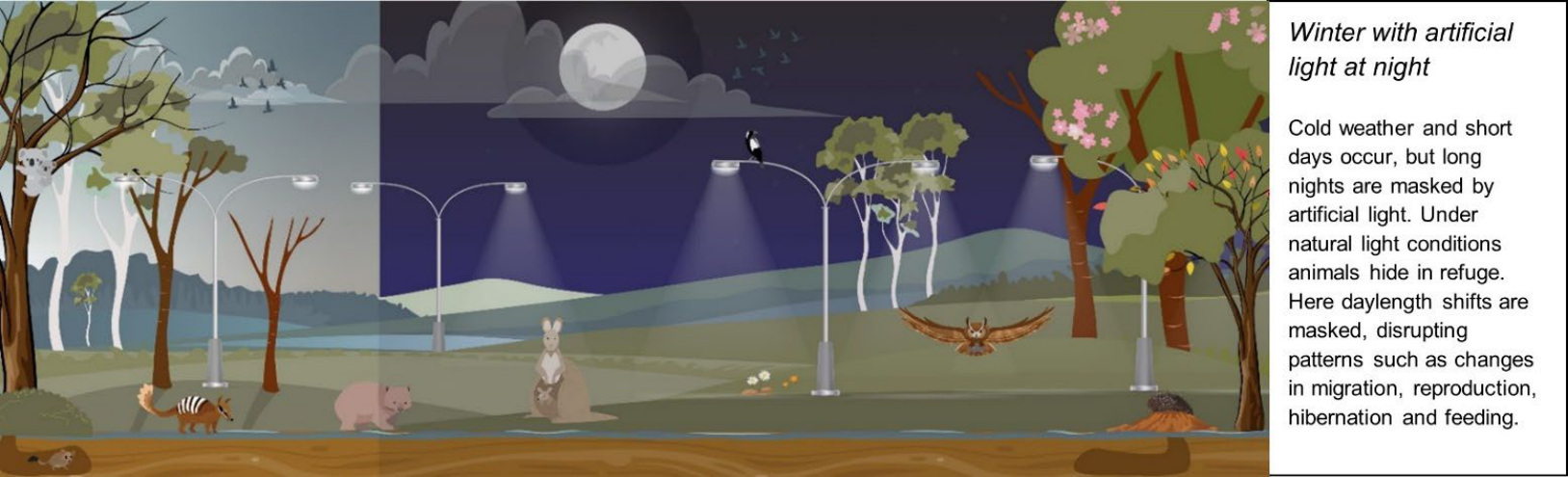
Figure 35 in the Australian wildlife guidelines illustrates how artificial light can mask seasonal day-length cues. This is a conceptual mechanism, not a measured response curve for a particular luminaire. Its practical implication is that a calendar profile should follow the locally documented period of concern; “dim after midnight” may miss exposure earlier in the night.
Start with the site, the seasonal trigger, and the lighting purpose
The first useful schedule is usually a site record, not a control-system screen. Before assigning times or levels, assemble enough information to explain why a change is being considered and who must approve it.
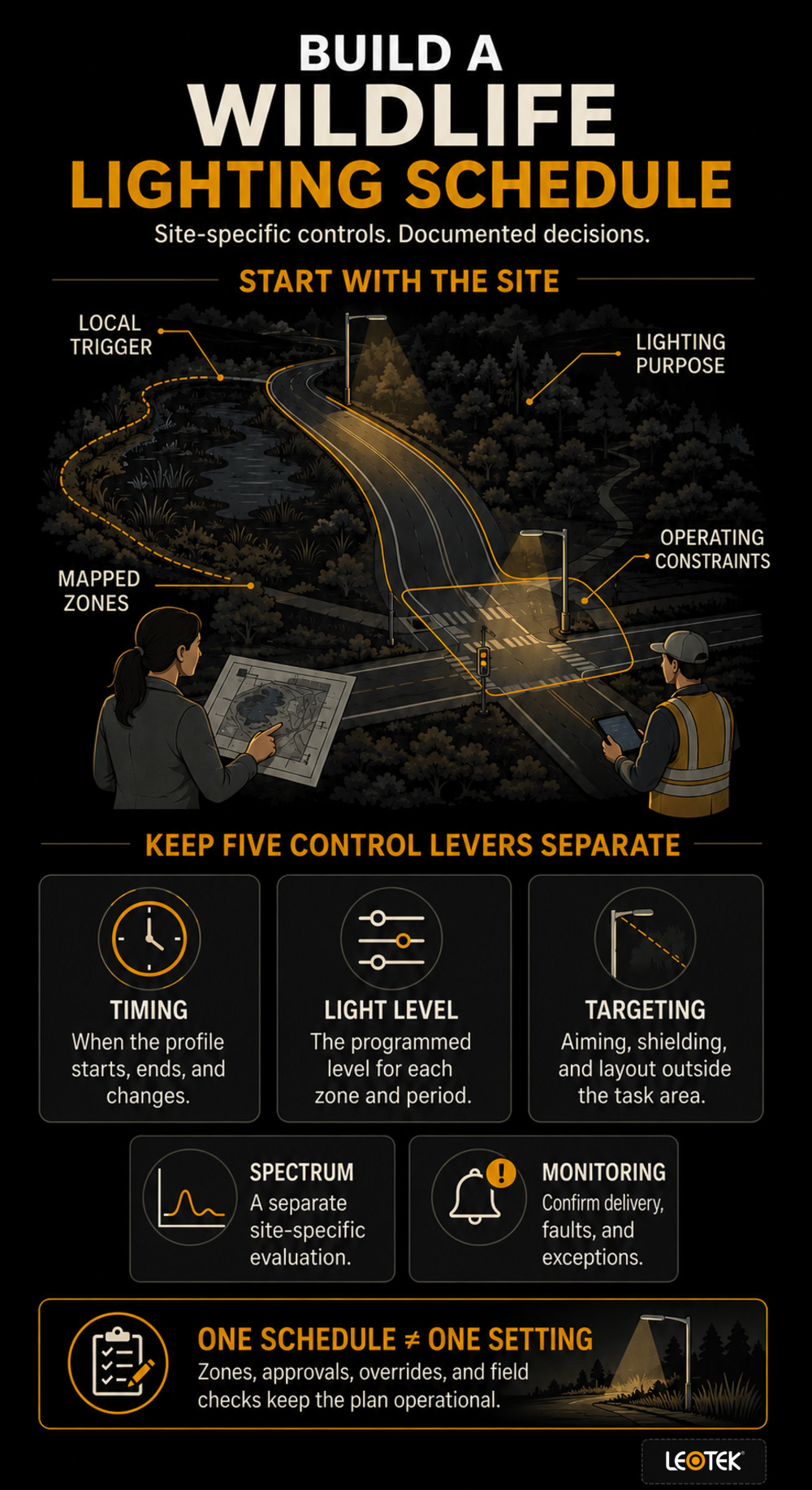
LEOTEK infographic showing site inputs and five separate control levers for a wildlife lighting schedule.
Map the sensitive area and the lighting zones
Create a working map that identifies the roadway or public-space area, the nearby habitat, existing luminaires, and the controls already in place. The map should also show lighting zones that have different purposes, such as a roadway segment, an intersection, a pedestrian crossing, a trail connection, a parking area, a maintenance access point, or a habitat edge.
Zone boundaries help prevent an all-or-nothing decision. A habitat-edge zone may warrant a separate review from an intersection where the lighting task, geometry, or operating constraints are different. The map is also the place to note physical conditions that affect the question: terrain, reflective surfaces, changes in land use, adjacent facilities, or a project boundary that limits where the agency can make changes.
Document the trigger with the appropriate local expertise
“Seasonal” should mean more than a calendar label. The trigger may be a locally documented period of wildlife sensitivity, a permit condition, a management plan, a recurring field observation, or direction from the responsible authority. Record the source, the relevant geography, the date range, its limitations, and the person or organization responsible for confirming when the window begins or ends.
Do not transfer dates, color-temperature preferences, or dimming levels from another community simply because the habitat name sounds similar. Species, conditions, travel patterns, ambient light, and agency responsibilities vary. When a schedule concerns protected areas, named species, nesting, migration, or breeding, obtain current guidance from the relevant local, state, federal, tribal, refuge, or species-management authority before publishing or applying species-specific advice.
On small screens, swipe the diagram sideways to read its labels, or open the full-size image below.
Open full-size diagram
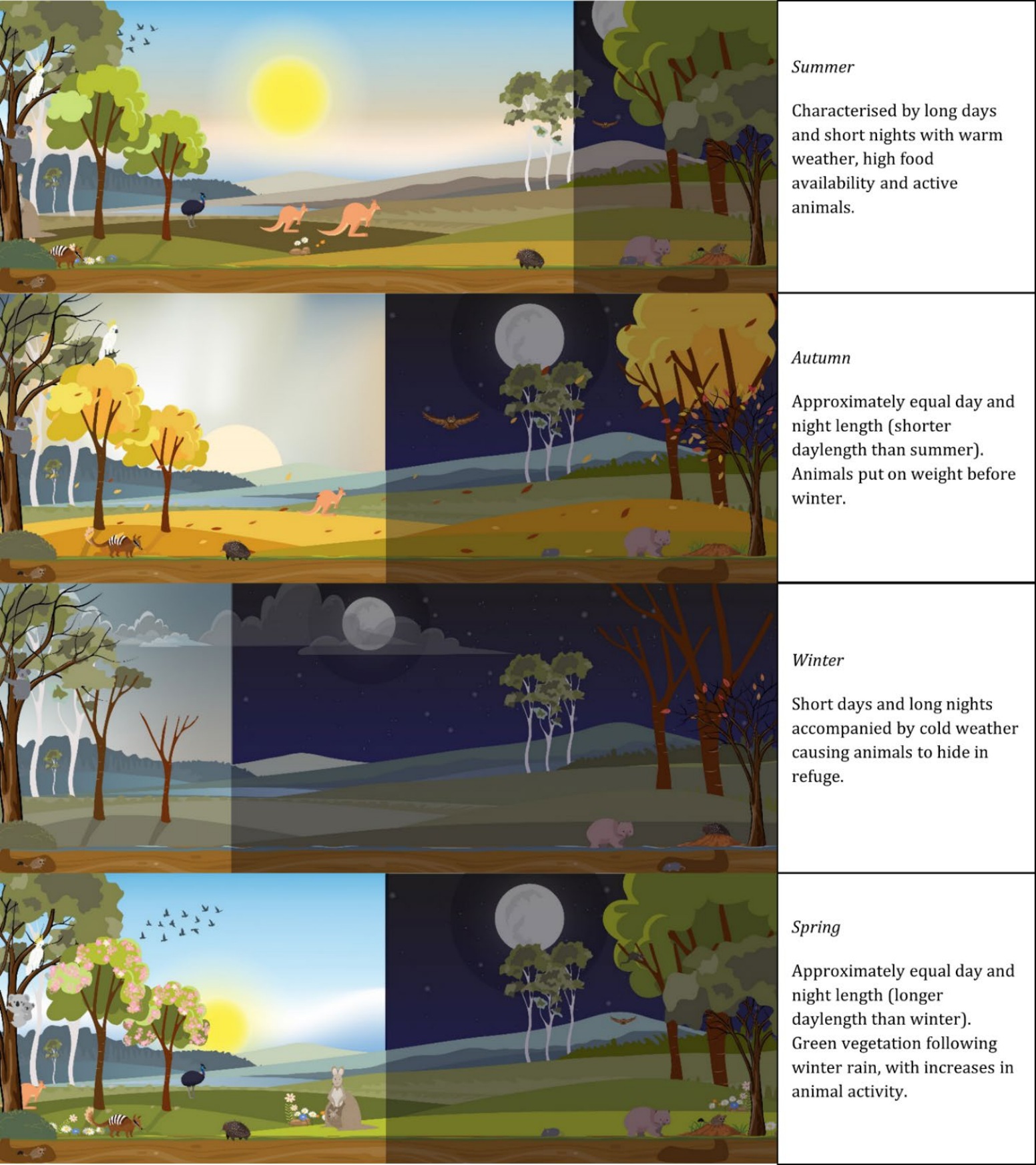
Figure 34 connects daylight duration with seasonal environmental cues. Its Australian landscape is useful for explaining the principle, but a US operating calendar still needs local latitude, dates and species activity. Record the ecological trigger separately from the switching rule: a fixed clock time and a time relative to sunset can produce different exposure windows as day length changes.
Identify constraints before setting a profile
A schedule must work within the project’s real operating conditions. Identify decisions that may require agency engineering, operations, emergency-response, maintenance, accessibility, electrical, or code review. These can include the roadway lighting task, pedestrian activity, scheduled events, maintenance access, equipment capabilities, and conditions that require a temporary change.
How do seasonal lighting controls work in wildlife-sensitive areas?
Once the site record is complete, translate the decision into a control profile. A profile states what changes, where it changes, when it changes, who owns it, and how the agency will know whether it was applied as intended.
- Control profile: The documented time-based setting for a defined area and period.
- Zone: A mapped area with a distinct lighting task or operating context.
- Override: A documented temporary departure from the approved profile.
- Commissioning: Field verification that the approved profile was entered and operates as intended.
Open full-size diagram
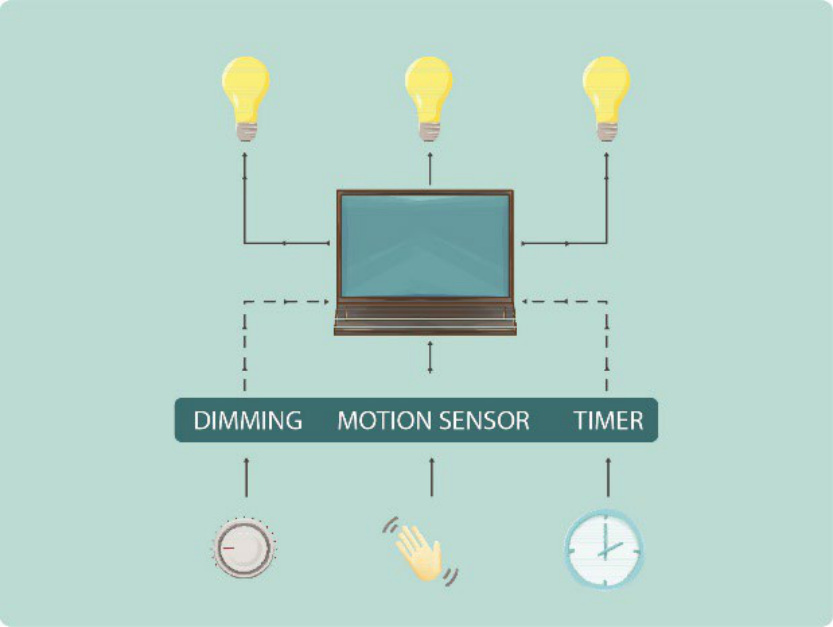
Figure 10 distinguishes control of timing, intensity and color. Specify those as separate capabilities: dimming an ordinary fixed-spectrum luminaire does not automatically create an adjustable-spectrum system. Confirm which functions the exact installed equipment supports and test the actual receiving condition in each approved state.
Separate the control levers
Seasonal lighting controls can involve several related, but distinct, decisions:
- Timing: When a profile begins, ends, and changes within the night.
- Light level: The programmed level for a particular zone during a defined period.
- Targeting: Whether aiming, shielding, or physical layout should be reviewed to limit light outside the intended task area.
- Spectrum: Whether the spectral characteristics of the selected lighting need separate, site-specific evaluation.
- Monitoring and alerts: How staff confirm that settings were delivered and identify faults or exceptions.
Keeping these levers separate makes the plan more useful. A change in operating time does not prove that a spectral decision is appropriate. Likewise, a shielding review is not the same as a dimming schedule. The project team can assess each lever against the lighting task and the evidence available for the site.
Use zones and exceptions rather than one corridor-wide setting
A schedule becomes more operationally credible when it describes zones and exceptions explicitly. An illustrative, non-prescriptive matrix might distinguish a habitat-edge zone, a roadway segment, and an intersection zone. Each row would identify the owner, seasonal review window, normal profile, temporary override condition, and required field check. It would not assume that each zone receives the same setting.
Avoid publishing a fixed dimming percentage, curfew, or seasonal date as if it applies everywhere. The correct setting depends on project-specific factors, including the lighting task, field conditions, applicable requirements, and the authority responsible for the habitat input. A well-designed schedule says how the setting will be determined and verified rather than presenting a copied number as an answer.
Exceptions should be planned, not improvised. For example, a documented override process can state who may authorize a temporary change, what triggers it, how long it remains active, and where the decision is logged. The process can cover planned maintenance, unusual activity, an incident response, a control fault, or a change in agency direction without asserting that any one situation always requires the same action.
Define ownership and change control
Assign an accountable owner for the schedule, the control-system update, the field check, and the ecological input. A durable change record can include:
- the zone and asset group affected;
- the effective dates and time windows;
- the profile or configuration reference;
- the reason and source for the change;
- the approver and implementer;
- the field-validation result; and
- any temporary override and its closeout.
This record supports continuity when staff, contractors, or operating conditions change. It also gives procurement and maintenance teams a clear way to ask whether the deployed controls can support the approved operating workflow, without assuming that every connected product has the same capability.
Commission the schedule before making it routine
A control profile on paper is not yet an operating schedule. Commissioning establishes that the approved profile was entered correctly, activates as intended, and can be observed at representative locations.
Start with a baseline record. Capture the current zone definitions, control settings, asset information, and the conditions that prompted review. Then identify representative field locations, including boundaries where a roadway or public area meets the habitat-sensitive area. The objective is to confirm implementation, not to claim an ecological outcome from a single visit.
Field-check the programmed profile
During a field check, verify that the intended zone changes at the expected time and that the control system records the event as designed. Observe the lighting task and the intended coverage area. If a shielding or aiming review is part of the approved project, verify the installed condition against the project documentation.
Record faults, unexpected behavior, access issues, stakeholder observations, and any condition that prevents the profile from operating as planned. A site-specific lighting or electrical evaluation belongs with qualified project personnel; this article does not establish photometry, electrical compliance, or an acceptable lighting level for any road or facility.
The commissioning record also needs an escalation path. If the profile cannot be delivered, if the equipment behaves unexpectedly, or if new local guidance changes the seasonal trigger, pause the assumption that the schedule is complete. Route the issue to the accountable engineering, operations, and ecological reviewers.
On small screens, swipe the diagram sideways to read its labels, or open the full-size image below.
Open full-size diagram
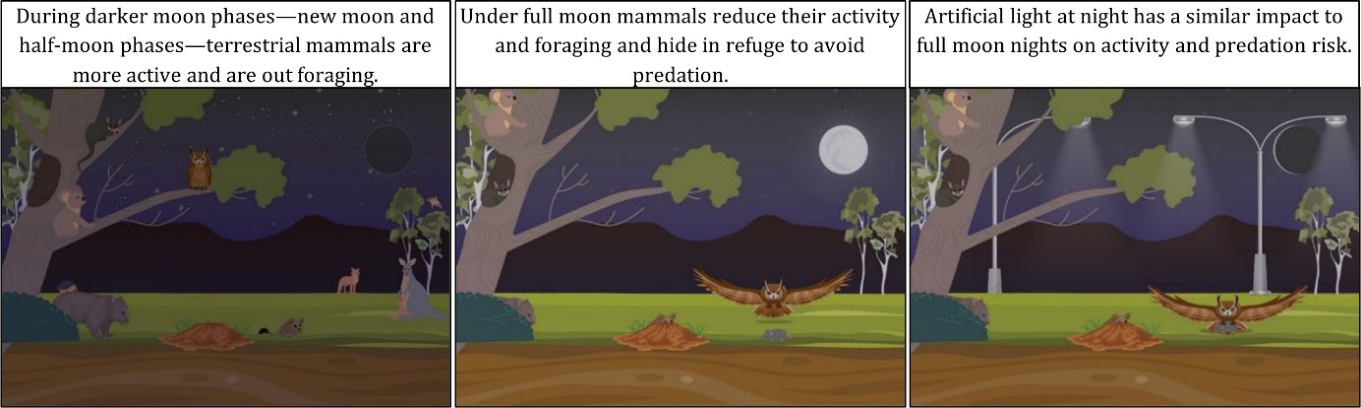
Figure 33 adds a different timing question: what was the natural night baseline during the inspection? The terrestrial-mammal illustration compares darker moon phases, full-moon conditions and artificial illumination. It is not a universal prediction for every species. Record moon conditions, cloud cover and source operation with field observations so a programmed change is interpreted against the conditions actually present.
Make reviews part of maintenance operations
The same operational tools that support a schedule can support its upkeep. Fault notification, asset records, and change logs may help an agency identify where a profile was not applied or where a maintenance action has changed the field condition. But those tools do not replace a site review or establish that a wildlife objective has been achieved.
Set an inspection and review cadence that fits the project. The review can occur before the recurring seasonal window, after significant maintenance, following a site change, or when the responsible habitat authority updates guidance. Keep the review question simple: Is the documented schedule still appropriate for the lighting task, the site, and the locally verified seasonal condition?
Review each season with operations and habitat partners
Seasonal schedules are adaptive only when someone is assigned to revisit them. Before each relevant period, convene the people who own the lighting operation and the people who provide habitat or regulatory input. Review the trigger source, zone map, previous change log, outstanding faults, field observations, and any planned construction or event that changes the operating context.
This review is also an opportunity to distinguish verified facts from recommendations. The agency may have a documented seasonal window, for example, while the exact control profile remains a project decision to be evaluated in the field. Keeping that distinction visible helps prevent a planning choice from being represented as a scientific result.
The result of a seasonal review may be to continue the existing profile, revise it, postpone a change until information is available, or retire a profile that no longer fits the site. Each outcome can be appropriate when it is documented and approved by the people responsible for the relevant decision.
Questions agencies ask about ecological dimming
What is a wildlife lighting schedule?
It is a site-specific operating plan that changes lighting timing or levels during a documented recurring period of wildlife sensitivity. It should define the zone, trigger, control profile, approver, field check, and exception process. It is not a universal dimming setting or a claim of ecological performance.
Who should approve a seasonal dimming schedule?
Approval depends on the project and jurisdiction. The schedule typically needs input from the agency personnel responsible for lighting operations and engineering, plus the appropriate local ecological, land-management, or regulatory authority when habitat considerations are involved. Requirements and responsibilities should be confirmed for the specific site.
Can one schedule work for every season and every location?
No general schedule should be assumed to fit every location. The lighting purpose, habitat context, locally verified seasonal trigger, equipment configuration, and operating constraints can differ by zone and site. Use a documented review to decide whether a profile is still appropriate.
What should be documented before changing roadway lighting?
At minimum, document the zone, lighting task, trigger source, proposed profile, responsible owner, approval path, override process, and field-validation plan. Also record limits: this planning record does not replace project-specific engineering, code, electrical, or ecological review.
References
Additional technical source: Australian Government DCCEEW, National Light Pollution Guidelines for Wildlife, Version 2.0 (2023). Interpret the cited figures in their original habitat and Australian guidance context; they do not establish a U.S. project criterion.
- DarkSky International, DarkSky International; accessed July 29, 2026.