

















Short answer: Smart city data ownership is not settled by putting a sensor on a streetlight. For connected roadway lighting, the useful question is what rights the city has to defined data: access, use, export, retention, disclosure, and post-contract continuity.
That distinction matters because a streetlight program can generate operational records that support daily work. A city may need to see asset status, investigate an outage, review a dimming schedule, reconcile an energy record, or hand records to a successor provider. Those needs should be stated in the procurement and agreement, alongside the technology requirements.
This article is educational information for municipal and transportation-agency teams, not legal advice. Applicable state and local law, public-records obligations, funding conditions, and the negotiated contract determine the result. City counsel and procurement staff should review contract language for a particular project.
Key takeaways
- “Ownership” alone is too vague. Define rights to access, use, export, retain, disclose, and delete each data category.
- Separate raw operational records from asset records, reports, calculated analytics, software, and vendor confidential information.
- Make deliverables specific: fields, historical period, export format, data dictionary, cadence, and any fees or transition support.
- Test portability and continuity with a sample export and documentation review before a contract ends.
- Review data rights with operations, procurement, IT/security, privacy, records management, and counsel rather than treating them as a software-only issue.
CONTRACT REVIEW
Four rights to specify for each streetlight dataset
Use this as a planning framework with procurement staff and counsel; the contract and applicable law control the result.
Start by separating the data from the system
Connected lighting can combine field hardware, communications, and a central management environment. A contract review becomes clearer when the team first identifies the records it needs instead of asking for “all data” without definition.
The categories below are a planning framework. They are not a statement that every connected streetlighting system produces every record, or that every record is appropriate for an agency to receive. The procurement should define the actual data elements for the proposed architecture.

Operational telemetry and status
Operational data may include device status, timestamps, fault or alarm events, switching or dimming commands, and energy-related records. For a lighting operations team, these records can help explain what was reported, when it occurred, and what action was recorded.
The key contract question is not whether an interface displays a status indicator. It is whether the agency receives the underlying records it needs, at the needed level of detail, for the duration it needs them. A dashboard view and a reusable export are different deliverables.
Asset and configuration records
An asset record may associate a city identifier with a pole, luminaire, controller, location, or configuration. Configuration and change-history information can be important when staff need to understand how a network was set up or how a setting changed over time.
Ask how identifiers relate across systems. A field-maintenance system, geographic information system, finance system, and lighting platform may each use different identifiers. Without an agreed mapping and documentation, a later export can be difficult to reconcile even when the records are technically available. See the GIS, CMMS and 311 service workflow guide for a field-level asset-ID approach.
Analytics, reports, and derived records
Source records are not the same as calculated metrics, visual dashboards, reports, models, or software. Contracts can distinguish proprietary software or methods from defined operational outputs and historical records the city requires for administration, records retention, or a transition.
Use precise labels. For example, distinguish a fault-event history from a chart generated from that history, and distinguish an export of agency asset records from a request for source code. Clear definitions reduce the chance that the parties use the same word, “data,” to mean different things.
Smart-City Data Ownership: Rights Cities Must Define
In practice, the phrase “smart city data ownership” can obscure more than it resolves. A city may have a strong need for access and continuity even where the agreement uses licenses or other rights rather than a simple ownership label. Conversely, a broad ownership statement may be less useful than a detailed export and transition obligation.
The federal acquisition rules offer a useful, limited illustration. The Federal Acquisition Regulation’s data-rights provisions say that federal contracts requiring data must delineate the parties’ rights and obligations and specify data to be delivered. That rule applies to executive agencies, not automatically to cities. Its practical lesson for municipal readers is narrower: define the data and the rights rather than relying on a label.
| Contract question | Why it matters operationally | What to define |
|---|---|---|
| What is the dataset? | Staff cannot verify a delivery that is not described. | Fields, metadata, identifiers, documentation, and historical period. |
| Who may access it? | Operations, consultants, and a successor may have different needs. | Roles, authentication, access period, and agency-controlled users. |
| Who may use or disclose it? | A record may have operational, public-records, or confidential treatment issues. | Permitted purposes, confidentiality, disclosures, and subcontractor conditions. |
| Can it be exported? | A screen view may not support audit, analysis, or transition. | Format, schema, data dictionary, method, cadence, completeness, and cost. |
| What happens at exit? | Service end should not erase the operational history a city needs. | Retention, export window, deletion, transition assistance, and verification. |
This table is a discussion tool, not model contract language. The right allocation depends on the agency’s requirements and applicable law.
Contract questions for municipal connected-lighting data
Before award, convert broad expectations into questions that a proposer can answer and that a contract can make enforceable. The following streetlight data rights checklist can help a city organize its review.
- Which records are deliverables? List the data categories, fields, metadata, documentation, and time period rather than asking generally for “system data.”
- What rights does the agency receive? Specify whether the city and its authorized representatives may access, use, copy, retain, or share each defined category for administration, maintenance, records obligations, and transition.
- How does access work during the term? Identify roles, administrative control, authentication expectations, and the information available to each role.
- What does an export contain? State the format, schema or data dictionary, delivery method, frequency, record counts or completeness checks, and whether a charge applies.
- Are historical records included? Address event histories, configuration changes, reports, and asset relationships when those records are needed for operations or continuity.
- What are the retention and deletion rules? Identify backup, retention, deletion, return, and records-management requirements. These should be reviewed against the agency’s applicable obligations.
- How are risk responsibilities allocated? Address confidentiality, privacy, cybersecurity, incident notification, and subcontractor duties in terms appropriate to the project. Do not assume that a platform label or a generic certification claim answers these questions.
- How are data quality and history handled? Define corrections, timestamps, provenance, audit logs, and who may amend a record. A correction process should preserve enough history for the agency’s stated need.
- What happens at expiration or termination? Establish a transition period, export test, documentation delivery, reasonable support expectations, and verification steps.
- Which terms control? Identify the governing contract documents and address conflicts with click-through or platform terms before service begins.
The National Institute of Standards and Technology (NIST) notes in NISTIR 8228 that Internet of Things devices can create cybersecurity and privacy risks that differ from conventional IT devices across their lifecycles. NIST’s SP 800-213 similarly frames IoT acquisition around organizational and system risk management and expected device cybersecurity requirements.
Both are federal guidance, not a municipal contract template. They support a risk-based review, not a conclusion about who owns a city’s data.
Make exit and continuity requirements testable
Data rights are more useful when the city can verify them. A commitment to provide an export at the end of a multi-year term may not be enough if the team has never seen the export, mapped identifiers, or checked the accompanying documentation.
Consider requesting a controlled acceptance exercise before award or early in implementation. The agency can define a sample dataset and validate whether the delivered export contains the agreed fields, includes the correct historical range, and can be read with the supplied data dictionary. It can also compare a reasonable sample of asset identifiers to its own asset records.
The goal is not to prescribe one universal file format. It is to make the project’s agreed result testable. A city that needs a machine-readable export, a scheduled report, or a transition package should state that need and the acceptance method in the procurement documents.
A practical continuity check
A useful exercise can include five steps:
- Export a defined sample of asset, status, and event records.
- Confirm that identifiers, timestamps, units, and field definitions are documented.
- Reconcile selected records to agency-maintained asset information.
- Confirm role-appropriate access for the people who will operate or oversee the system.
- Document how the city would receive records, documentation, and support if the service ended.
This is a procurement recommendation, not a promise that every system will interoperate with every city application. The required test should match the agency’s operating model, technical environment, and records obligations.
Apply the questions to connected streetlighting workflows
The framework is most useful when it is tied to an operational task. For example, a team responsible for outage response may need defined access to connected-streetlight data, including status and event history, while an asset-management team may need stable identifiers and configuration history. A procurement review can ask what record is needed for each task, who needs it, and how it will be available.
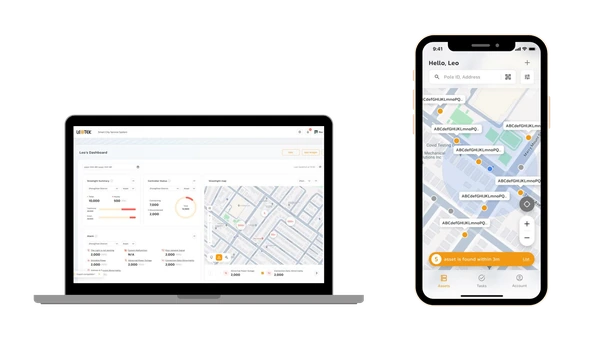
LEOTEK describes connected streetlight management in terms that include remote operations, energy tracking, alerts, and asset management. Its roadway asset management platform describes reporting, fault detection, data analysis, and asset-management functions. Those first-party descriptions show why a city should define operational records carefully; they do not establish an ownership right, an export format, a retention period, a privacy control, or an interoperability commitment for any project.
When evaluating a proposed connected-lighting architecture, distinguish these questions:
- What records are generated by the controller, communication service, and central management environment?
- Which records are required to operate, maintain, audit, or transition the roadway-lighting program?
- Which records remain visible only in a user interface, and which can the city receive as documented deliverables?
- What data relationships are necessary to connect an alarm or historical event to a specific asset?
Keeping the discussion at this level avoids an unsupported claim that all connected lighting products have the same capabilities. It also helps the agency ask for evidence relevant to its own workflows.
Build a cross-functional contract review
Data governance for roadway lighting is not solely an IT task. The people who operate the assets understand the records needed for maintenance and service continuity. Procurement and counsel translate those needs into the solicitation and agreement. IT and security teams can assess architecture-specific risk and access requirements, while privacy and records professionals can identify obligations that may apply to the agency.
NIST describes its Privacy Framework as a voluntary tool for helping organizations identify and manage privacy risk through enterprise risk management. For a city, that is a useful prompt to involve the appropriate functions early. It is not proof that any particular lighting system has a privacy certification or that one framework resolves every state or local requirement.
Assign responsibility for each decision. For example, operations can maintain the list of workflow-critical records; procurement can maintain the contractual deliverables list; IT/security can conduct a technical risk review; and records management can review retention and disposition. The final agreement should connect these decisions so that an operational need is not lost between a specification, a platform term, and a transition plan.
Conclusion: contract for defined rights and usable continuity
The most reliable answer to smart city data ownership is not a slogan. It is a contract that identifies the records a city needs and states who may access, use, export, retain, disclose, and delete them at every stage of the connected-lighting lifecycle.
For connected roadway lighting, start with actual work: responding to faults, managing assets, reviewing history, and maintaining continuity at contract end. Then require defined data deliverables, documentation, and a testable transition path that match those needs. After documenting required records and transition tests, teams evaluating a system can review technical documents and resources and, once they have a defined project question, contact LEOTEK for project-specific information.
Frequently asked questions
Who owns data generated by smart streetlights?
There is no universal answer. The applicable law and the agreement determine the parties’ rights. A city should define the relevant datasets and specify rights to access, use, export, retain, disclose, and delete them instead of relying only on an ownership label.
What data should cities be able to export from a streetlight management system?
That depends on the city’s stated operational and records needs. A procurement may define asset identifiers, status or event histories, configuration records, reports, metadata, and supporting documentation as required deliverables when those records are needed. It should also define the export format, data dictionary, historical period, method, cadence, and completeness checks.
What happens to streetlight data when a vendor contract ends?
The agreement should say. Before award, a city can define the export window, historical records, documentation, retention or deletion obligations, transition assistance, and a way to verify delivery. Testing a sample export before the end of a term can reduce uncertainty.
Is a data-rights clause the same as a cybersecurity clause?
No. Data rights address matters such as access, use, delivery, and disclosure. Cybersecurity addresses architecture- and risk-specific protections and responsibilities. Both may be needed, along with privacy, records-management, and transition terms, but they serve different purposes.
References
- National Institute of Standards and Technology, Considerations for Managing IoT Cybersecurity and Privacy Risks.
- National Institute of Standards and Technology, IoT Device Cybersecurity Guidance for the Federal Government.
- National Institute of Standards and Technology, NIST Privacy Framework.
- Federal Acquisition Regulation, FAR Subpart 27.4—Rights in Data and Copyrights.
- LEOTEK, LEOLink Solutions.
- LEOTEK, RenAI AI Roadway Infrastructure Management System.
- LEOTEK, Resources and Documents.