

















Cities and transportation agencies should procure smart streetlights as an Internet of Things (IoT) and operational-technology (OT) system, not simply as luminaires with a connectivity option. A useful smart streetlight cybersecurity checklist asks suppliers to document identity, configuration, data protection, access, updates, logging, vulnerability handling, and support responsibilities for the complete system.
That system may include field nodes, gateways, communications services, a management application, administrative accounts, integrations, and supplier support. The right requirements depend on the city’s architecture, data flows, operating constraints, and procurement rules. This checklist helps turn broad expectations into evidence a city can evaluate.
Key takeaways
- Treat connected streetlighting as a lifecycle and system-security decision, not only a hardware purchase.
- Request evidence for asset identity, secure configuration, protected data, access control, updates, and security-state awareness.
- Assign ownership for credentials, logs, incident support, and vulnerability communications before deployment.
- Evaluate specific, reviewable supplier evidence instead of relying on a general security label.
- Tailor the requirements to the city’s architecture, operations, and procurement policy.
City procurement workflow
Turn security claims into acceptance evidence
Use this framework with agency engineering, IT/OT security and procurement review for the proposed configuration.
Why smart streetlight cybersecurity needs a procurement scope
Connected lighting introduces decisions that do not exist in a standalone luminaire purchase. A project may include a controller at the fixture, a gateway or other communications component, a cloud or on-premises management service, user accounts, interfaces to city systems, and operational support. Each component can have its own software, configuration, identity, access path, and lifecycle.
The procurement scope should identify those components before the city asks suppliers to respond. NIST SP 800-213 recommends that organizations consider how an IoT device will integrate into a system and identify the cybersecurity abilities and actions expected from the device, its manufacturer, and relevant third parties. That is a useful framing for a city, even though the publication is federal guidance rather than a municipal procurement rule.
Define the system boundary before requesting quotes
Start with a simple map of the proposed environment. It should show the streetlight or luminaire, connected control node, gateway where applicable, communications path, management application, user roles, integrations, data stores, and support parties. The map does not need to prescribe a topology. Its purpose is to make sure the procurement package covers all components that could affect security or operations.
For example, a request for information can ask suppliers to state which components they provide, host, manage, update, or support. It can also ask which components remain under city, utility, integrator, or communications-provider control. This distinction prevents an assumption that a security feature at one layer automatically protects another layer.
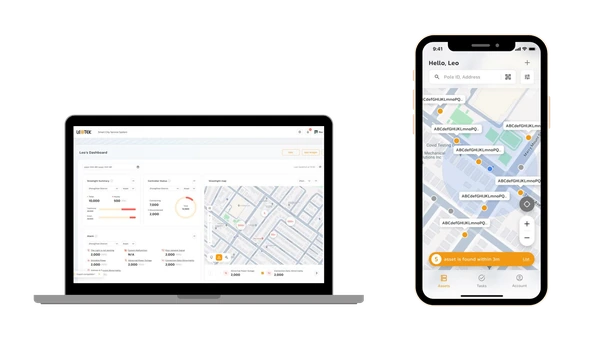
When a project evaluates connected streetlight management, the functional scope may include controllers and a management service. That is a reason to ask for security evidence across the system, not evidence that any particular platform has met the requirements in this article.
Keep OT operating constraints in view
Smart streetlight systems can affect field operations, maintenance workflows, and public-infrastructure service continuity. NIST describes OT as programmable systems and devices that interact with, or manage devices that interact with, the physical environment; its OT security guidance addresses performance, reliability, and safety requirements alongside cybersecurity concerns. See NIST SP 800-82 Rev. 3.
That does not mean every lighting project has the same risk profile or must use the same architecture. It means that update timing, remote administration, recovery procedures, and network controls should be reviewed with the city’s lighting operations, engineering, and IT or OT security teams. Agency validation and applicable local requirements govern deployment decisions.

The smart streetlight cybersecurity procurement checklist
The checklist below is a set of questions and evidence requests, not a universal specification. NISTIR 8259A offers a useful IoT device capability baseline covering identification, configuration, data protection, logical access, software update, and cybersecurity-state awareness. Cities can use those areas to structure a procurement review, then tailor the requirements to the project.
Smart streetlight cybersecurity procurement checklist
| Requirement area | Ask the supplier | Evidence to request | City review role |
|---|---|---|---|
| Asset identity and inventory | How are field devices, gateways, and supported software versions identified? | Device and component inventory fields; supported-version list; process for commissioning, retirement, and unauthorized-device identification | Asset owner, operations, IT/OT security |
| Secure configuration | What settings are secure by default, configurable, and controlled by the supplier? | Hardening and configuration guidance; change-record approach; approved-configuration restore process | Operations, IT/OT security, integrator |
| Data protection | What data is collected, transmitted, stored, or shared, and how is it protected? | Data-flow diagram; documentation of communications and stored-data protections; key or certificate ownership and responsibilities | IT/OT security, privacy or data-governance lead |
| Access and credentials | Who can administer the system and how is supplier remote access handled? | Role definitions; account lifecycle process; authentication options; privileged-access and audit approach | IT/OT security, system owner |
| Software and firmware | How are updates communicated, verified, applied, and recovered from? | Software/firmware inventory; supported versions; update and rollback documentation; end-of-support policy | Operations, IT/OT security, supplier |
| Logging and incident support | What security-relevant events can the system record and export? | Logging and retention documentation; alert ownership; incident contacts; support escalation process | Security operations, system owner |
| Supplier assurance | How does the supplier communicate vulnerabilities and maintain security support? | Vulnerability-reporting channel; security contact; support-lifecycle statement; subcontractor or cloud responsibility statement | Procurement, legal, IT/OT security |
The table gives an evaluation structure. It does not establish that a product is secure, certified, encrypted, patched, or suitable for a particular city. Confirm the supplied evidence for the exact proposed configuration and contract scope.
1. Asset identity and inventory
Ask for a unique, manageable identity for each relevant field device and system component. The procurement response should explain how the city can identify device type, software or firmware version, ownership, location or asset record, and lifecycle state. An exportable inventory can help an agency reconcile what has been installed with what is supported.
Also ask what happens when a device is replaced, retired, or appears without authorization. The answer should cover process and responsibility, not merely an inventory field. Inventory evidence supports operational planning as well as security review because an organization cannot assess an unknown component or unsupported version effectively.
2. Secure configuration and deployment controls
Require suppliers to distinguish secure defaults from settings that the city or integrator must configure during deployment. Ask for configuration documentation that identifies who can change a setting, how changes are recorded, and how a known approved configuration can be restored.
This request is especially important when multiple parties participate in installation and operations. A lighting contractor, communications provider, cloud-service provider, and city team can each affect the eventual configuration. The RFP response should make those boundaries visible rather than relying on a broad statement that the system is “secure by design.”
3. Encryption and data protection
Encryption is an important procurement topic, but it is not a complete answer by itself. Ask suppliers to describe how they protect communications and stored data, what data they collect, where it moves and resides, and who owns or manages keys and certificates where those are used. Ask them to identify limitations, exceptions, and third-party dependencies.
The goal is a reviewable data-flow and responsibility picture. Avoid inserting a named protocol, cipher, retention period, or key-rotation interval as a universal requirement unless the city has a validated policy for its own environment. A product claim should be accepted only when it is documented for the actual model, software release, and configuration being proposed.
4. Access, credentials, and remote administration
Access-control questions should cover city users, integrators, and supplier personnel. Ask for role definitions, least-privilege options, account provisioning and removal steps, authentication choices, privileged-access controls, and an auditable procedure for remote administration.
The key procurement question is not simply whether a system has a password. It is whether the city can understand who receives access, what each role can do, how access changes when responsibilities change, and how remote activity is governed. Supplier remote access should have an explicit process, including authorization and accountability, rather than being left to operational convention.
5. Software, firmware, patches, and vulnerability handling
A connected lighting system has a lifecycle. Ask for a current software and firmware inventory, supported versions, the process for update delivery and verification, maintenance-window considerations, rollback documentation, and an end-of-support policy. Operations teams need this information to plan changes without assuming that an update approach suitable for a typical IT application will fit field operations.
Ask separately for a vulnerability-reporting channel, security contact, and a process for communicating remediation information. NIST IR 8259 Rev. 1 describes foundational cybersecurity activities that IoT product manufacturers should consider before sale, including providing customers with cybersecurity-related information they need. A supplier response does not guarantee that vulnerabilities will not occur; it gives the city a basis to assess how they would be handled.
6. Logging, alerting, and incident support
Operational alarms and security logs are not necessarily the same thing. Ask suppliers which security-relevant events the system records, whether logs can be retrieved or exported for the city’s process, who can view them, how they are protected, and what retention options apply. Clarify who owns alerts and who contacts whom during a suspected incident.
The procurement response should make logging, access, and alerting evidence specific enough for the city to review. Those questions do not prove that a particular lighting product provides a feature or meets a city requirement; the city still needs documentation for the proposed configuration and support model.
7. Supplier assurance, contracts, and acceptance evidence
Request written responses that map directly to the procurement package. Useful evidence can include architecture and data-flow documentation, support and release policies, a vulnerability process, a supplier security contact, and a statement of subcontractor or cloud-service responsibilities. The city can then evaluate the specificity and applicability of the response rather than comparing unqualified marketing language.
Acceptance criteria should be appropriate to the project and reviewed by procurement, legal, engineering, operations, and cybersecurity stakeholders. Do not treat a general standards explainer, a product-family page, or a supplier assertion as proof of a certification, contractual commitment, or compliance status. Where certification or listing matters, request the exact model, issuer, scope, date, and supporting record.
Evidence should also state its scope. A document may apply to one software release, hosting model, communications option, geographic service, or support tier rather than the full procurement. Record the document revision and date, the exact configuration it describes, and the party responsible for maintaining it. If a response depends on an integrator, communications provider, or cloud service, record that dependency rather than treating the supplier response as a complete system assurance.
This review does not need to create a new universal threshold for every answer. It should show whether the city received enough current, applicable evidence to make a project decision, what requires clarification, and which party owns the next action. That approach keeps technical, contractual, and operational questions visible through acceptance and later lifecycle changes.
Turn the checklist into an evaluation process
The checklist becomes more useful when the city applies it at each stage of the project. The aim is not to shift all responsibility to a supplier or to treat the city network as someone else’s problem. It is to document responsibilities and evidence before the system is live.
Assign responsibility before deployment
Create a responsibility matrix that names the agency owner, lighting operations team, IT or OT security team, integrator, communications provider, cloud or service provider, and manufacturer where applicable. For each requirement, identify who approves it, who performs it, who is informed of a change, and who maintains records.
For example, a supplier might publish an update, an operations team might schedule it, a security team might assess its relevance, and an integrator might perform a field change. The correct allocation is project-specific. The important point is that the procurement documents make the allocation explicit before an incident or upgrade forces the question.
Score evidence, not marketing labels
Use the same checklist for every response, then record whether the supplier supplied direct documentation, a partial answer, or no substantiating evidence. A review team can also note whether the answer addresses the exact configuration and support model proposed for the project.
A simple evidence worksheet can keep the review consistent: list the requirement, the supplier assertion, the supporting document and revision, the proposed configuration, the responsible city reviewer, any open question, and the acceptance status. This is not a universal compliance score. It is a record that lets a city distinguish a documented response from a general claim and carry unresolved questions into technical or contractual review.
Common review prompts include an unnamed support period, ambiguity about shared or default credentials, undocumented remote access, no update path, no security contact, or a security claim without a document that defines its scope. These are prompts for clarification, not findings about any company. They help the city request a complete answer before selecting or accepting a system.
Questions cities can ask suppliers
Use these questions in an RFI, RFP, technical interview, or acceptance review. Adapt the wording to local procurement policy and the planned architecture.
- What unique identity does each device and gateway use, and how can the city inventory supported versions?
- Which security-relevant settings are enabled by default, and which must be configured during installation?
- What data is collected, transmitted, stored, or shared, and what documentation describes its protection and flow?
- Who can administer the system, how are accounts removed, and what procedure governs supplier remote access?
- How are software and firmware updates verified, scheduled, communicated, and rolled back if necessary?
- What security-relevant events are logged, how can the city retrieve them, and who owns alert response?
- What is the supported-life and end-of-support policy for each relevant component?
- How can the city report a vulnerability, receive remediation information, and reach the responsible security contact?
These questions are most effective when the city also states its own technical, operational, contractual, and data-governance constraints. A supplier cannot define the agency’s risk tolerance, network policy, or incident process on its behalf.
Make security evidence a procurement deliverable
Smart streetlight cybersecurity is not a box to check beside a luminaire specification. It is a set of evidence, decisions, and assigned responsibilities that should follow the system from selection through operation, update, and retirement. A city can use this checklist to request specific documentation, compare answers consistently, and identify questions that need technical or contractual review.
For exact proposed equipment, verify the current model, document revision, configuration, and project applicability through LEOTEK technical documents. If a city has defined project questions after completing its own review, it can discuss a roadway infrastructure project with LEOTEK. Neither step replaces the city’s engineering, cybersecurity, procurement, or legal review.
Smart streetlight cybersecurity FAQs
Are smart streetlights an IoT cybersecurity concern?
Connected streetlighting can include IoT devices and management services, but the actual concern depends on the components, interfaces, data flows, and operating model in a project. Start by documenting the system boundary and responsibilities rather than assuming every luminaire has the same exposure or capability.
Is encryption enough to secure connected lighting?
No. Encryption or other data protections should be evaluated alongside asset identity, configuration, logical access, software updates, logs, alerts, and supplier support. NISTIR 8259A presents these capability areas as a baseline starting point; it is not a certification or a complete design for a city system.
What cybersecurity documentation should a city request from a lighting supplier?
Request architecture and data-flow documentation, configuration guidance, access-role information, supported-version and update policies, logging information, a vulnerability-reporting process, security contact details, and end-of-support information. Review each item for the exact proposed configuration and the responsibilities stated in the contract.
Who is responsible for smart-streetlight cybersecurity after deployment?
Responsibility is shared and must be assigned for the project. Depending on the system, it can involve the agency, lighting operations team, IT or OT security team, integrator, communications or cloud provider, and manufacturer. Procurement documents and operating procedures should make that allocation clear; they should not assume that a supplier is responsible for every layer.
References
- National Institute of Standards and Technology, IoT Device Cybersecurity Guidance for the Federal Government.
- National Institute of Standards and Technology, IoT Device Cybersecurity Capability Core Baseline.
- National Institute of Standards and Technology, Foundational Cybersecurity Activities for IoT Device Manufacturers.
- National Institute of Standards and Technology, Guide to Operational Technology Security.
- LEOTEK, LEOLink Solutions.
- LEOTEK, Resources and Documents.