


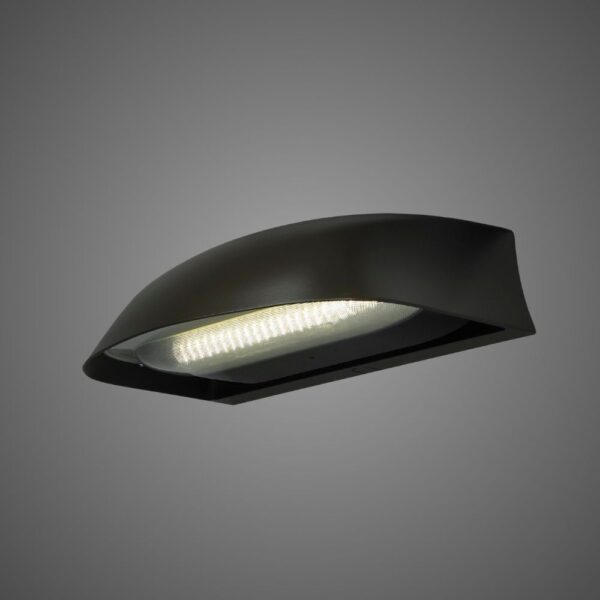



KarbonCobra LED Street Light Series
Select the configuration for your roadway
Compare KarbonCobra LED street light fixtures for municipal, utility and roadway projects. Start with the required illumination, pole geometry, optical distribution and operating plan. Then select the model, wattage, CCT, voltage and control configuration using the current data sheets below.
An energy-efficient LED street light can support lower energy consumption, but energy savings and maintenance costs depend on the baseline, operating hours, tariff and installed system. Request a project comparison rather than applying one percentage to every site.
Review the model, photometry and ownership cost
See the Big Picture: Why TCO Wins?
Total Cost of Ownership includes the LED street light purchase, installation, energy, controls, maintenance and replacement assumptions. A municipality can compare options on the same service basis before choosing a configuration.
Think of comparing two vehicles: the purchase price is only one part of the cost to keep them in service. For an LED street light, use verified watt input and operating hours, then separate energy savings from utility-bill savings. The 20-year TCO guide shows how to document the assumptions.
Inputs for a KarbonCobra ownership-cost review
- Installation and access: Review weight, mast-arm fit, electrical-door access and the required crew and equipment.
- Energy efficiency: Compare the selected LED street light input power with the measured or documented existing system.
- Controls and software: Include hardware, commissioning, connectivity, RenAI subscription and support where specified.
- Maintenance: State inspection, cleaning, service access, component replacement and warranty assumptions.
- Environmental evidence: Assess energy-related emissions using a stated method; a factory certificate is not a product carbon result.
- Project delivery: Confirm configuration availability, lead time and the documents required before ordering.
Compare the same lighting task, study period and service assumptions across the shortlisted options.


Built for Savings—Engineered to Last
A long service life needs more than a single lumen-maintenance number
- Light output: Use the model-specific performance table and matching photometric file, including its tolerance.
- Lifespan: Keep source lumen-maintenance projections separate from driver reliability and complete-system service life.
- Warranty: Current model information identifies a 10-year limited luminaire warranty, with a 5-year limited warranty for motion-sensor configurations and separate controller terms. Review the actual agreement.
- Temperature: Qualified configurations cover −40°C to +50°C; some performance codes are limited to +40°C.
- Durability: Check the complete luminaire and compartment ratings separately, plus the actual vibration, impact and finish evidence.
- Coastal exposure: Select the finish and maintenance plan for the environment; test hours are not a direct prediction of field years.
- Optical choices: Compare Type II, III, IV and V distributions and available shields for the exact model.


DarkSky Approved
For projects requiring DarkSky Approved luminaires, verify the current listing for the exact KarbonCobra model and permitted configuration. Confirm CCT, output, tilt and other conditions before ordering. A family-level recognition should not be applied to every possible option.
Light distribution, shielding and operating schedules help address light spill and light pollution. Product approval and a completed site assessment answer different questions; neither establishes a universal wildlife-safety result. Read the ecological lighting guide for the receiving-habitat review.
Verify the listing and the installed conditions together.

LEOLink Solution Ready
Embedded and external controls serve different configurations
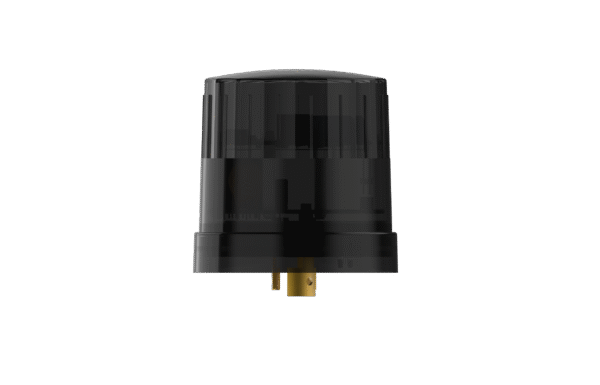
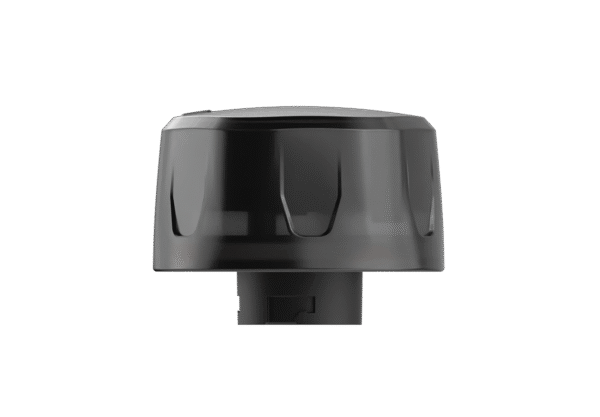
Supported factory configurations can use the embedded LEOLink EB01 with the approved D4i driver interface. EB01 is not an external retrofit node. LEOLink NB01-Plus is a separate external option requiring the wired NEMA 7-pin receptacle, compatible 0–10V driver and supported 110–277V controller supply. A 347–480V luminaire option does not by itself establish node compatibility.
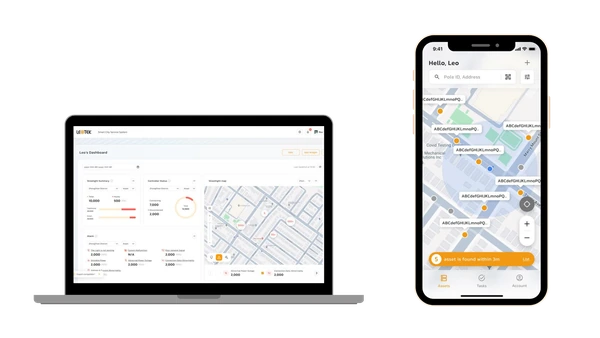
Each controller requires the selected RenAI CMS subscription and network data plan; R00/D00 requires prior approval. Confirm coverage, scheduled operation, command feedback and behavior when communications are unavailable. RenAI and LiSA can support asset-information workflows; verify records before acting on an AI-generated response.
Commission the complete lighting system
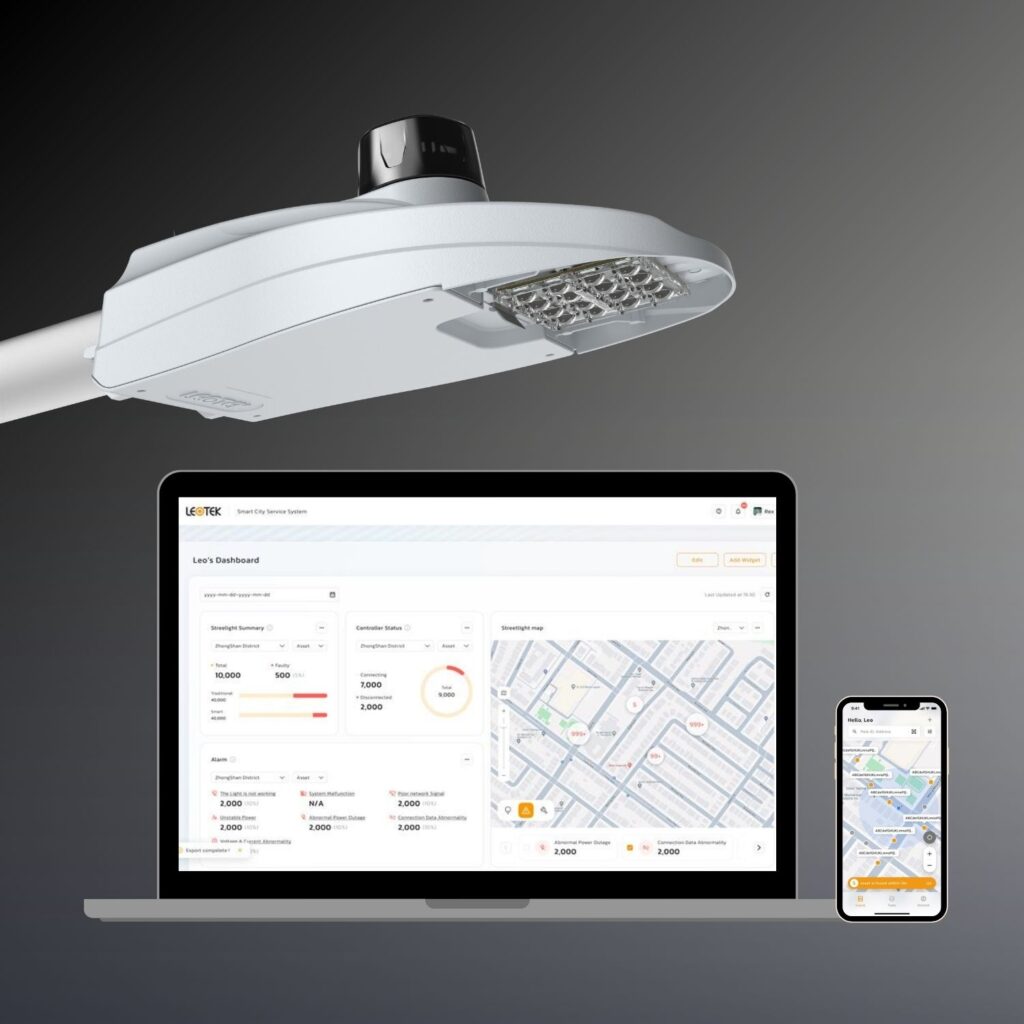
Check the dimmable driver, control interface and actual output response. The PS eight-step Performance Selector uses the standard 0–10V driver and is not compatible with DALI D4i. Review the exact socket and motion-sensor options. The LEOLink solution overview connects hardware selection to the operating workflow.
Define the field response and the data needed before citywide deployment.

KarbonCobra Key Features
Configuration-specific efficiency
Compare measured watt input, lumens and efficacy for the selected model. Project savings depend on the existing system and operating plan.
Service-life review
Review lumen-maintenance evidence, driver reliability and current limited-warranty terms separately. A projection is not a complete-system lifetime guarantee.
Mounting and service access
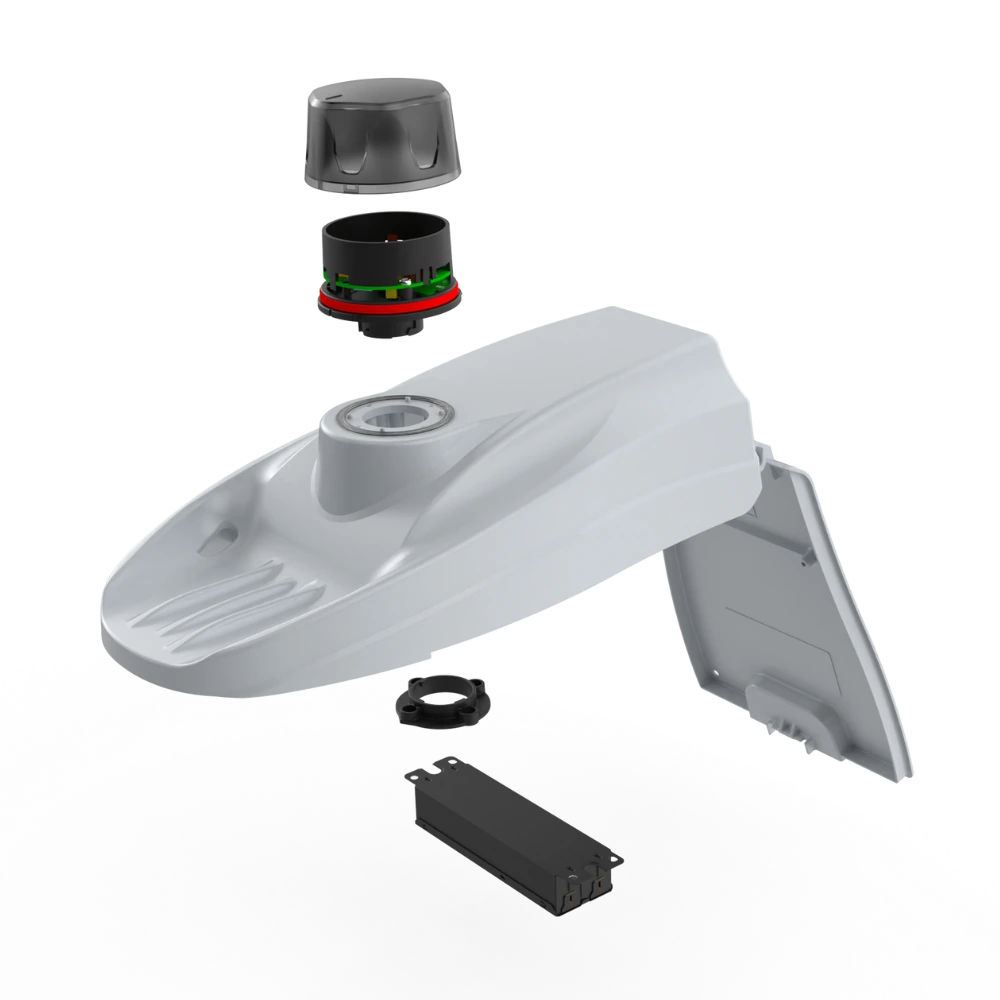
Review mast-arm dimensions, luminaire weight, tool-free electrical-door access and the installation guide. Plan the required crew and equipment.
Defined smart-control options
Select the driver, NEMA or Zhaga interface, controller, data plan and RenAI subscription as a compatible configuration; verify operation in a pilot.
Photo Gallery




“Lighting Made Simple. Management Made Smart.”
Product Details

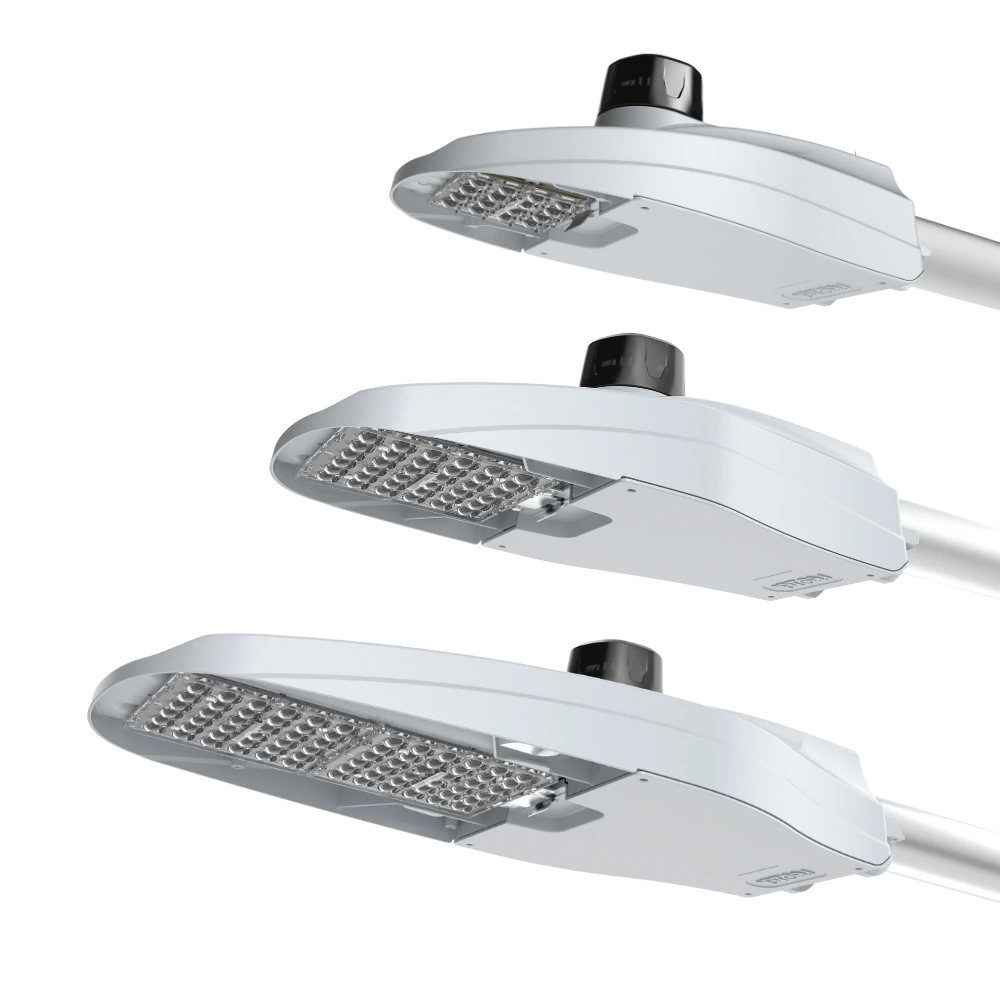
KarbonCobra KC0
- Review use: Residential street and lower-output roadway applications, subject to the lighting calculation.
- Nominal range: Published 70 CRI, Type 2R tables span 1,232–7,964 lumens at 9–57 W across CCT and performance codes; normal tolerance ±10%.
- Weight: 5.9 lb (2.7 kg).
- Selection: Confirm optics, shields, temperature limits, driver and control options in the current data sheet.
The range combines configurations; it is not one field-adjustable operating range for every KC0. Select the matching IES file.
Product detail page

KarbonCobra KC1 / KC1CE
- Review use: Municipal street and general roadway applications, subject to the project calculation.
- KC1 nominal range: Published 70 CRI, Type 2R tables span 2,158–15,735 lumens at 15–105 W across CCT and performance codes; normal tolerance ±10%.
- KC1 weight: 7.7 lb (3.5 kg).
- KC1CE: Review its separate Comfort Enhanced optics and performance documents; do not apply KC1 values automatically.
KC1 D4i / TLR4U / TLR4L options are restricted to the specified MV 120–277V configuration. Confirm the approved order code.
Product detail pages

KarbonCobra KC2 / KC2CE
- Review use: Higher-output roadway applications, subject to geometry, criteria and photometry.
- KC2 nominal range: Published 70 CRI, Type 2R tables span 10,733–28,939 lumens at 74–188 W across CCT and performance codes; normal tolerance ±10%.
- KC2 weight: 10.6 lb (4.8 kg).
- KC2CE: Review its separate Comfort Enhanced performance and optical documents.
A larger luminaire is not automatically the best LED street light for a site. Compare the minimum, uniformity and glare as well as the average.
Product detail pages
Configuration and submittal checks
- CCT and CRI: Check available 2200K, 2700K, 3000K, 4000K and 5000K options and model-specific 70/80 CRI combinations. Color temperature alone does not establish visibility or ecological suitability.
- Optics: Match light distribution, shields and photometric files to the roadway layout.
- Voltage: Confirm the exact supply and driver. 120-277V and 347–480V options do not imply identical control compatibility.
- Mounting: Review the two-bolt slipfitter and nominal mast-arm versus outside-diameter dimensions; use the installation guide.
- Surge protection: Check standard 10kV/5kA and optional 20kV/10kA configurations, including fail-to-on versus fail-to-off behavior.
- Ingress: The optical system and power supply are IP66 rated. Complete-luminaire IP54 requires the specified option. Do not substitute a generic IP65 claim.
- Mechanical evidence: Confirm vibration and IK10 impact scope for the tested assembly.
- Environment: Check temperature limits, coastal finish and maintenance access.
- Controls: Match adjustable output, photocell, motion sensor and network options to the selected driver.
- Compliance: Verify current safety listings, DLC program records, domestic-content requirements and the exact configuration. A logo does not resolve order-code differences.
- Warranty: Retain the applicable luminaire, sensor and controller terms in the project record.
Contact LEOTEK Today
LED street light frequently asked questions
What evidence supports a high-performance LED street light claim?
Match the measured watt input, light output and distribution to the lighting needs of the project. For LED streetlights replacing traditional street lighting such as high-pressure sodium, compare the complete baseline and proposed operating state. Consistent light on the task and the required field verification matter more than an adjective.
How do I select an LED street light wattage?
Use the required light levels, pole height, spacing, road width, optical distribution and maintained basis. Wattage describes power input, while lumens describe light output. Neither alone establishes illumination or visibility for drivers and pedestrians. Compare the exact IES file in the project calculation.
Can a 150W metal halide street light be replaced watt for watt?
Do not make a watt-for-watt substitution. An LED roadway light can use directional light differently from traditional lighting. Document the existing lamp plus ballast power, then compare the proposed distribution, maintained levels and operating hours. Switching to LED does not establish a fixed saving for every site.
Does KarbonCobra include a dusk to dawn photocell?
Specify the selected photocell or controller and verify the ordered configuration. A wired controls-ready receptacle, a simple dusk to dawn photocell and a networked controller have different functions. Confirm supply, driver compatibility and the approved operating sequence before ordering.
Are these LED parking lot lights for all commercial properties?
Evaluate streets and parking lots as distinct applications. Parking lot lights may need different distributions, poles, glare limits and pedestrian coverage. When comparing LED parking lot lights for parking lots or public spaces, ask whether the selected KarbonCobra configuration meets the actual site calculation or whether a different area-lighting product is appropriate.
Does an LED street light guarantee reduced maintenance costs and a long lifespan?
No single claim establishes the result. Review service access, driver and control reliability, cleaning, replacement assumptions and limited-warranty terms. Long-lasting LEDs are one part of a complete assembly. Maintenance costs and useful service life depend on the installed system and operating environment.
How should brightness, energy efficiency and light pollution be compared?
Select an energy-efficient configuration that meets the defined visual task. The brightest LED street light is not automatically the most suitable. Review glare, uniformity, light spill and the operating schedule. An LED light can illuminate the task with less power in a suitable design, but confirm the actual baseline and calculated result.
How do I request LED street lights for sale, pricing or a rebate review?
Send the quantity, delivery location, proposed order code, voltage, optics, CCT, mounting options, controls and required documents. LEOTEK can review LED street light options for the defined scope. Confirm current rebate eligibility with the utility or program administrator before including an incentive in the cost model.
Does LED technology make every option environmentally harmless?
No. An environmentally informed review considers energy, materials, habitat exposure, maintenance and end of life. A safety listing or materials declaration does not establish every environmental outcome. Avoid turning a general LED technology benefit into a guarantee for all outdoor environments.
Selection summary
Choose the LED street light configuration that meets the roadway task, then verify its photometry, ratings, controls and ownership-cost assumptions. Keep the approved records with commissioning and maintenance responsibilities.
Further reading
Uniformity and layout review · Ownership-cost model · Certification evidence
Request a configuration review: Share the site, quantity and document requirements with LEOTEK.


