






Interested in the topics we write about? Add us to your preferred feed now to get the latest, most up-to-date information!
How LEOTEK, Visual Impact Lighting and the City of Madison are creating a more efficient, dependable and visually comfortable nighttime environment
Streetlights are easy to overlook when they are working properly. They quietly illuminate intersections, guide drivers through changing road conditions and help pedestrians and cyclists navigate the city after dark.
But for the people responsible for maintaining a municipal lighting network, every streetlight represents a long-term operational commitment. Energy use, fixture reliability, maintenance access, optical performance and community comfort must all be considered—not for one street, but across an entire city.
That was the larger challenge facing Madison, Wisconsin, as the city began replacing outdated, less-efficient streetlights with modern LED technology.
The goal was not simply to install brighter lights. Madison wanted a lighting system that would consume less energy, reduce operating costs, improve illumination and provide dependable service for residents over many years.
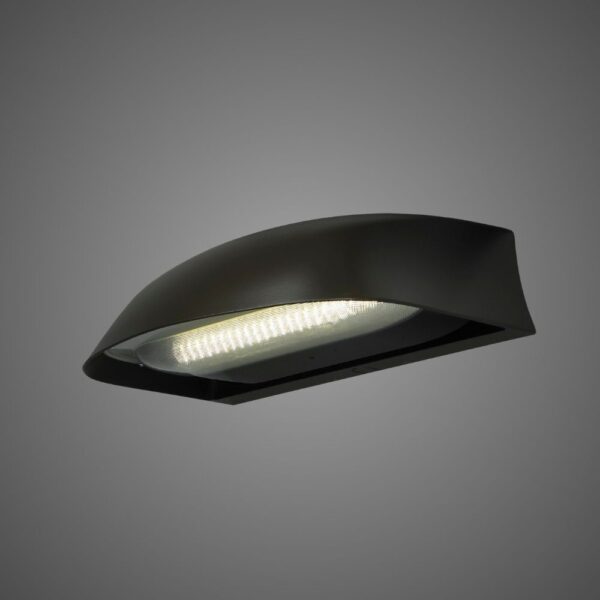
Within this broader modernization effort, Madison deployed three LEOTEK roadway-lighting solutions: GreenCobra®, KarbonCobra™ and ComfortView™. Together, these products provided the flexibility to address different roadway, neighborhood and site-lighting conditions while maintaining a consistent focus on reliability and long-term performance.
Project at a Glance
| Category | Project Details |
|---|---|
| Location | Madison, Wisconsin |
| Application | Municipal roadway, neighborhood and general site lighting |
| LEOTEK solutions | GreenCobra®, KarbonCobra™ and ComfortView™ |
| Local representative | Scott Zagrodnik, Visual Impact Lighting |
| Primary objectives | Energy efficiency, dependable performance, flexible light output, improved illumination and visual comfort |
| Citywide energy-cost goal | More than $390,000 in estimated annual electricity savings |
| Sustainability objective | Reduce energy consumption and greenhouse-gas emissions |
| Project status | Madison reported completion of its latest LED installation phase in June 2025 |
A Citywide Transition to LED Lighting
Madison’s streetlighting transition forms part of the city’s Green and Resilient program, an initiative focused on improving efficiency and reducing environmental impact.
The city identified incandescent, mercury-vapor and high-pressure-sodium streetlights as older technologies that required more electricity and more frequent maintenance than modern LED fixtures. Madison’s objective is ultimately to convert all of its streetlights to LED technology, beginning with city-owned circuits and extending into additional residential areas as budgets and resources permit.
A federally funded installation phase began in March 2025, and the city reported that the new LED installations included in that phase were complete by June 2025.
According to the City of Madison LED Conversion Project, the transition is estimated to save more than $390,000 annually in electricity costs while also reducing greenhouse-gas emissions.
The city also expects LED streetlights to deliver a service life of more than 10 years, compared with approximately three years for incandescent fixtures. Longer service life can extend the interval between maintenance visits, allowing municipal resources to be directed toward other infrastructure priorities.
However, energy efficiency and service life were only part of the story. Madison also wanted to preserve a pleasant nighttime environment. The city continued specifying full-cutoff fixtures and warm color temperatures to avoid the harsh, blue-white appearance sometimes associated with early LED streetlighting projects.
This required more than a single fixture. It required a portfolio capable of responding to different streets, lighting levels and community settings.
Three Solutions for Different Urban Environments
Madison’s use of GreenCobra, KarbonCobra and ComfortView reflects a practical approach to municipal lighting: different environments require different combinations of output, distribution, size and visual comfort.
GreenCobra: Proven Roadway Performance
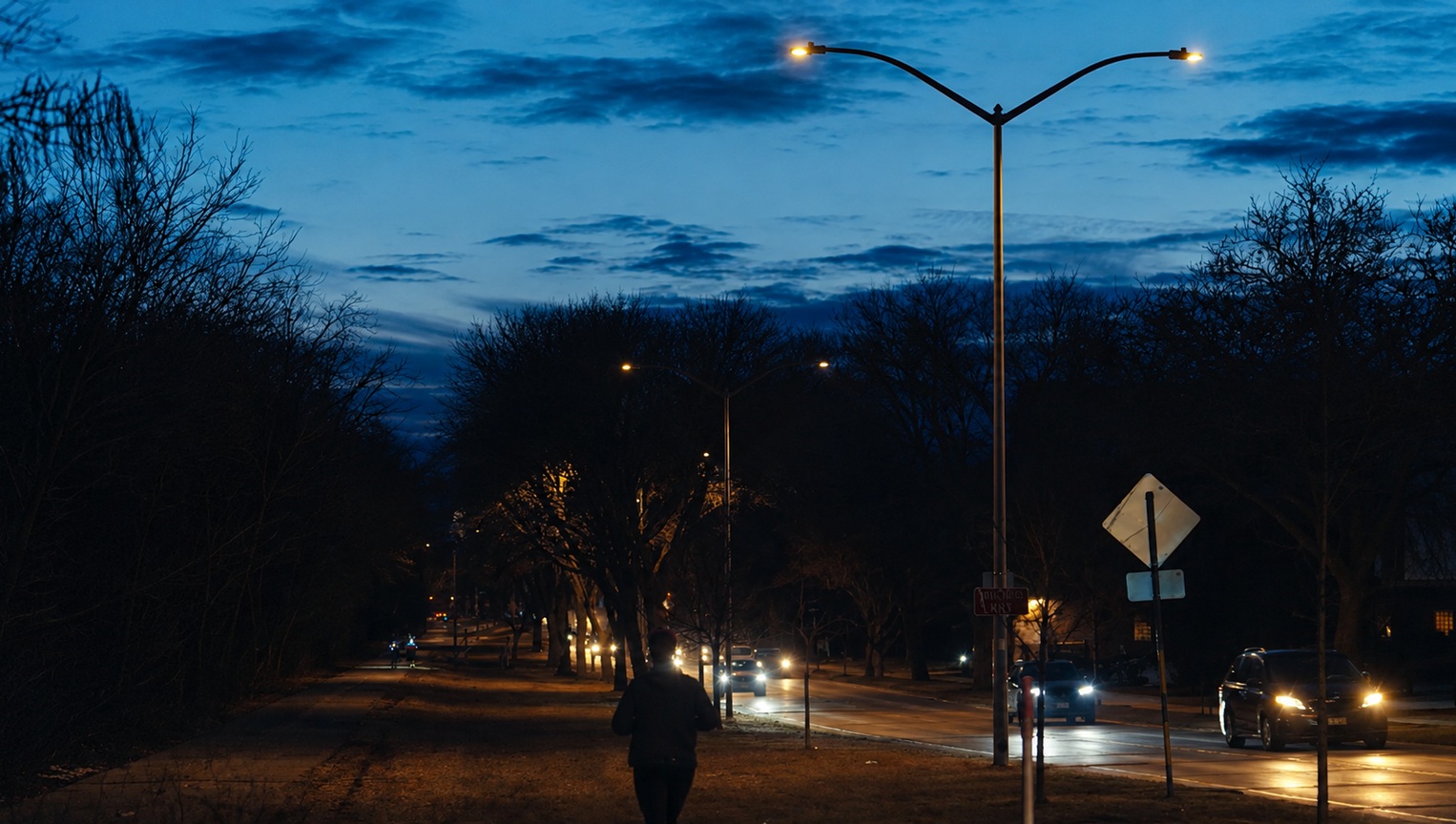
GreenCobra provides the dependable optical performance required for demanding roadway applications. Its available light distributions and output configurations allow project teams to match illumination more closely to the geometry and operating conditions of each street.
For Madison, GreenCobra also brought something equally important: a record of reliable field performance.
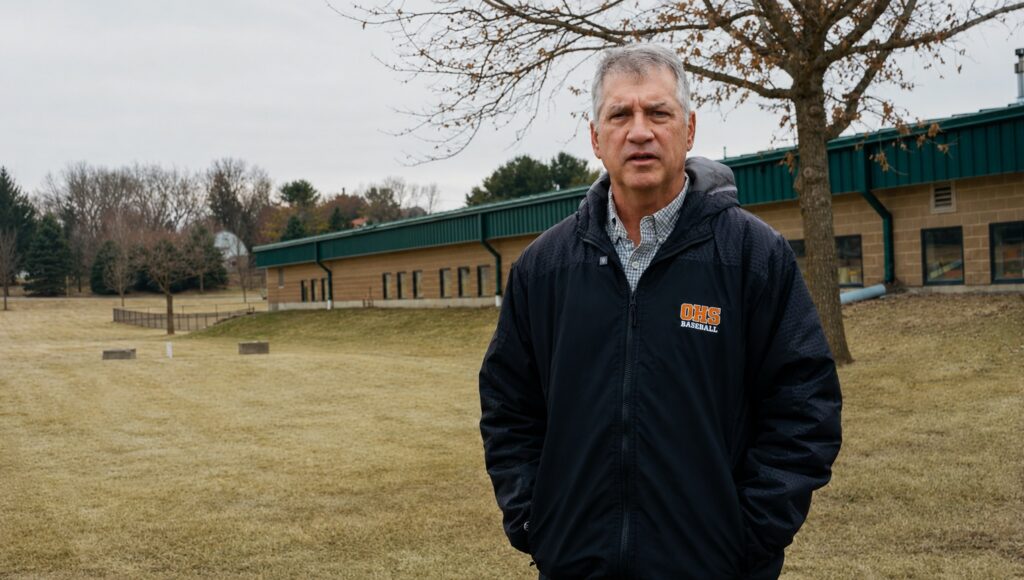
Scott Zagrodnik, Sales Manager at Visual Impact Lighting and LEOTEK’s representative for Wisconsin, has worked with LEOTEK for approximately 10–15 years. His experience with the company gave him confidence that the GreenCobra fixtures would provide the longevity and dependability Madison required.
“Ever since they’ve been installed, the GreenCobra has been reliable—and that’s what you want for a cityscape,” Scott explained in the Madison project interview.
For a municipality, reliability is more than a product specification. A failed fixture can generate a resident complaint, require a maintenance crew and temporarily affect the experience of an intersection, roadway or neighborhood. Reliable operation helps protect the city’s investment long after installation is complete.
KarbonCobra: Flexible Performance in a Compact Form
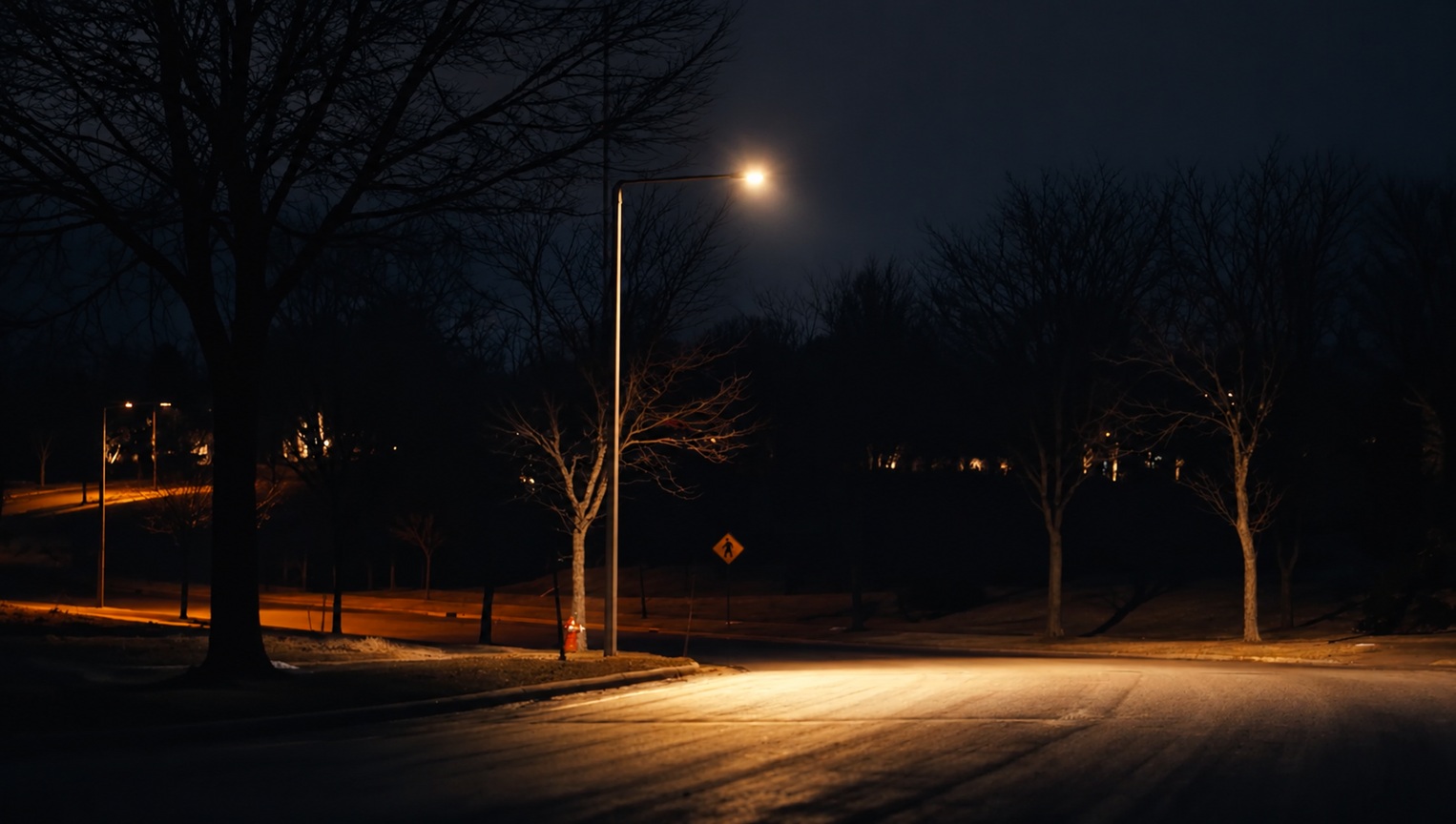
KarbonCobra adds a compact, lightweight option to the city’s lighting portfolio. Its range of optical distributions and performance configurations gives designers flexibility when addressing different road classifications and installation requirements.
This flexibility matters because municipal lighting is rarely uniform. A major roadway does not require the same output as a local street, and a residential intersection does not have the same lighting needs as a broad commercial corridor.
Scott highlighted lighting distribution and wattage control as two of the most valuable LEOTEK capabilities. The ability to select more or less light according to the application helps the project team avoid a one-output-fits-all approach.
Instead, each fixture can be better matched to its surroundings—delivering light where it is needed while helping limit unnecessary output, energy consumption and glare.
ComfortView: Lighting Designed Around People
Roadway lighting must support visibility, but it also influences how residents experience their neighborhoods after dark.
Excessive brightness or poorly controlled glare can make an efficient lighting system uncomfortable. Light can spill toward nearby homes, create distracting contrast or make a street feel visually harsh even when technical illumination targets are being met.
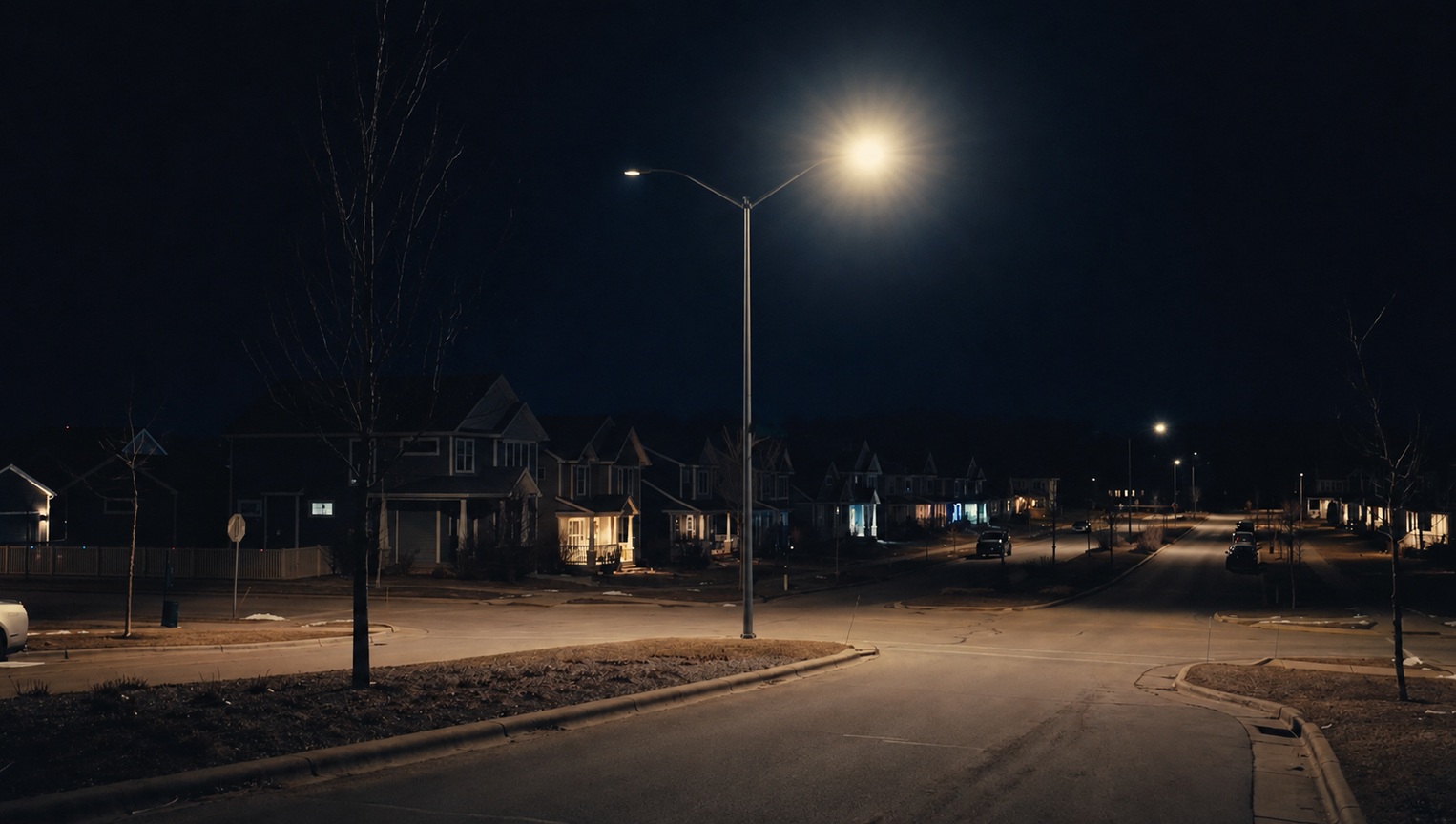
ComfortView places greater emphasis on visual comfort through controlled distribution and reduced glare. This makes it particularly relevant for neighborhood and residential applications, where roadway visibility must be balanced with the experience of pedestrians, residents and nearby properties.
Its role aligns with Madison’s stated preference for warm-color, full-cutoff LED lighting that maintains a softer and more pleasant nighttime appearance.
Together, GreenCobra, KarbonCobra and ComfortView gave Madison access to a coordinated family of solutions rather than forcing every application into a single fixture configuration.
Reliability Begins Before Installation
One of the most compelling parts of Madison’s story happens before a fixture ever reaches a city street.
According to Scott, LEOTEK operates fixtures for two hours at the factory before they are shipped. This burn-in process is intended to identify potential early-life issues before the product leaves the manufacturing facility.
Electronic components are most vulnerable to certain failures during their earliest operating period. Testing fixtures before shipment gives the factory an opportunity to identify and address those issues before the products arrive at the distributor, contractor or installation site.
For a manufacturer’s representative, this additional quality-control step reduces uncertainty. For the city, it provides greater confidence that fixtures arriving on the project have already completed an initial period of operation.
It is a relatively brief step in the manufacturing process, but it can have an important influence on the experience of everyone downstream—from the representative coordinating the project to the crews installing the fixtures and the city personnel responsible for maintaining them.
As Scott explained, much of the concern surrounding an early fixture failure can be addressed before the product leaves the factory.
That is what makes factory quality control part of the larger case-study story. Reliability is not created only through product design. It is supported through the processes used to test, verify and deliver the finished fixture.
A Partnership Developed Over Time
Successful municipal lighting projects depend on more than products alone.
Cities need manufacturers and representatives who understand local applications, respond when questions arise and remain available throughout the life of the project. Specifications may change, roadway conditions can vary, and different areas of a city can require different optical or output configurations.
Scott’s 10–15 years of experience working with LEOTEK brought continuity to the Madison project. That history allowed product recommendations to be based on field experience rather than specifications alone.
For Scott, LEOTEK has been a straightforward and dependable company to work with. For Madison, that relationship provided access to both a broad product portfolio and local expertise capable of connecting individual fixture capabilities with real municipal applications.
This combination—local representation supported by manufacturer engineering, product selection and quality control—helped turn the lighting upgrade into a long-term infrastructure partnership.
The Result: Confidence Beyond the Initial Installation
Madison’s LED transition is expected to produce significant environmental and financial value. The city estimates more than $390,000 in annual electricity-cost savings, along with lower energy consumption, reduced greenhouse-gas emissions and longer intervals between fixture replacement.
LEOTEK’s contribution adds another dimension to those citywide objectives: confidence in how the lighting will perform after installation.
GreenCobra’s reliability in the field provides an important qualitative result. KarbonCobra expands the range of available performance and distribution options. ComfortView helps the city address lighting quality and visual comfort in more sensitive community settings.
The result is not simply a collection of new luminaires. It is a more adaptable lighting foundation—one designed to help Madison balance efficiency, visibility, operational reliability and the nighttime experience of its residents.
More Than a Fixture Replacement
Madison’s experience demonstrates that a successful LED conversion is not defined only by how much energy a fixture saves.
The real value comes from bringing several priorities together:
- Selecting the right light distribution for each roadway
- Matching wattage and output to actual application requirements
- Maintaining warm, visually comfortable illumination
- Reducing long-term maintenance demands
- Verifying product quality before shipment
- Supporting the installation through an experienced local representative
- Building a manufacturer relationship that continues after the fixtures are installed
When these elements work together, a lighting upgrade becomes more than a replacement project. It becomes an investment in how the city operates and how the community experiences its streets after dark.
For Madison, the transition to LEOTEK’s GreenCobra, KarbonCobra and ComfortView solutions represents a practical step toward more efficient, dependable and community-conscious infrastructure.
For LEOTEK and Visual Impact Lighting, it represents the continuation of a partnership built around an uncomplicated but essential promise: provide the right light, deliver it reliably and stand behind it for the road ahead.
Building the Next Generation of Municipal Lighting
As Madison continues advancing its LED-lighting strategy, the city has established a foundation that can adapt to future roadway and neighborhood requirements.
Its experience offers a useful lesson for other municipalities: long-term lighting performance begins with thoughtful product selection, but it depends equally on manufacturing quality, application support and trusted local relationships.
The best streetlighting infrastructure does not call attention to itself. It simply performs—night after night, street after street.
That is the outcome Madison is working toward, and it is the standard LEOTEK is helping the city deliver.