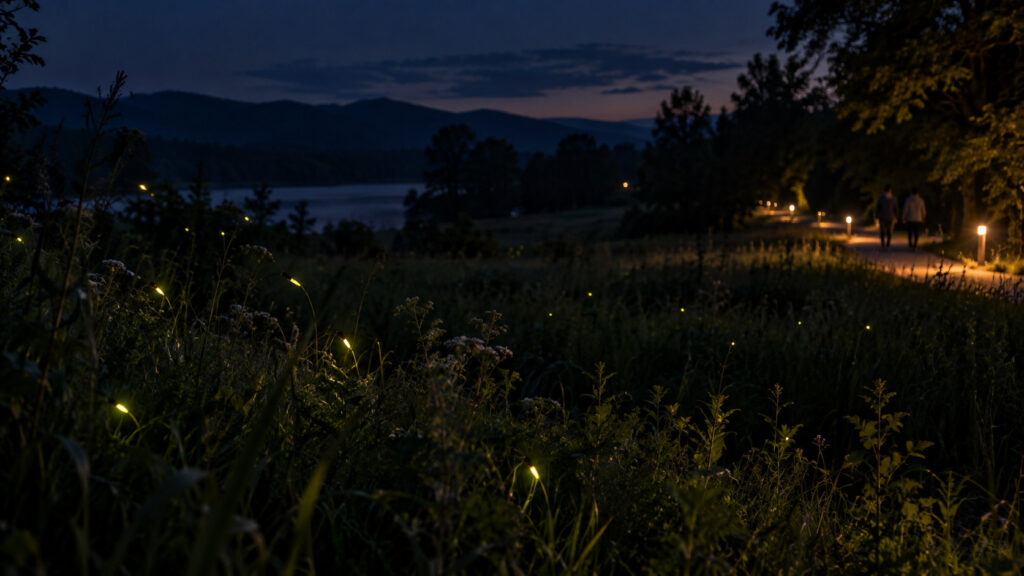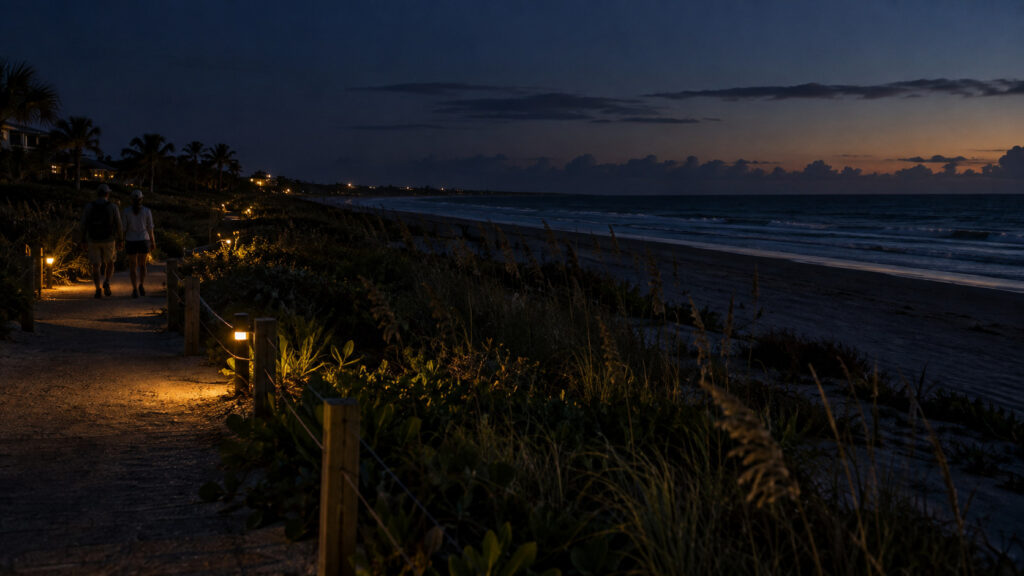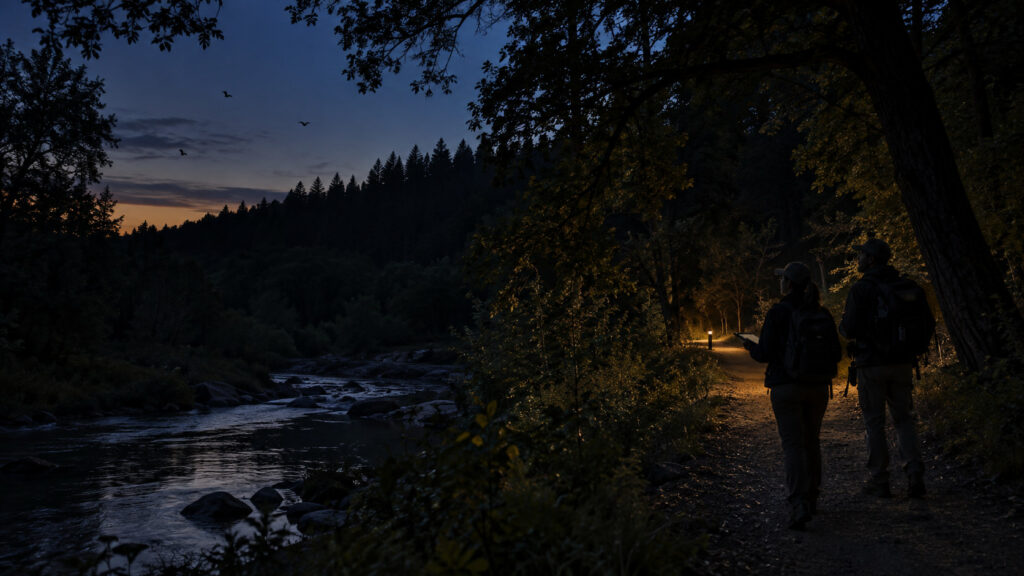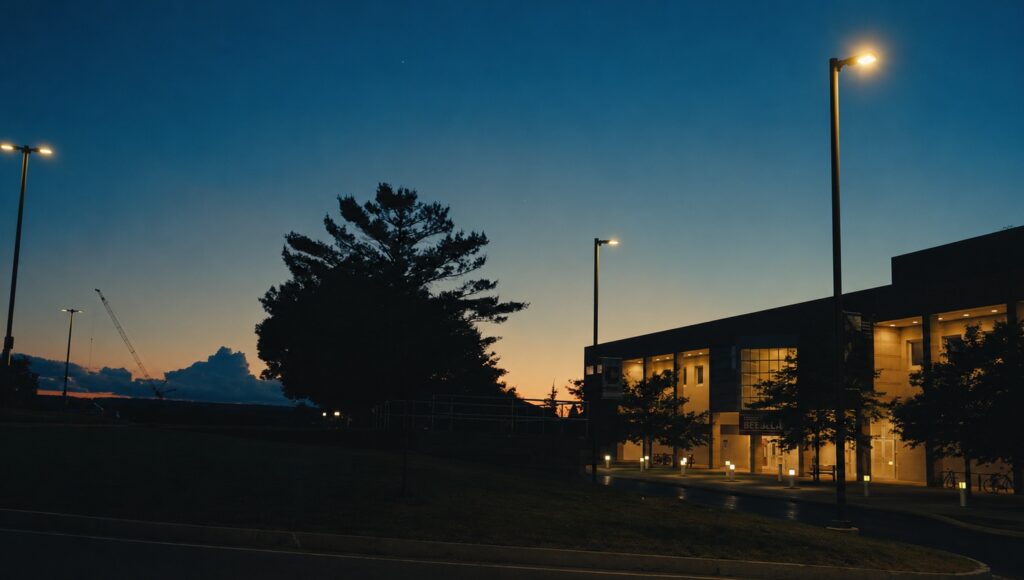

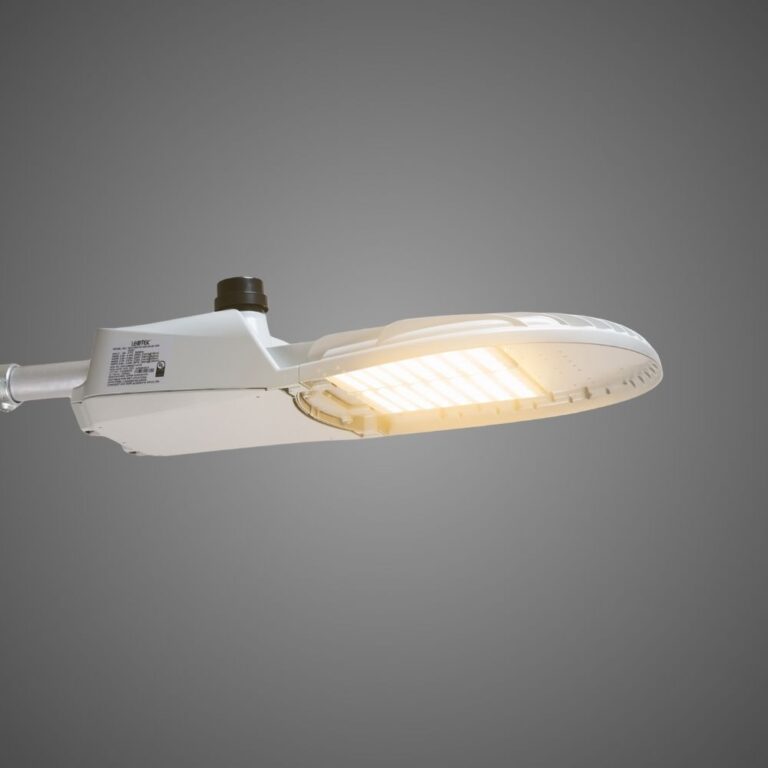
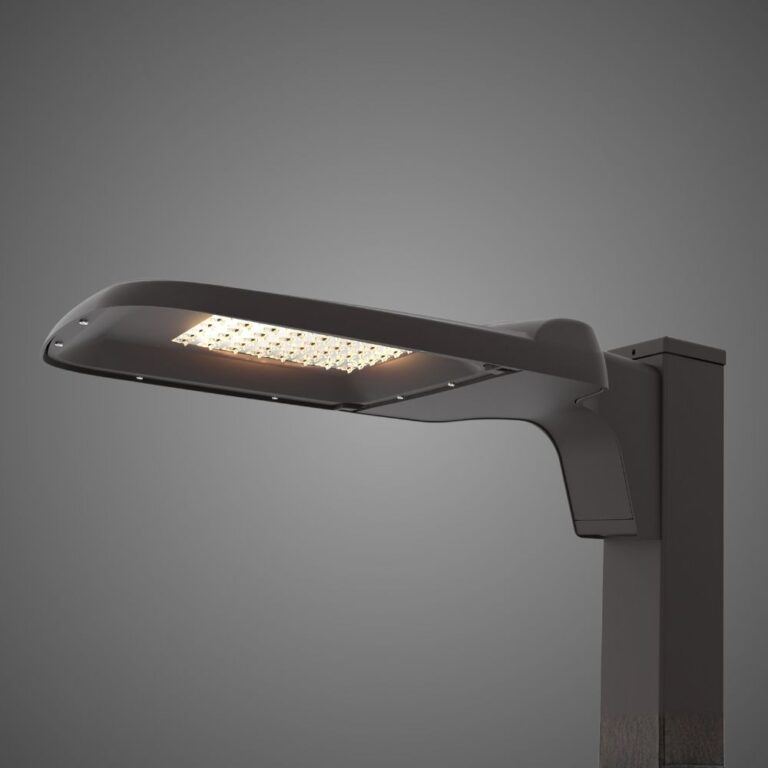
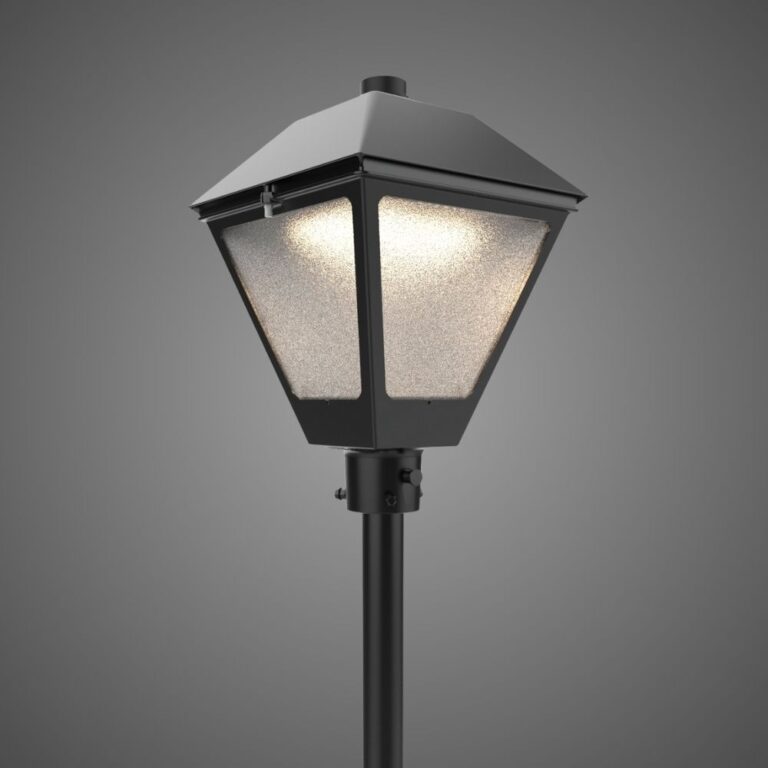

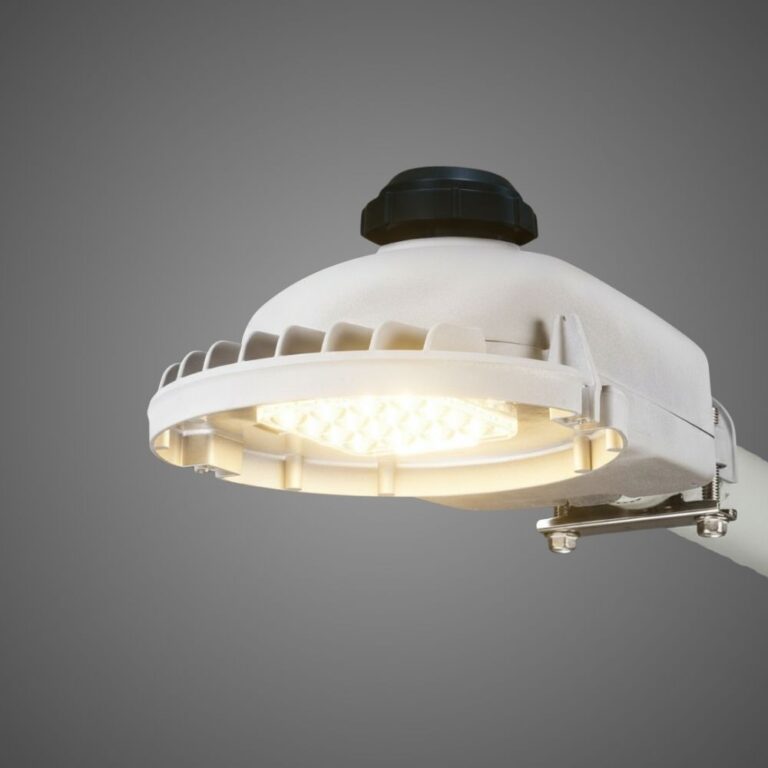
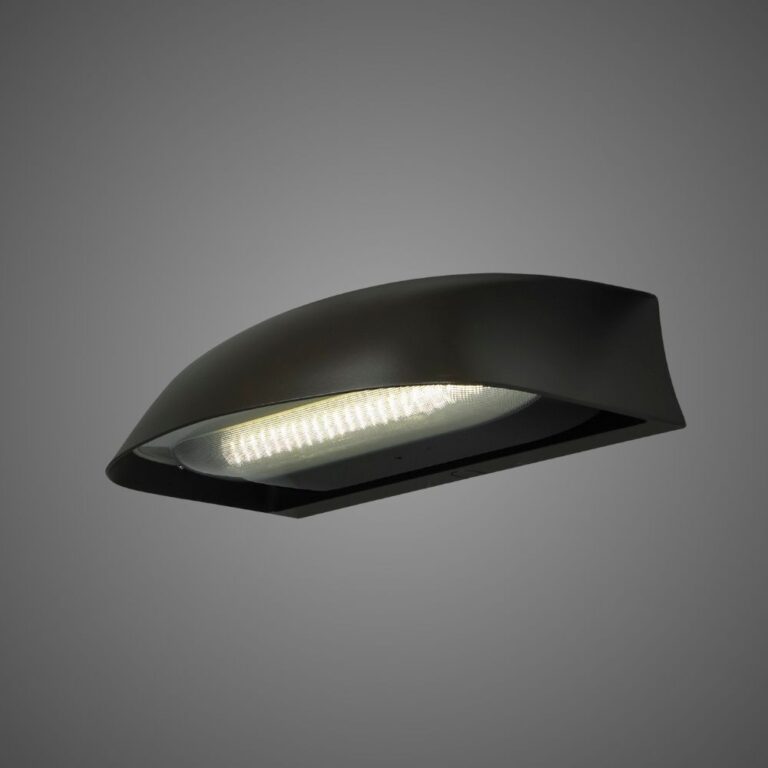

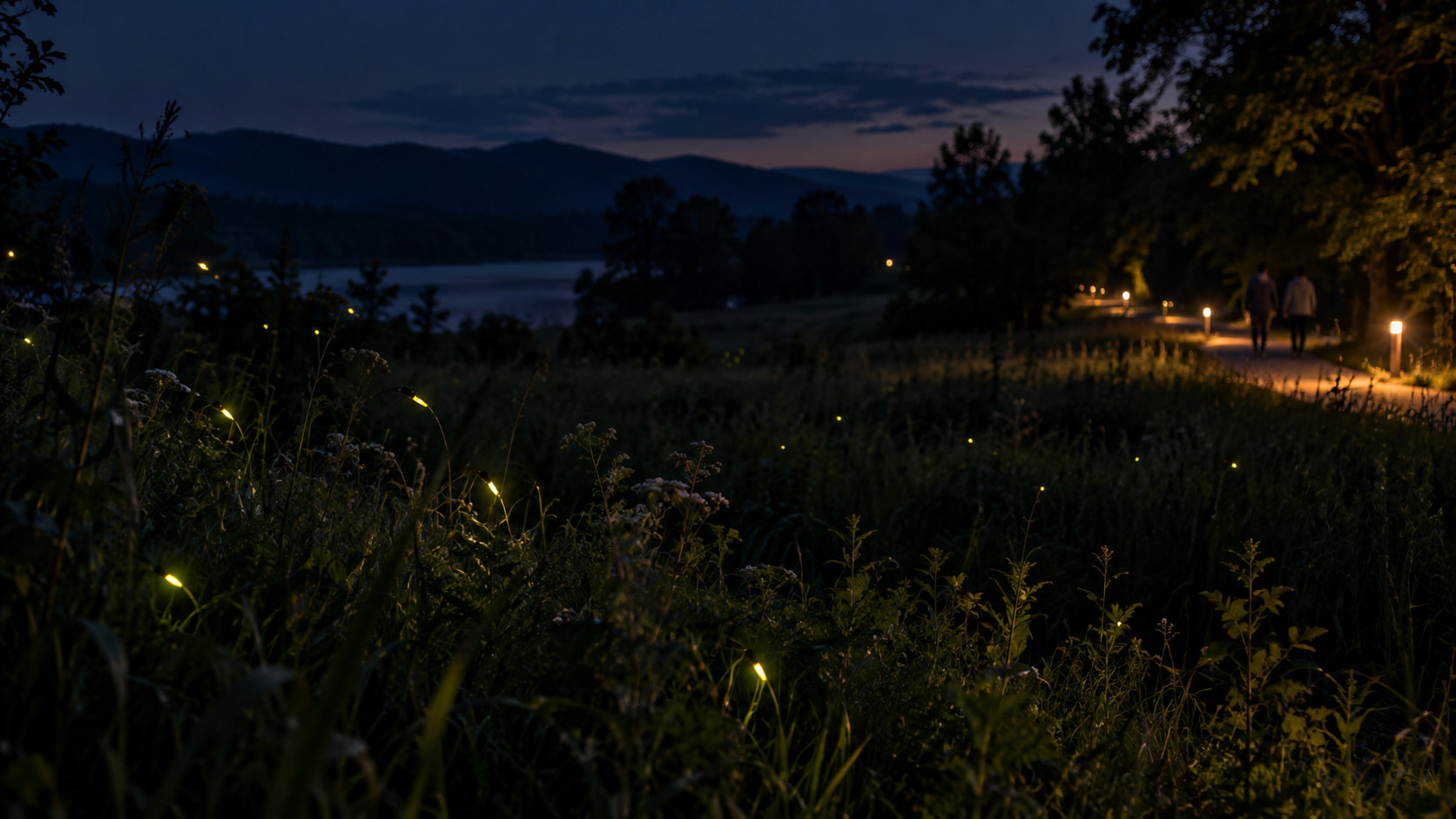
Firefly-friendly lighting for public infrastructure starts by limiting unnecessary nighttime light near confirmed habitat, aiming necessary light only at the task area, using no more light than the task requires, and controlling it by time. Spectrum, curfew, and buffer decisions need to reflect the local firefly species, site conditions, and roadway or public-space requirements.
This is not a universal fixture recipe. A road, trail, park, or bridge approach may have legitimate visibility, operations, and code requirements. The practical goal is to make those requirements explicit, then reduce unnecessary illumination and spill near habitat rather than treating every nighttime area the same.
Key takeaways
- Treat firefly habitat as a site-assessment question before selecting equipment or setting a schedule.
- Use shielding and aiming to keep light on the intended task area and out of adjacent vegetation, water edges, and dark corridors.
- Consider lower blue-violet content as one design variable, not a guarantee of ecological suitability.
- Use dimming, schedules, or curfews only where the task and local requirements allow.
- Document the design assumptions, operating logic, and seasonal review process so the agency can revisit them.
Why firefly communication changes the lighting question
Many fireflies and glow-worms use bioluminescent signals in courtship. That makes artificial light at night more than an aesthetic issue: it can alter the visual setting in which those signals are detected. A review of firefly conservation threats identifies habitat loss, light pollution, and pesticide use as prominent concerns, while also emphasizing that vulnerability varies among species and places (Lewis et al., 2020). A broader review of nocturnal insects likewise identifies multiple pathways through which artificial light at night can affect insects and flags the special vulnerability of light-based communication (Owens and Lewis, 2018).
The evidence is important, but it does not authorize broad claims. A study of the European glow-worm Lampyris noctiluca found that low levels of light pollution may block males' ability to locate females (Bird and Parker, 2014). That result supports careful planning around visual communication; it does not establish a safe threshold for every U.S. firefly, roadway, or luminaire.
For agencies, this distinction matters. Lighting should be evaluated alongside habitat quality, vegetation, hydrology, seasonal activity, maintenance practices, and other stressors. A lighting project alone is not a firefly conservation plan, but it can avoid adding avoidable nighttime disturbance.
Start with a site and habitat assessment
Identify the habitat relationship before selecting equipment
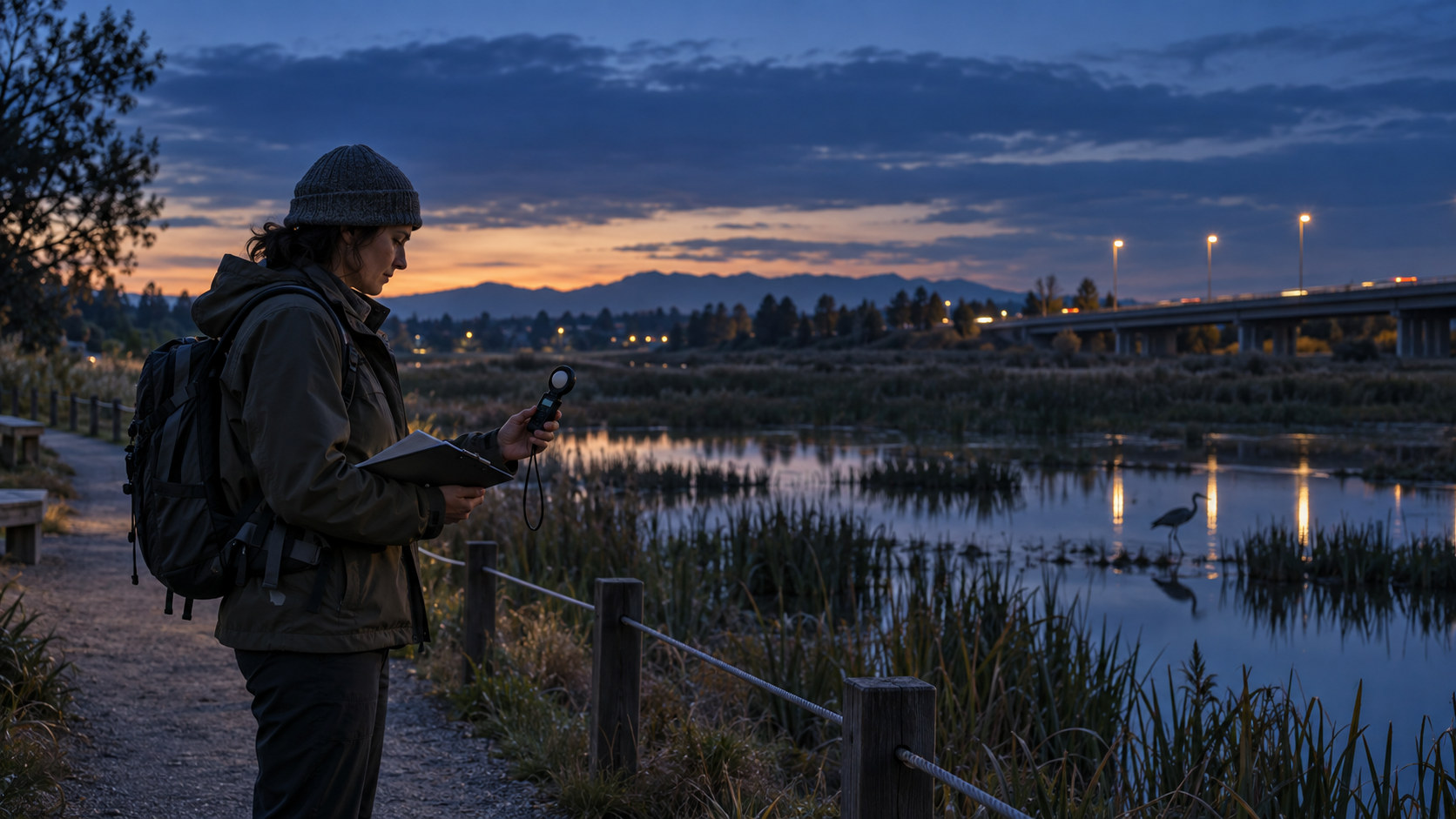
Begin with a map, not a catalog. Mark existing and proposed luminaires, the areas people or vehicles must use at night, water and wetland edges, vegetated margins, known observations, and the locations where light could spill beyond the intended task area. A local ecologist or qualified firefly specialist can help identify the species, seasonal activity period, and habitat relationship that matter at that site.
This early work prevents a common mistake: choosing a color temperature first and treating the habitat assessment as an afterthought. A site may require a different approach at a trailhead, parking edge, bridge approach, or habitat-adjacent road segment. The project team should record what is known, what is uncertain, and who is responsible for resolving each question.
Separate the lighting task from ambient spill light
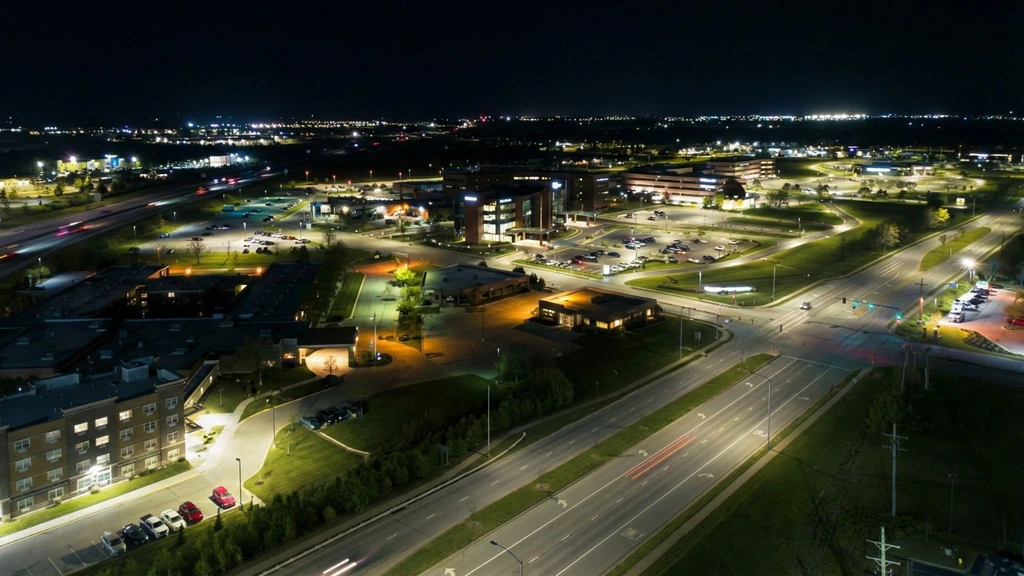
Every proposed luminaire should have a stated purpose: a pedestrian crossing, a maintenance activity, a roadway conflict area, or another defined task. Then ask what light reaches beyond that task. Light spilling into an undeveloped edge, waterway, or vegetation may be unrelated to the stated purpose even when the fixture itself is necessary.
This approach does not substitute for engineering. The agency and qualified lighting designer must evaluate photometry, operations, applicable standards, accessibility, and jurisdictional requirements. It does provide a disciplined way to avoid treating ambient brightness as an automatic project objective.
Apply four lighting strategies near firefly habitat
Aim and shield required light so the task area receives it, not the habitat edge.
Use no more output than the documented task requires.
Review source characteristics with ecology and site guidance; color alone is not a guarantee.
Use dimming, schedules or curfews where the actual operation allows.
Coordinate these controls with a site-specific habitat assessment and verify the installed condition.
Direct light where it is needed
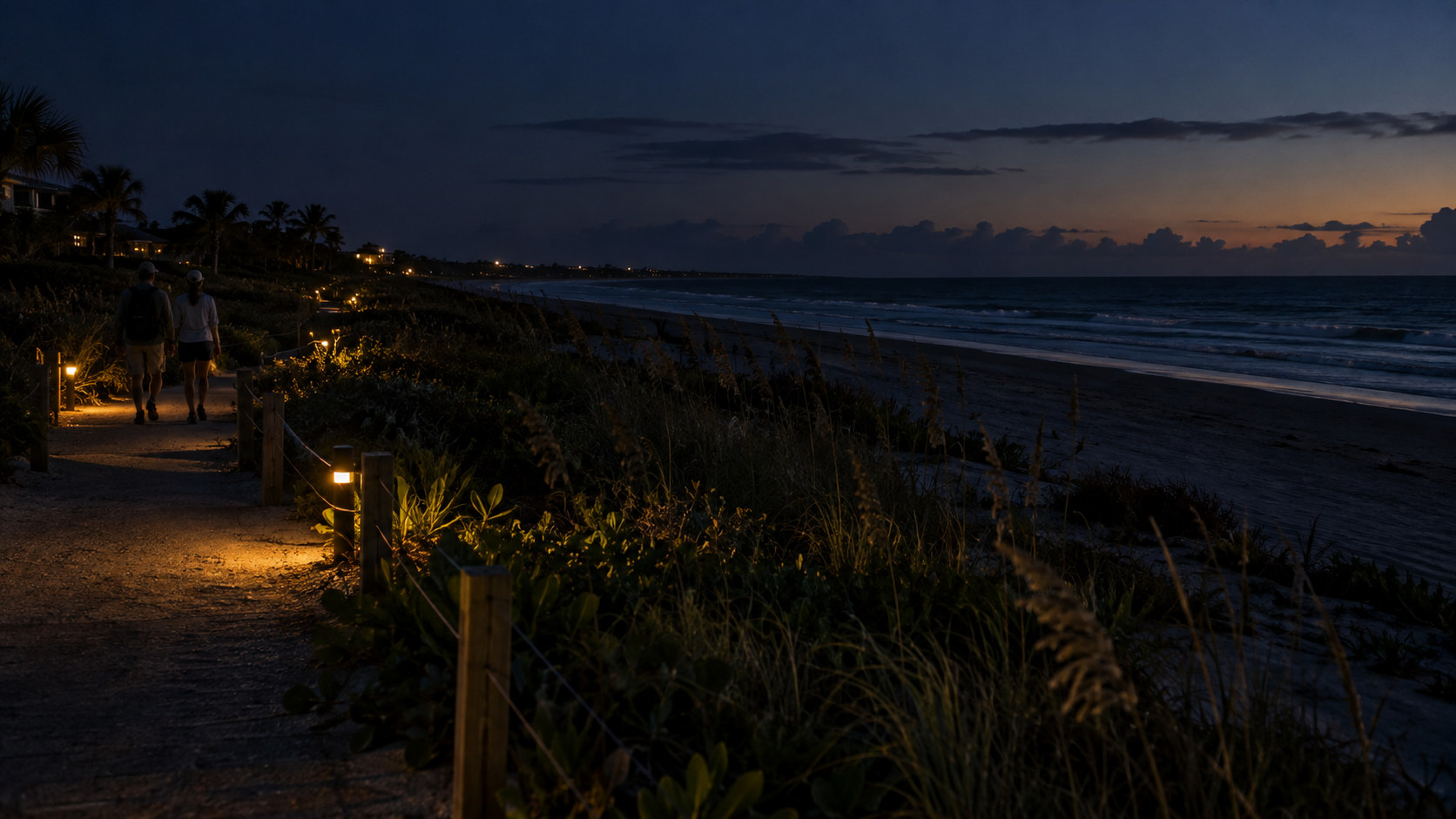
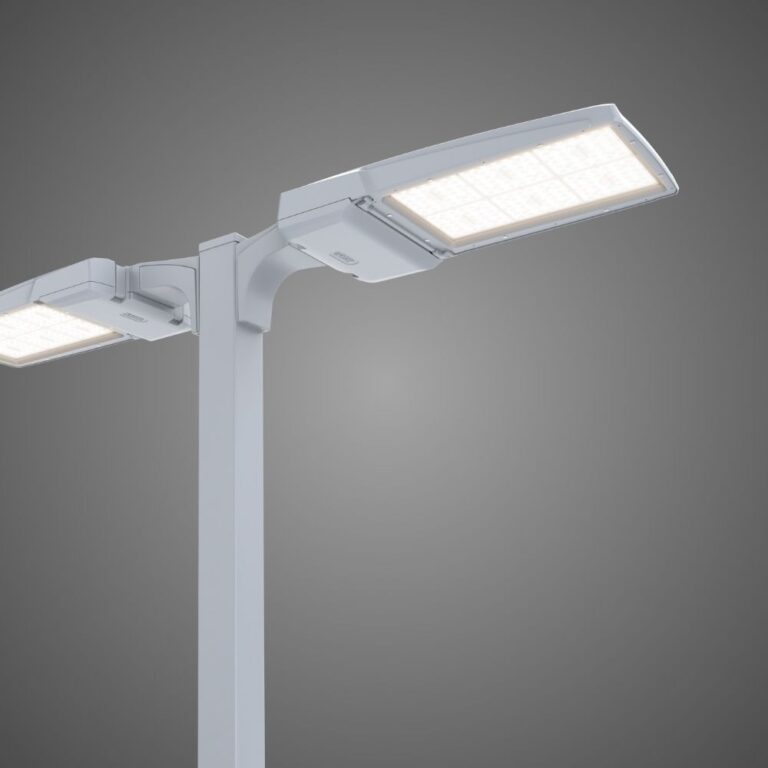
Shielding and careful aiming can keep the beam on the intended surface rather than sending it laterally toward habitat. The DarkSky and Illuminating Engineering Society framework describes responsible lighting as useful, targeted, low-level, controlled, and warm-colored; it specifically recommends directing light only where it is needed (Five Principles for Responsible Outdoor Lighting).
For a project team, “targeted” should be a review question: Where does the light go at the property edge, below the fixture, and from the viewpoint of the habitat? The answer should be shown in the lighting calculation and verified after installation, not assumed from a fixture label.
Keep levels no higher than the task requires
More light is not automatically better light. Define the nighttime task, evaluate the surface and surrounding conditions, and select the lowest level that meets the approved design criteria. Do not publish or reuse a single illuminance level as a firefly-safe target; the research brief does not support one.
This is also where agencies can connect an ecological objective to normal design discipline. A clear task definition, documented calculations, and commissioning checks make it easier to identify overlighting or unnecessary spill without making an unsupported claim about safety or wildlife outcomes.
Manage spectrum as one variable, not a guarantee
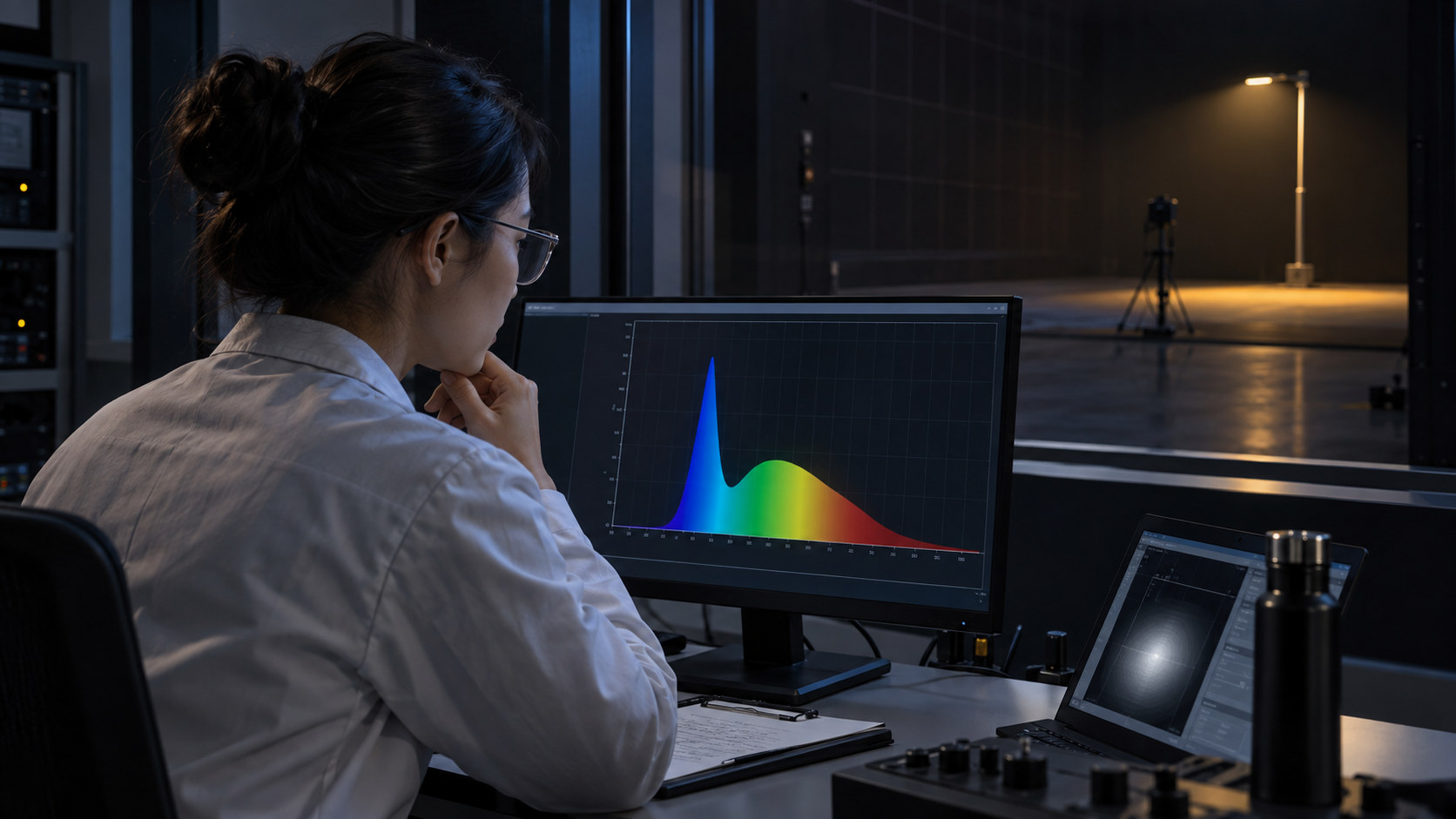
Low-blue outdoor lighting can be part of ecological lighting for fireflies because the responsible-lighting framework calls for limiting shorter-wavelength blue-violet light to the least amount needed. But spectrum is only one part of the exposure. Direction, intensity, duration, timing, background brightness, and local species all matter.
Correlated color temperature (CCT) is not a full spectral description. Readers who need that distinction can review Kelvin values in lighting, but no CCT alone proves firefly suitability, visual comfort, or a conservation outcome. Ask for the spectral information relevant to the project, then assess it with the other design variables.
Use dimming, schedules, and curfews when the task allows
Controls can align illumination with real operating needs. For example, a site may be able to reduce output after an activity period, use a schedule during a defined season, or turn off lighting that serves no nighttime task. The correct choice depends on the site, not a generic curfew.
The operating logic should be clear enough for facilities staff to maintain: who can change it, what triggers an override, and how seasonal changes are reviewed. Controls are not proof of an ecological result, but they can reduce the duration of unnecessary light when they are properly planned and maintained.
Plan buffers and transitions around habitat
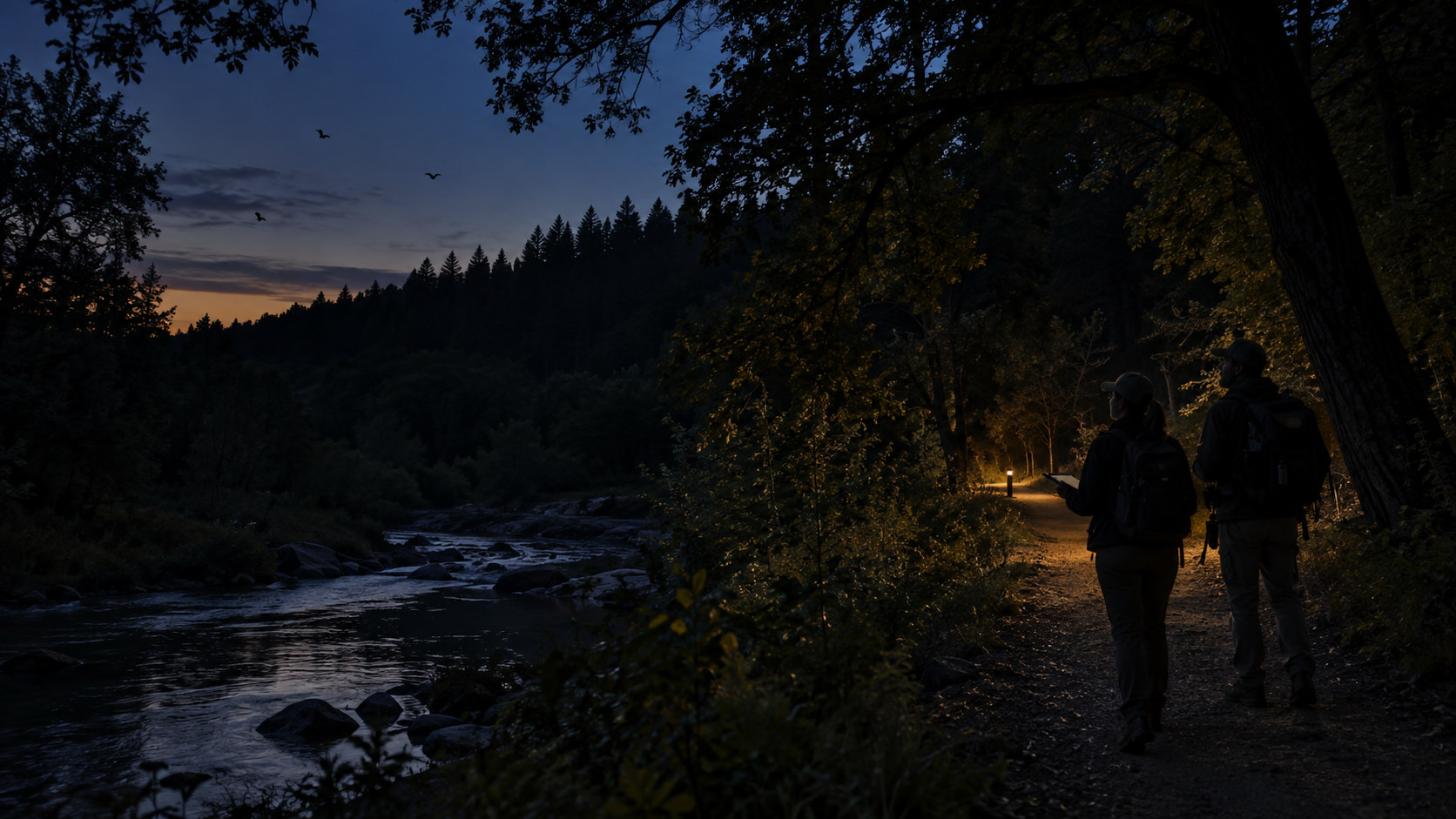
A habitat buffer in this context is a site-specific transition area where the project seeks to reduce direct illumination and spill. It is not a universal setback distance. The appropriate boundary may depend on habitat location, topography, vegetation, species activity, access needs, and the lighting task.
Consider transitions that are often overlooked: a trail entering a wooded edge, a parking lot beside a wetland, a bridge approach over riparian habitat, or a road segment near a known viewing area. A conceptual plan can show the task area, shielded beam direction, spill-light boundary, and lower-illumination transition. It should be labeled as an illustrative planning tool, not an engineered design.
For broader context on the problem being managed, link readers to understanding light pollution. The distinction is useful: general light-pollution education describes the issue, while a firefly-focused project plan addresses the habitat relationship and operating decisions at one location.
Build the approach into procurement and operations
Ecological intent is easiest to preserve when it appears in the project process, not only in a project narrative. Before procurement, assemble the people who own the relevant decisions: agency operations, lighting design, environmental review, maintenance, and, where appropriate, local ecological expertise.
Request evidence that can be evaluated rather than promises that cannot. Depending on the project, that may include photometric calculations, spectral information, shielding and aiming options, control logic, maintenance access, and commissioning procedures. Avoid asking a vendor to certify that a product is firefly-safe unless the project has species-specific, independently supported criteria for that claim.
The ECOridge ecological lighting page is an appropriate pathway for readers exploring spectrum engineering, blue-light filtering, shielding, monitoring, and adaptive dimming in sensitive-habitat contexts. It does not establish a firefly-specific benefit, so the final project decision still requires local evidence and review.
After installation, verify what was built. Compare aiming and control settings with the approved intent, observe the site at night, record changes, and revisit the plan when operations or habitat information changes. Teams developing a defined project can review LEOTEK technical documents as part of their documentation process.
Questions cities and agencies ask
Does outdoor lighting affect firefly mating?
Artificial light can affect the visual environment used for bioluminescent communication. The cited glow-worm study found a potential effect on male location of females in that species, but its findings should not be converted into a universal firefly threshold. Local species and conditions need assessment.
Is low-blue outdoor lighting enough to make a site firefly-friendly?
No. Limiting shorter-wavelength blue-violet light may be a useful consideration, but it does not replace control of direction, level, duration, habitat spill, and seasonal timing. It also does not substitute for local ecological review.
What is a firefly habitat buffer zone?
It is a project-defined, lower-spill transition area around relevant habitat, not a fixed distance. The boundary should be based on the site, species information, and the public-infrastructure task that still must be served.
Can a roadway project use adaptive controls near habitat?
Potentially, where agency operations, engineering, and applicable requirements allow. The controls should be specified, commissioned, and maintained as part of the project rather than assumed to work as intended.
A practical next step
Firefly-friendly lighting is a process of disciplined trade-offs: assess the habitat, define the required task, target and control light, evaluate spectrum carefully, and verify the result. For related environmental planning context, see eco-friendly streetlighting considerations, then bring project-specific ecology and engineering evidence into the design review.
Start a habitat-adjacent project with an ecological lighting site assessment. The companion guide to dark corridors, buffer zones, and lighting curfews explains how to carry those findings into boundary and operating decisions.
References
- DOI / journal source, Lewis et al., 2020; accessed July 29, 2026.
- DOI / journal source, Owens and Lewis, 2018; accessed July 29, 2026.
- DOI / journal source, Bird and Parker, 2014; accessed July 29, 2026.
- DarkSky International, Five Principles for Responsible Outdoor Lighting; accessed July 29, 2026.
- LEOTEK, Kelvin values in lighting; accessed July 29, 2026.
- LEOTEK, understanding light pollution; accessed July 29, 2026.
- LEOTEK, ECOridge ecological lighting; accessed July 29, 2026.
- LEOTEK, LEOTEK technical documents; accessed July 29, 2026.
- LEOTEK, eco-friendly streetlighting considerations; accessed July 29, 2026.