
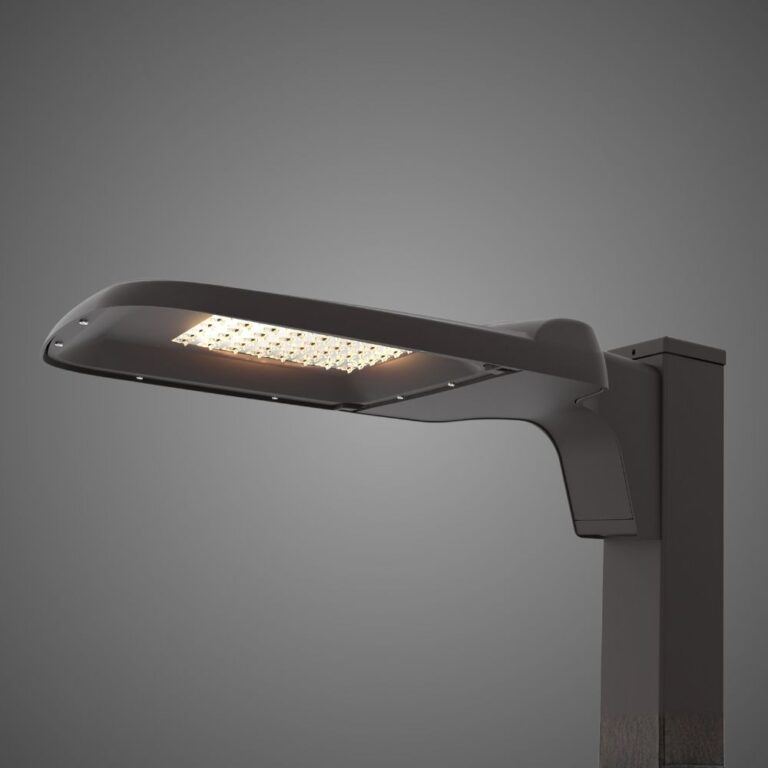
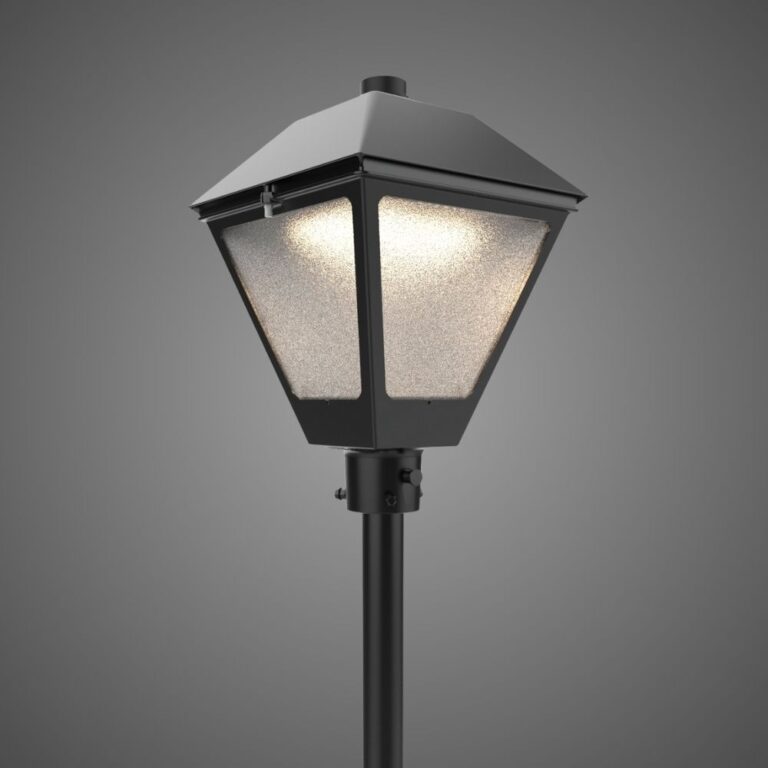

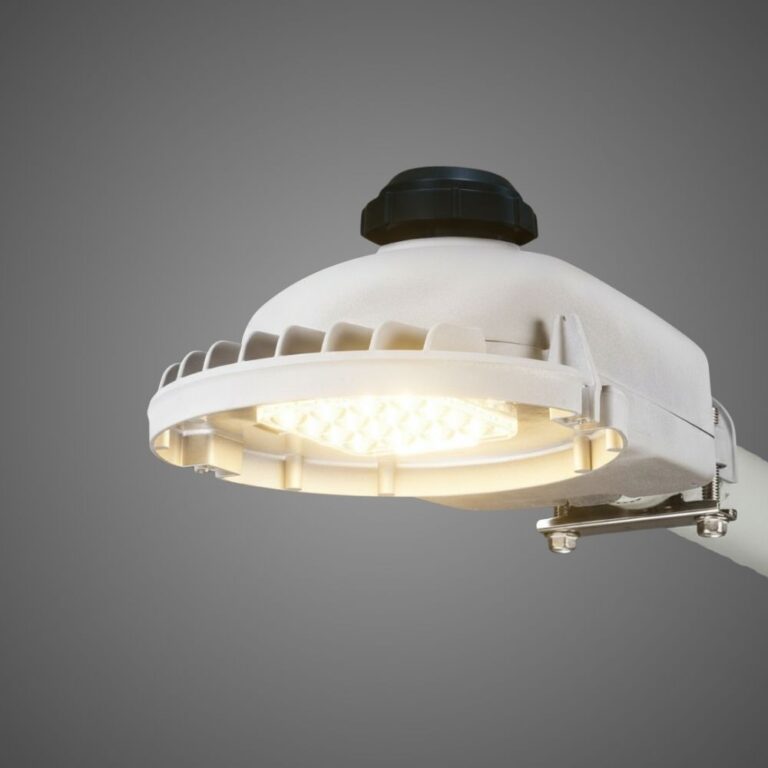
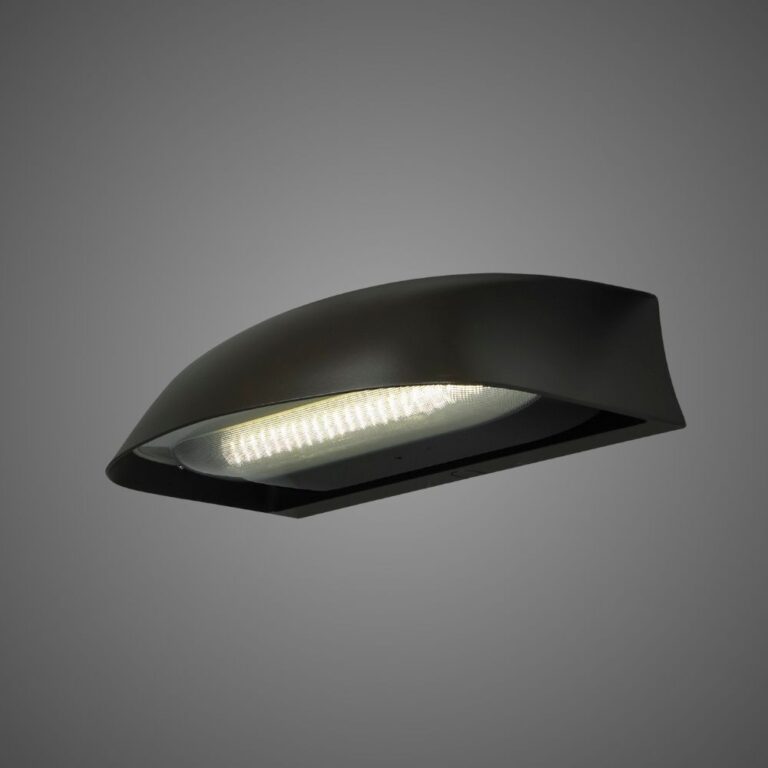

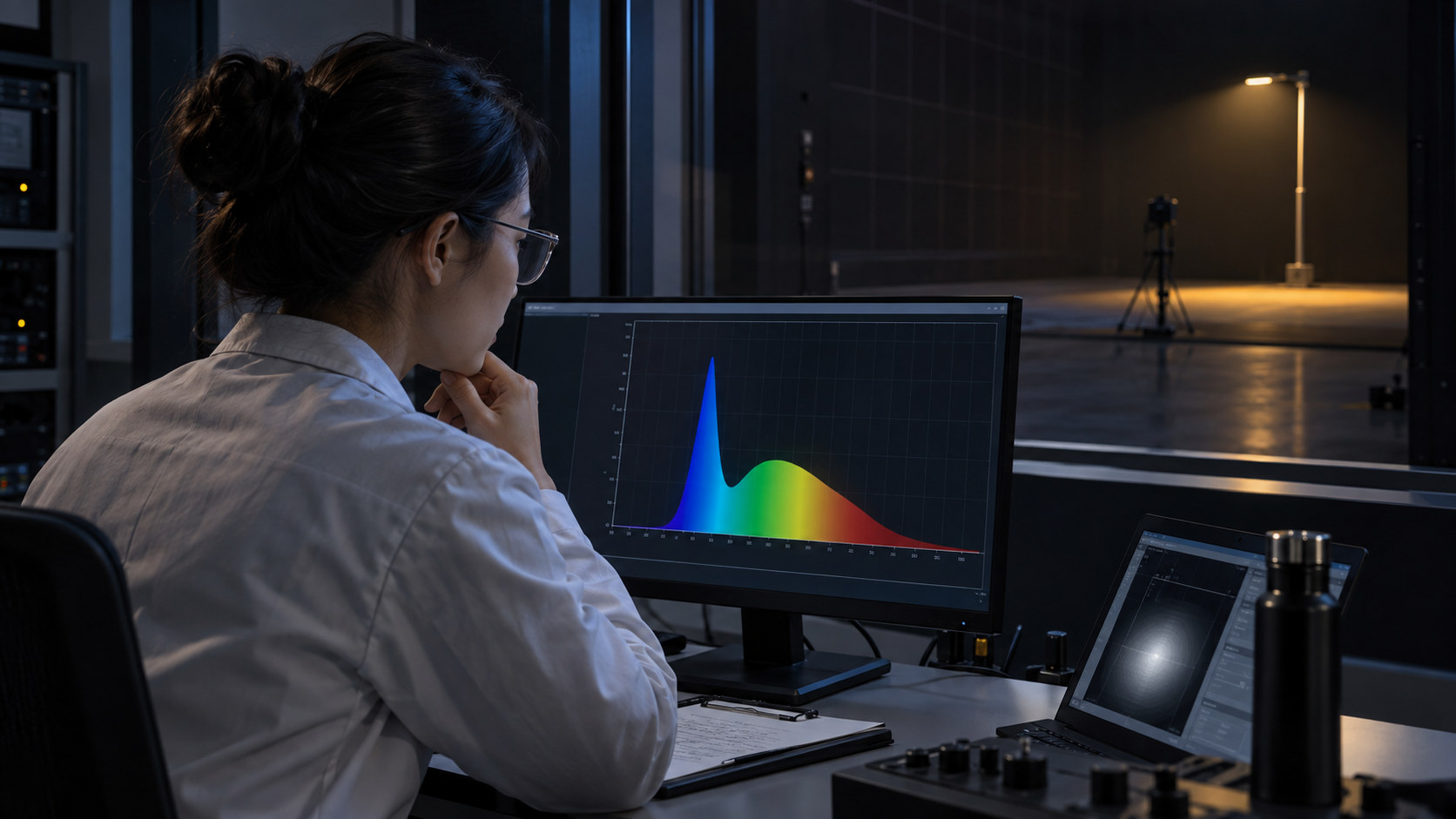
Blue-light measurement should start with the spectral power distribution of the complete luminaire in a stated operating condition, then apply a metric that fits the project question. Correlated color temperature (CCT) describes the apparent color of light, but it does not replace spectral data or a project-specific acceptance criterion.
For city and transportation-agency teams, that distinction matters when a roadway or public-space project must balance its lighting task with habitat-sensitive design. A request for a “low blue light luminaire” is not yet a measurable requirement. It needs a defined spectrum, metric, method, configuration, and decision context.
Key takeaways
- Start blue-light measurement with a spectral power distribution (SPD) for the complete luminaire, not only a nominal CCT or LED-package claim.
- Do not treat CCT, a blue-band percentage, a photobiological evaluation, and a species-specific action-spectrum calculation as interchangeable measurements.
- Compare reports only when their operating state, optical configuration, units, normalization, and measurement geometry are stated and comparable.
- Evaluate spectrum with aiming, shielding, light level, and controls; no single spectral value establishes ecological suitability.
- For procurement, request current model-specific spectral and photometric documentation with a revision date.
Blue-light measurement starts with the complete luminaire
An ecological lighting spectrum report shows how a luminaire’s spectral output varies across wavelengths. That distribution is the relevant starting point when the question concerns blue-light content. An SPD presents that information as a wavelength-by-wavelength graph or data set.
CCT is useful, but it answers a narrower question. It describes the chromatic appearance of a light source relative to a reference radiator; it does not provide the full shape of the source spectrum. Two luminaires can have a similar nominal CCT and still require separate spectral review. Readers who need the foundational definition can see LEOTEK’s guide to Kelvin values in lighting; it should not be used as a substitute for a luminaire spectral report.
In CIE’s description of photobiological-safety evaluation, assessing a broad-band optical source begins with the spectral distribution at points of nearest human access. It also notes that optical elements in the light path can change the spectral distribution from the lamp alone. For procurement review, that supports requesting evidence for the configured finished luminaire rather than relying only on the diode or LED package. See CIE’s photobiological-safety publication (accessed July 29, 2026) for the measurement rationale.
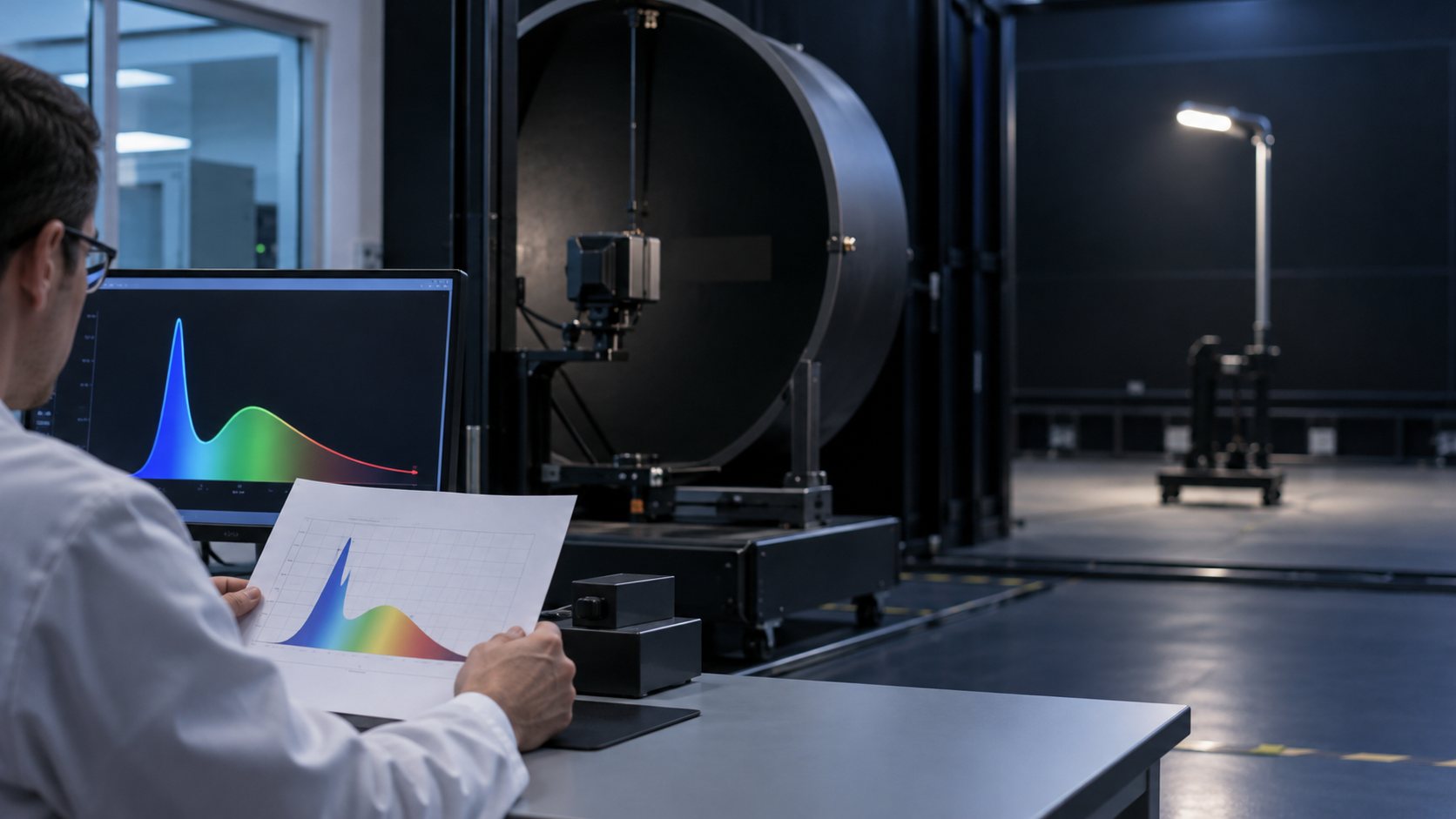
What counts as the “complete luminaire”
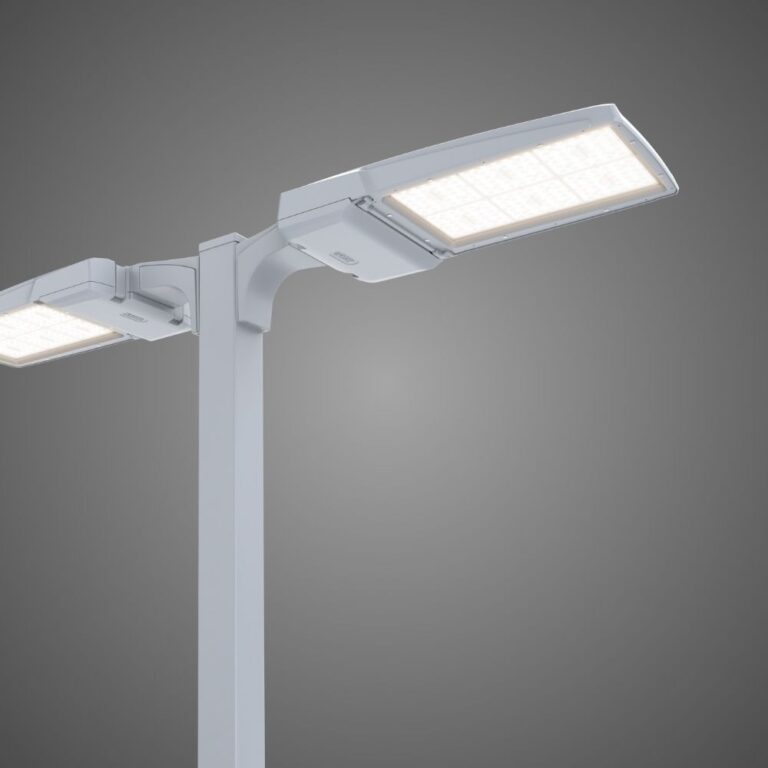
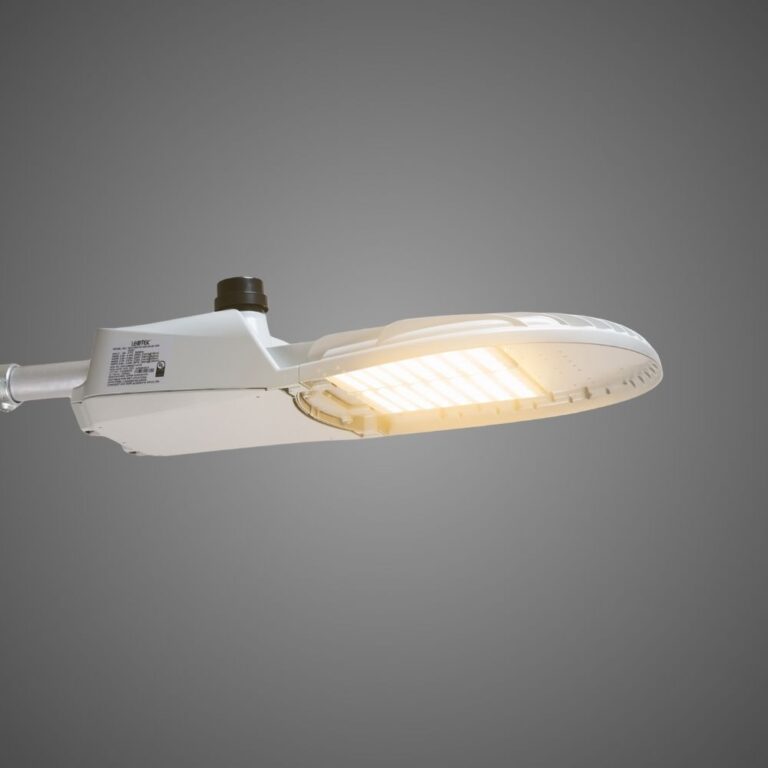
For a comparison to be meaningful, identify the exact model and the configuration that produces the light being measured. The configuration may include the optic, lens, filter, shield, accessory, driver, control setting, and selected color channel. A report for a different optic or a bare source may be useful background, but it is not automatically evidence for the installed assembly.
The report should also state how the luminaire was operating. A tunable product may have more than one spectral state. A controlled product may be dimmed or scheduled differently at different times. The appropriate request is not “send the blue-light number”; it is “show the spectrum and the test condition for the configuration and operating state proposed for this site.”
Why CCT is not a pass/fail test for blue light
It is reasonable to use CCT as one descriptor in a lighting schedule. It is not reasonable to infer a universal blue-light content, habitat effect, glare result, or regulatory outcome from CCT alone. Those claims depend on the purpose of the measurement and on other properties of the lighting installation.
This is especially important in public infrastructure. A road authority may need to assess visual performance, a local environmental requirement, a conservation plan, or a product safety document. Each can call for different evidence. A single color-temperature label cannot resolve all of those questions.
Read the spectral power distribution before choosing a metric
An SPD is the evidence record that allows a reviewer to see how output varies by wavelength. It can be reported in absolute radiometric units or normalized to make spectral shape easier to compare. Neither presentation is automatically better; the report must say which is used and why it fits the decision.
Before comparing two SPDs, confirm that their conditions match. Different dimming levels, color channels, optics, and measurement approaches can make a visual comparison misleading. A normalized plot can show relative shape but not total output. An absolute report can show output but still needs its measurement conditions and units to be understood.
Match the metric to the decision
“Blue light” is an informal shorthand, not one universal engineering metric. The project team should name the question first, then select the applicable metric and method. The following framework helps keep unlike measurements separate.
| Project question | Evidence to request | Conditions that must be stated | Important caution |
|---|---|---|---|
| Does the proposed luminaire meet a habitat or species requirement? | Complete-luminaire SPD plus the action spectrum and calculation method named by the applicable plan, authority, or ecological professional | Model/configuration, operating state, units, normalization, geometry, and acceptance criterion | Do not substitute a generic blue-band percentage for a species- or site-specific method. |
| Does a source need a photobiological-safety evaluation? | The applicable safety evaluation and its underlying spectral/radiometric evidence | Source size, viewing geometry or distance where applicable, operating condition, and applicable standard edition | A safety evaluation is not an ecological-impact assessment. |
| Which option has less relative output in a specified band for an internal comparison? | SPDs measured under equivalent conditions, with a stated band and calculation method | Identical configuration, test method, reporting basis, and operating state | An internal comparison does not establish a compliance threshold or ecological outcome. |
The CIE notes that source size and the variation of irradiance and effective radiance with distance can matter for some evaluations. The point is practical: state the method rather than presenting an isolated number as self-explanatory. The applicable standard, specification, or authority should determine any formal test method and acceptance threshold.
Do not collapse distinct measurements into one claim
Several measurements may appear in the same technical discussion, but they are not interchangeable:
- An SPD describes spectral content.
- A band-integrated value summarizes output over a specified wavelength interval and calculation method.
- A photobiological evaluation addresses the scope defined by its applicable safety standard.
- A melanopic quantity addresses a different light-response framework.
- A species-action-spectrum calculation depends on the selected action spectrum, site, and ecological question.
Using the wrong measure can make a submittal look complete while leaving the actual decision unanswered. The specification should therefore identify the required calculation, units, and acceptance criterion before bidders or reviewers try to compare products.
Build a defensible submittal request
The most useful procurement language asks for evidence, not a product promise. It also allows an agency to compare reports on the same basis and to identify where a project-specific review is still needed.
Request data for the exact complete-luminaire configuration, not only the LED package.
Review the measured spectral power distribution and how the test was performed.
Choose a metric that answers the project question; do not treat CCT as a blue-light pass/fail test.
Use the project’s applicable criteria and current test documentation for a defensible comparison.
A minimum documentation checklist
For each proposed luminaire, request:
- The current model number, optic, filter or lens, shield or accessory, driver, and control configuration.
- An SPD for the complete luminaire, with units or normalization, test method, and report revision/date.
- The operating state used for the report, including selected CCT or channel, dimming level, and control mode where relevant.
- The stated ambient or thermal condition where the applicable test method requires it, plus the measurement geometry or distance where required.
- The project’s selected metric, action spectrum if applicable, calculation method, units, and acceptance criterion.
- Photometric documentation and the proposed aiming or shielding information when distribution and spill are part of the decision.
- The proposed control schedule, along with the project’s commissioning and verification approach.
This approach is deliberately more specific than asking for “low blue light.” It is also more cautious than assuming a marketing label proves performance in a particular configuration. For current model-specific specifications, guides, and technical documents, use LEOTEK’s resources and documents and verify the model, date, and revision before relying on a document.
Questions to resolve before a comparison
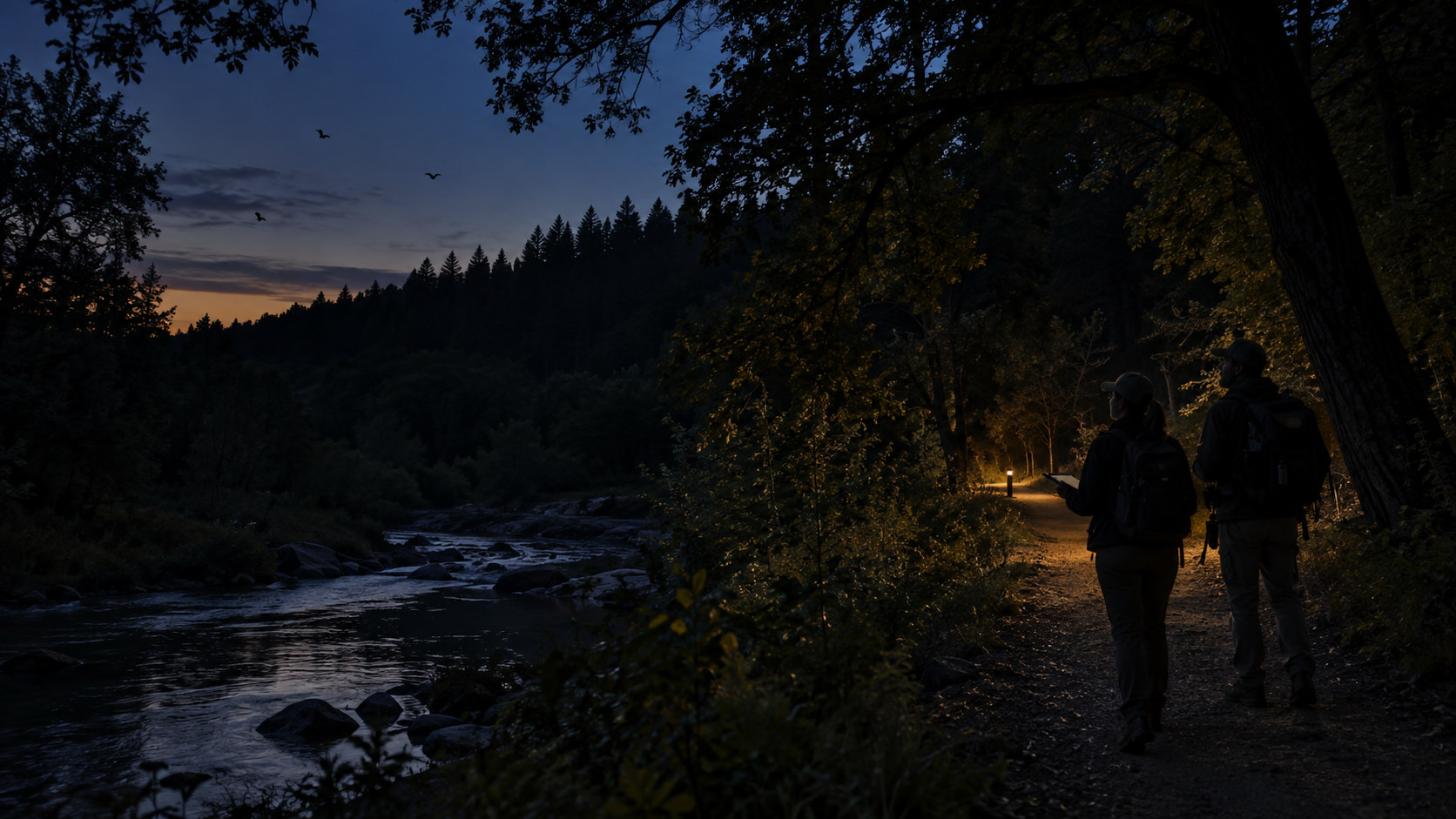
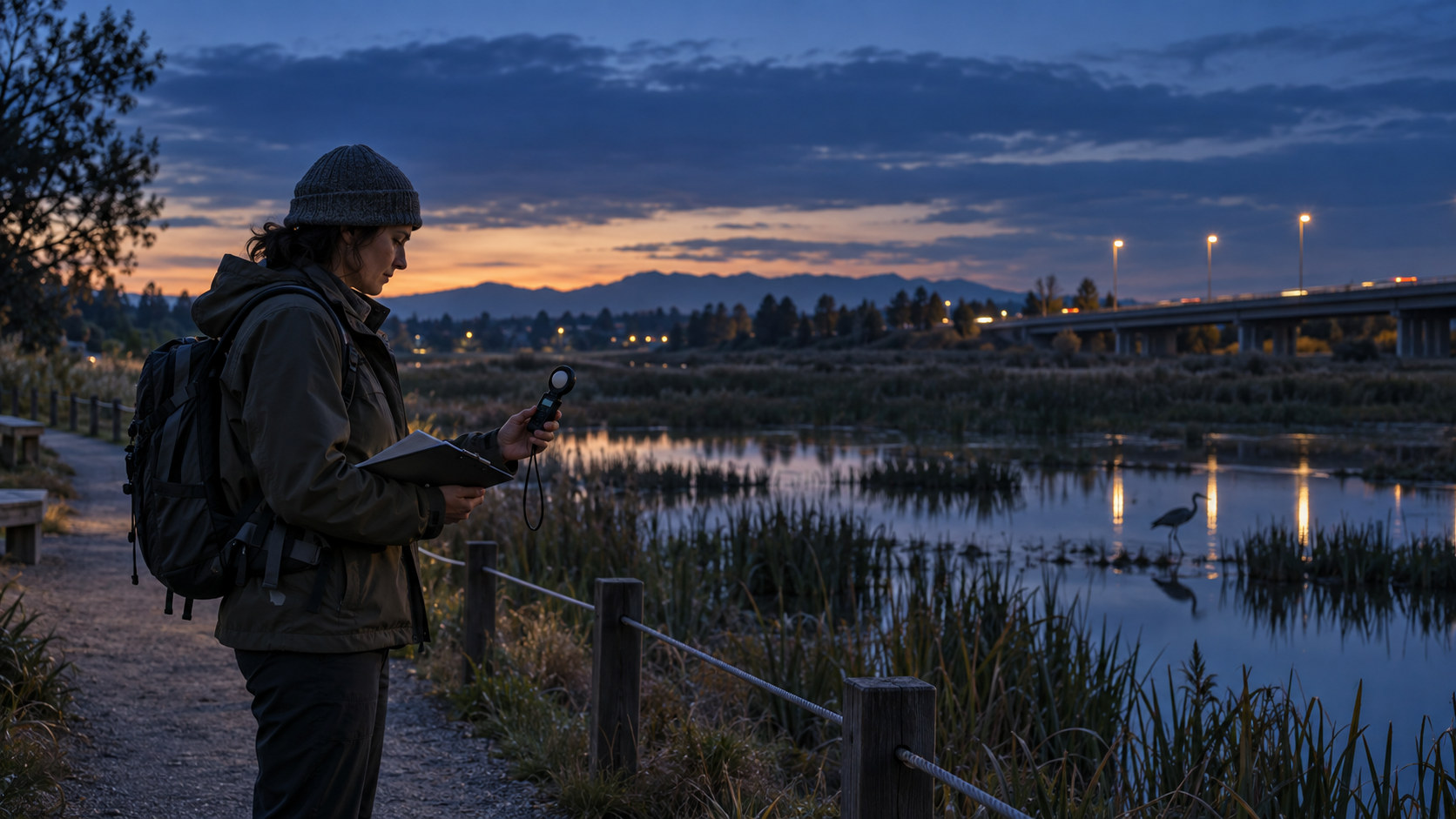
The project team should identify the public-infrastructure task first: roadway, trail, park edge, coastal corridor, campus, or another setting. Then clarify the protected resource, relevant season or operating period, local requirements, intended light level and distribution, maintenance constraints, and available controls.
Those questions do not prescribe an answer. They establish the evidence needed for a qualified lighting professional, ecological professional, and the authority having jurisdiction to make a project-specific decision. This article is an educational framework, not engineering, environmental, electrical, or procurement approval.
Evaluate spectrum as part of an outdoor-lighting system
Spectrum is one design lever. A luminaire can have a carefully reviewed SPD and still be poorly suited to a site if its distribution, aiming, level, or schedule creates unwanted light where or when it is not needed.
The U.S. Department of Energy describes the challenge of balancing nighttime lighting functions with environmental effects. Its guidance points to thoughtful deployment, optical control, the minimum necessary light, controls, and careful color-temperature selection. Read DOE’s Light at Night overview (accessed July 29, 2026) for that broader framing.
DarkSky and the Illuminating Engineering Society similarly describe five complementary principles: lighting should be useful, targeted, low level, controlled, and warm-colored where possible. Their guidance says to limit shorter-wavelength blue-violet light to the least amount needed, but it does not convert that principle into a universal luminaire threshold. See the Five Principles for Responsible Outdoor Lighting (updated June 11, 2024; accessed July 29, 2026).
Distribution, shielding, level, and schedule each have a job
Optical distribution and shielding determine where light goes. Aiming determines how the installed luminaire directs that distribution. Light level establishes how much light is delivered for the identified task. Controls determine when and at what state it operates. Spectral review addresses wavelength content.
None of these elements replaces the others. A filter cannot correct an improperly aimed luminaire. Dimming cannot establish a spectrum that was never measured. Conversely, spectral selection alone does not establish that an installation provides the right distribution, manages glare, or meets a local requirement.
CIE’s Guide to the lighting of urban areas includes luminance and illuminance alongside glare, color appearance and rendering, environmental effect, and lighting aesthetics in urban-lighting considerations. It is useful context for a whole-system review, not a current local code. See CIE 136-2000 (accessed July 29, 2026).
For related education on the broader topic, see LEOTEK’s light pollution overview. It is a reader pathway, not evidence that a particular luminaire delivers a particular health, wildlife, safety, or environmental outcome.
Put ecological-lighting technology in the evidence workflow
LEOTEK presents ECOridge ecological lighting as a technology page related to spectrum engineering and habitat-sensitive lighting. That page can help readers understand the relevant technology area, but it should not replace current model-specific spectral and photometric documentation.
For a real project, the evidence workflow remains the same: identify the site question, obtain the complete-luminaire SPD and configuration, apply the right project method, compare it with a stated criterion, and review the result with distribution, shielding, level, and controls. Do not infer patents, species outcomes, certifications, performance, or project fit from a technology page.
Frequently asked questions
Is 3000K proof that a luminaire is low blue light?
No. CCT is a color-appearance descriptor, not a complete spectral measurement. Ask for the SPD of the complete luminaire in the operating state proposed for the project, then use the metric and criterion that apply to the decision.
What document should I request to compare blue-light content?
Request a current SPD report for the complete luminaire, along with the model and optical configuration, operating state, measurement method, units or normalization, and report revision/date. If the project requires a particular calculation, request that calculation and its stated method as well.
Should blue light be measured at the LED package or at the luminaire?
Use the complete luminaire for an installation decision. CIE notes that optical elements can alter the spectral distribution from the lamp alone. Package information may be useful context, but it is not a substitute for the emitted light of the configured luminaire.
Can shielding or dimming replace spectral review?
No. Shielding, aiming, light level, scheduling, and spectrum address different parts of the lighting design. They should be reviewed together, not treated as interchangeable remedies.
Which blue-light metric should an ecological-lighting specification use?
Use the metric, action spectrum, method, units, and acceptance criterion applicable to the site’s actual requirement. That choice should be set by the relevant project documents and qualified professionals; this article does not prescribe a universal threshold.
The practical sequence
Blue-light measurement becomes useful when it is connected to a clear decision. Start with the SPD from the complete luminaire. State the configuration and operating condition. Select the metric that answers the site’s question, using a documented method and acceptance criterion. Then review the result alongside distribution, shielding, level, and controls.
That sequence gives agency and procurement teams a more durable basis for ecological-lighting spectrum discussions than a nominal CCT or an unsupported “low blue light” label. Preserve the report revision, configuration, and operating state used for approval in the submittal record.
For the field context behind a spectral requirement, see how to conduct an ecological lighting site assessment. For repeatable verification after installation, use the companion guide to measuring ecological lighting conditions before and after installation.
References
- International Commission on Illumination (CIE), Photobiological Safety of Lamps and Lamp Systems; accessed July 29, 2026.
- U.S. Department of Energy, Light at Night; accessed July 29, 2026.
- DarkSky International, Five Principles for Responsible Outdoor Lighting; accessed July 29, 2026.
- International Commission on Illumination (CIE), Guide to the lighting of urban areas; accessed July 29, 2026.
- LEOTEK, What Are the Differences Between 3000K, 4000K, 5000K, and 6000K Color Temperatures?; accessed July 29, 2026.
- LEOTEK, Resources & Documents; accessed July 29, 2026.
- LEOTEK, Light Pollution Explained: Impacts and Solutions; accessed July 29, 2026.
- LEOTEK, ECOridge™ | Ecological Lighting; accessed July 29, 2026.