









An ecological lighting specification defines the site, sensitive habitats, required lighting tasks, and verifiable limits on direction, spectrum, output, timing, and maintenance. For a public project, it should require bidders to show how the proposed equipment and controls meet those requirements while leaving final design values to the responsible engineer and applicable authority.
Ecological lighting is not a fixture label or a single color-temperature choice. It is a project-specific way to manage artificial light where roads, paths, public facilities, or municipal spaces meet sensitive receptors. The work belongs in the same specification process that addresses visual tasks, operations, maintainability, and procurement evidence.
Key takeaways
- Start with the lighting purpose, site boundary, and sensitive-receptor baseline before selecting equipment.
- Specify measurable attributes: direction, shielding, spectrum where justified, output, operating schedule, and verification records.
- Treat wildlife guidance as habitat- and jurisdiction-specific; do not copy a wavelength, curfew, or fixture type into every project.
- Require submittals, nighttime commissioning, and change control so the installed system can be checked and maintained.
- Use current project standards and responsible engineering review for final criteria, not a general article or a product page.
Start with the project boundary and habitat baseline
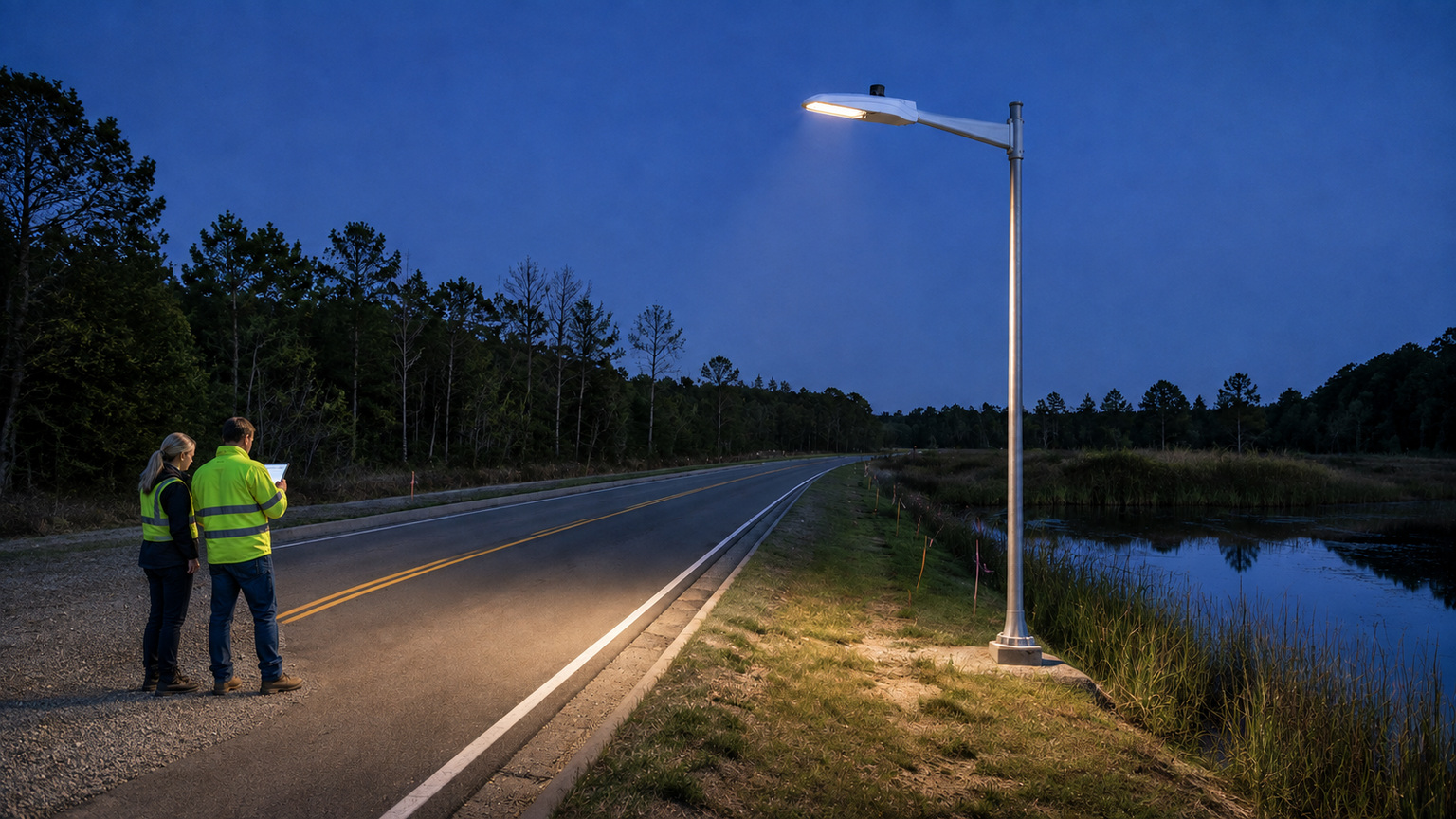
The first section of an ecological lighting specification should say what must be illuminated and why. A roadway, shared-use path, transit stop, parking area, maintenance yard, or public waterfront can have different operating needs. Define the asset, the hours when lighting is needed, the areas that need illumination, and the areas that should remain unlit.

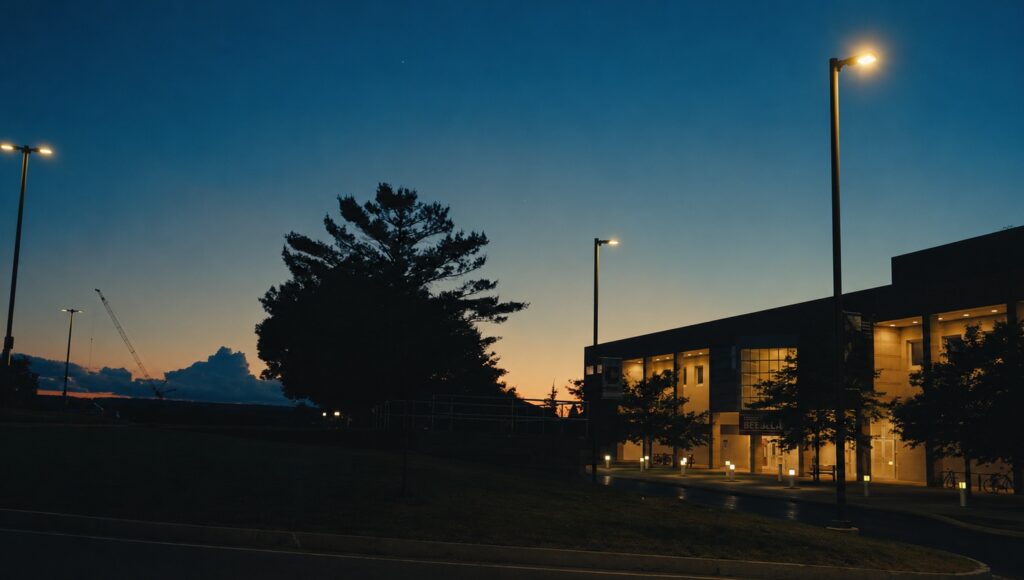
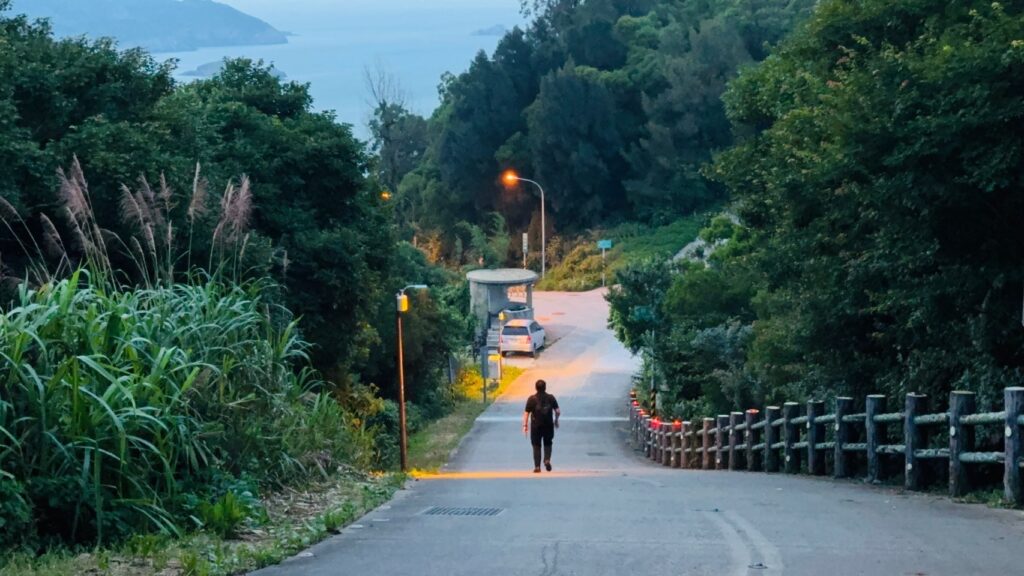
A vegetated coastal route at dusk with pole lights beside the roadway.
This step is more useful than beginning with a preferred fixture. It gives the design team a basis for separating required light from convenience light, decorative light, or light that has no defined public purpose. The National Park Service notes that ecosystems rely on natural cycles of light and dark in its Night Skies resource. That is an ecological rationale, not a universal roadway design criterion.
Next, identify sensitive receptors. Depending on the project, these can include habitat boundaries, water edges, parks, nesting or migration areas identified by the responsible wildlife authority, nearby residences, or observatory and dark-sky interests. Record the source of the boundary information, the season or time period that matters, and the agency or owner responsible for reviewing it.
The specification should also name the decision process. For example, it can require coordination among the owner, roadway or lighting engineer, environmental staff, operations staff, and the authority having jurisdiction. This avoids a common failure mode: asking a bidder to solve an unresolved environmental or engineering question after bids are due.
Write the scope as a design input
Use direct language that makes the project limits testable:
- Identify the work areas, sensitive-receptor areas, and no-light areas on the plans.
- State the operational condition that requires lighting, such as scheduled public use or an identified maintenance activity.
- Require the design to show proposed mounting locations, aiming, and control zones.
- Identify the applicable permitting, environmental-review, and roadway-design authorities.
Avoid calling a whole corridor “wildlife friendly” without a defined habitat, performance objective, and review authority. The phrase is too broad to evaluate at submittal or acceptance.
Set ecological lighting requirements before naming a fixture
An ecological lighting specification works best as a performance document. State the visual task and operating condition, then require the proposed luminaire and controls to demonstrate conformance. This approach leaves room for competition while keeping the project team focused on what must be verified.
For roadway and public-infrastructure work, the responsible professional should identify the current standard, edition, and jurisdictional requirements that apply. The Illuminating Engineering Society standards program is a useful starting point for finding current lighting standards, but its overview page does not establish a numeric criterion for a particular road, path, or habitat. A specification should not copy a number from an unrelated project or a general web article.
Separate the requirements into two groups:
- Required lighting performance. Describe the task, operating period, relevant users, and the project-specific criteria established by the responsible design team.
- Ecological constraints. Describe the receptor boundary, direction-of-light limits, controls, documentation, and review process that apply near that receptor.
This structure prevents an ecological objective from being treated as an afterthought. It also prevents a general sustainability claim from standing in for a lighting design.
Require a design narrative
Ask each bidder or design-build team for a short narrative that explains how its proposed configuration addresses both groups of requirements. The narrative should identify the luminaire configuration, optic, mounting height and location, aiming approach, shielding, control zones, and any assumptions that need owner confirmation.
The narrative is not a substitute for calculations or drawings. It gives reviewers a plain-language record of how the proposal connects the habitat baseline to the technical submittal. It also makes later changes easier to assess if an installer proposes a different luminaire, optic, driver, controller, or mounting arrangement.
Specify direction and shielding as installed conditions
Direction is a property of the installed system, not just the luminaire catalog. A complete requirement should cover the optic, mounting, tilt, aiming, shielding, and location of the source. It should also state how the team will review light at the sensitive-receptor boundary and whether direct view of a lamp or luminous surface is acceptable from specified locations.
The Florida Fish and Wildlife Conservation Commission’s Wildlife Lighting program explains that turning off unnecessary light is the simplest approach. Where artificial light is required, its program uses a “low, long, shielded” framework: mount fixtures as low as practical, use only the necessary wattage, use long-wavelength sources greater than 560 nm, and use full-cutoff shielding. That guidance is directly relevant to the program’s wildlife and sea-turtle context. It is not a nationwide roadway rule or a substitute for site-specific ecological and engineering review.
For a public tender, turn the principle into a reviewable requirement rather than an unsupported product preference. Consider requiring:
- Plan and elevation drawings that show fixture location, mounting, aiming, and shielding.
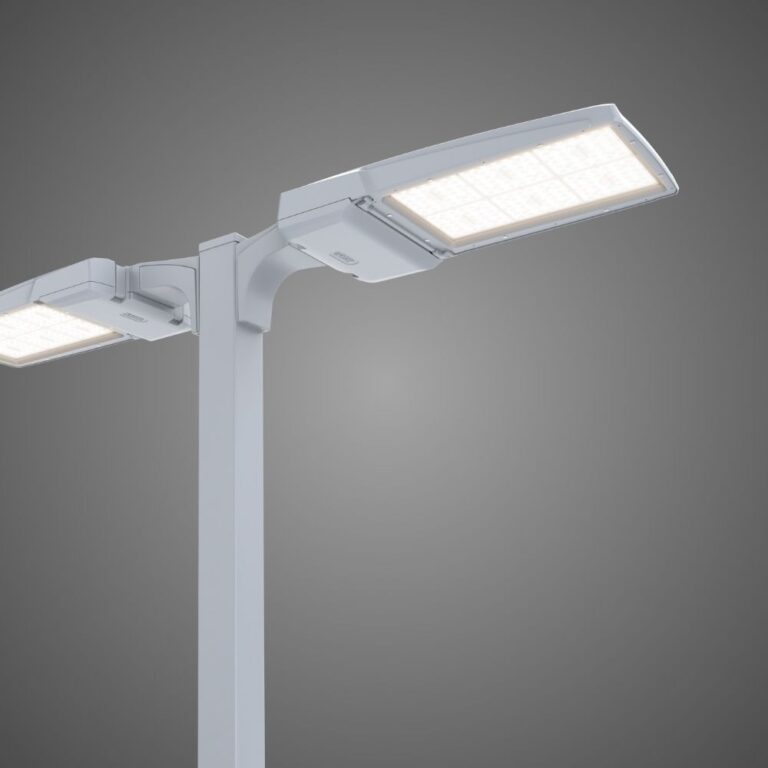
- Manufacturer documentation for the proposed optic and configuration.
- Installation details that prevent field adjustments from defeating the intended shielding or aiming.
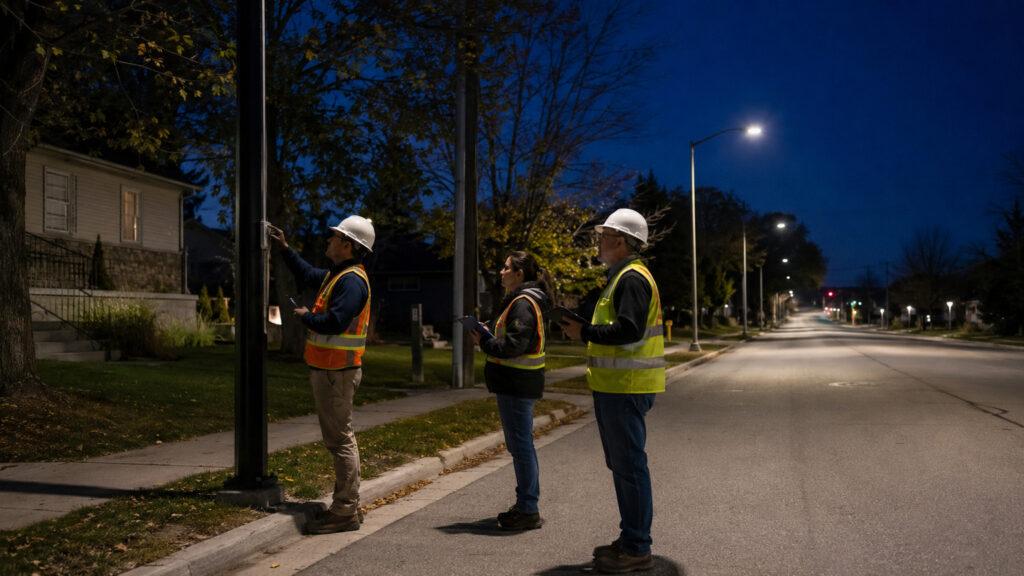
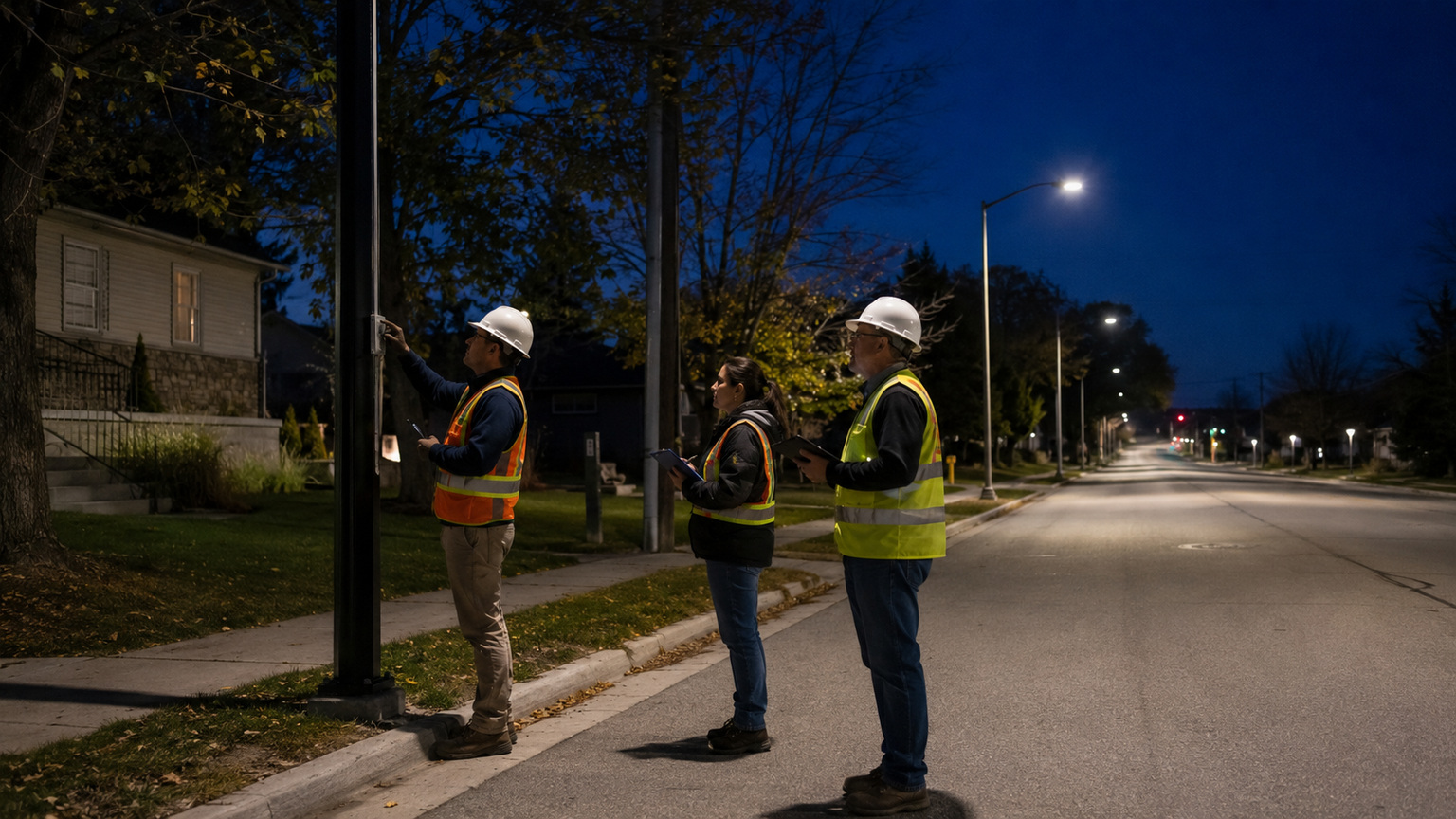
- A nighttime inspection from designated receptor locations after installation.
- A correction process if the installed condition differs from the approved submittal.
These requirements can help the owner evaluate the actual lighted environment, rather than assuming a catalog description applies to every pole, bracket, terrain condition, or field adjustment.
Address spectrum, output, and controls together
Spectrum matters in some ecological contexts, but it should not be the only ecological requirement. Direction, intensity, duration, timing, and the sensitivity of the receptor can all change how a project is evaluated. A tender that says only “use amber light” or “use low color temperature” gives reviewers little way to determine whether the whole system meets the project intent.
Where a wildlife authority or project environmental review supports a spectral requirement, state the source, the affected area, the required documentation, and the method of confirmation. The FWC’s greater-than-560-nm criterion is an example of program-specific guidance, not a default for every public project. Do not infer that one wavelength threshold, amber appearance, or correlated color temperature is suitable for every species or location.
Output should be tied to the project’s approved lighting task, not described as “minimum” or “maximum” without a reference condition. Ask the responsible design team to define the relevant measurements, locations, operating states, and acceptance method. A luminaire’s rated output alone cannot establish the light received at a roadway, path, or habitat boundary.
Use controls to reduce unnecessary operation
Controls can make a specification more precise when the operating schedule is clear. Define which areas may switch, dim, or remain at a designated state; identify triggers and overrides; and require a documented sequence of operations. Do not promise energy, maintenance, or ecological outcomes without a project-specific baseline and method.
The U.S. Department of Energy’s Solid-State Lighting program links to research on lighting quality and light at night. That program-level resource supports careful evaluation, not a claim that a particular control setting or product configuration achieves a particular environmental result.
If the project requires adaptive operation, include who can change schedules, how changes are recorded, and who reviews a request to extend operating hours. A control schedule without ownership can drift over time and undermine the original specification.
Make an ecological lighting tender verifiable from submittal to commissioning
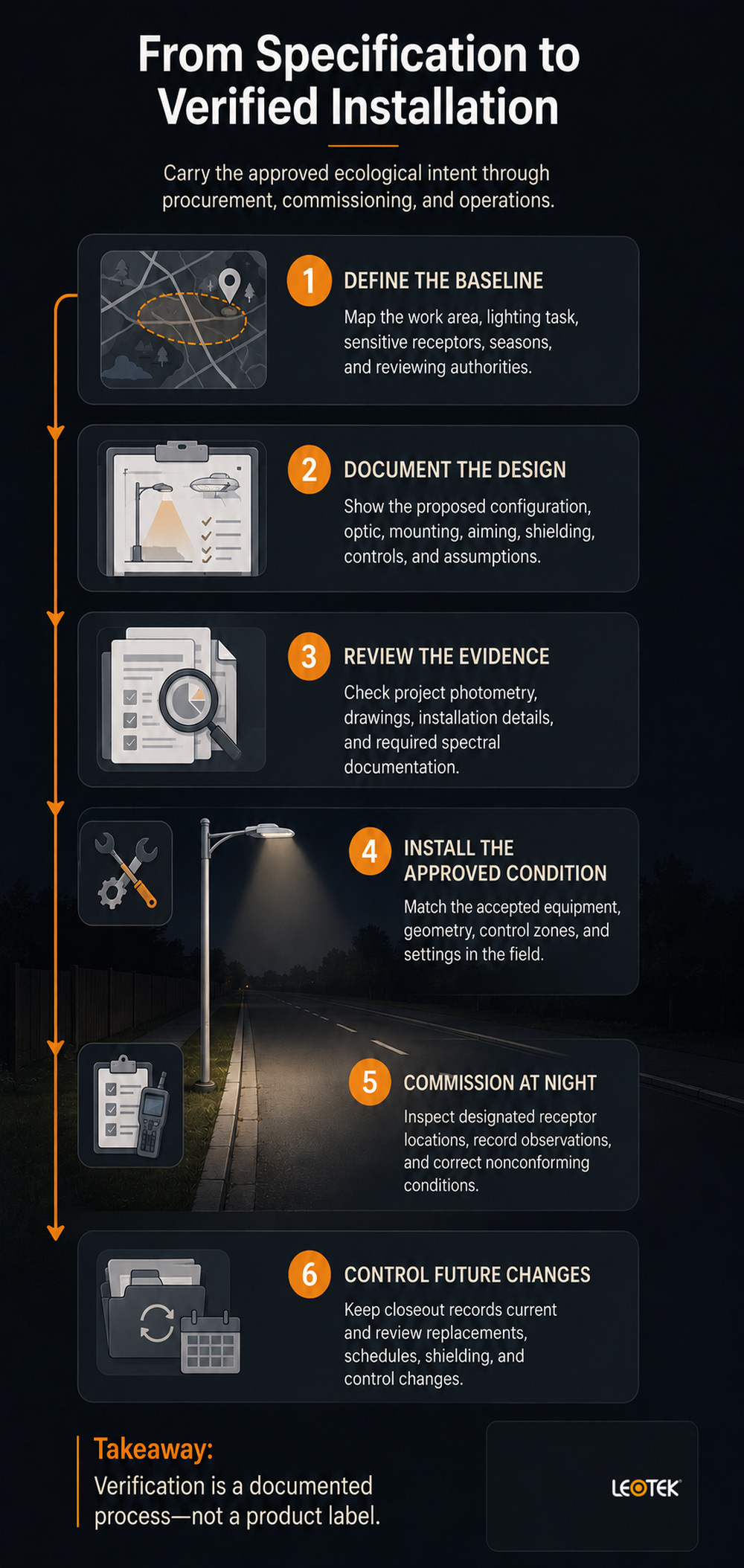
A strong public-project lighting tender is not satisfied by a brochure or a generic “dark-sky” statement. It identifies the records needed for design review, installation review, and closeout. The exact package will vary, but the specification can require the following items where applicable:
Use a seven-element specification checklist
The following framework can help an agency organize its requirements without prescribing universal technical values:
- Site and habitat baseline: Map the project boundary, sensitive receptors, relevant seasons, and the authorities that review them.
- Lighting tasks and exclusions: State where light is necessary, when it is needed, and where it is not intended to operate.
- Direction and shielding: Require documentation for optics, mounting, aiming, shielding, and the installed-condition review.
- Spectrum: Include a spectral requirement only when supported by the applicable habitat evidence and authority.
- Output and controls: Define approved operating states, schedules, overrides, and the process for recording changes.
- Bidder submittals: Request the proposed configuration, project-specific photometry, installation details, and any required spectral documentation.
- Commissioning and monitoring: Establish nighttime inspection, closeout records, maintenance responsibilities, and proportionate follow-up.
This format gives procurement staff a clear review sequence while allowing the responsible design and environmental professionals to set the final criteria for the site.
| Submittal or record | Why it matters |
|---|---|
| Proposed manufacturer, model, configuration, optic, and control equipment | Establishes what is actually being offered. |
| Project-specific photometric documentation and layout | Lets the design team review the proposal in its intended geometry. |
| Spectral documentation when a project requirement calls for it | Connects a claimed spectral attribute to the specified condition. |
| Mounting, aiming, and shielding details | Shows how direction-of-light requirements will be installed. |
| Controls sequence and zone schedule | Makes operating states reviewable and maintainable. |
| Mock-up or nighttime inspection plan | Establishes how the installed condition will be checked. |
| Commissioning and record-drawing package | Gives the owner a basis for operation, maintenance, and future changes. |
Use the procurement documents to define acceptance responsibilities. For example, identify who reviews submittals, who attends the nighttime inspection, what observations are recorded, and how nonconforming installation conditions are corrected. The article is not a substitute for the responsible professional’s calculations, inspection procedures, or contract language.
When reviewers need current manufacturer documents, product specifications and resources provides an approved path to LEOTEK’s document hub. Verify each exact model, configuration, document date, and revision before using it for a procurement decision. An application page such as outdoor lighting applications can support early product-category exploration, but it is not model-level specification evidence.
Plan monitoring, maintenance, and change control
The installed system may change after acceptance. A failed driver, damaged shield, replacement luminaire, revised schedule, tree trimming, or new adjacent development can alter the conditions the project team evaluated. Put change control in the specification so the ecological intent is not lost during routine operations.

A worker performs work beside a pole-mounted outdoor light fixture from an elevated platform.
Start with a baseline. It might include approved drawings, equipment schedules, control settings, inspection photographs, observation locations, and known sensitive-receptor constraints. Then name the owner role that receives complaints or observations and the role authorized to approve changes.
Monitoring should be proportionate to the project and its approvals. A simple project may need a documented nighttime inspection and a seasonal review; a more sensitive site may require a monitoring plan established with the relevant environmental authority. Do not frame monitoring as proof of a wildlife outcome unless the project has an appropriate method, baseline, and qualified review.
Maintenance requirements should preserve the approved configuration. Require like-for-like review when a replacement changes optic, spectrum, shielding, output, mounting, or controls. Keep current record drawings and settings with the asset records so operations staff can identify the intended condition years after the original bid.
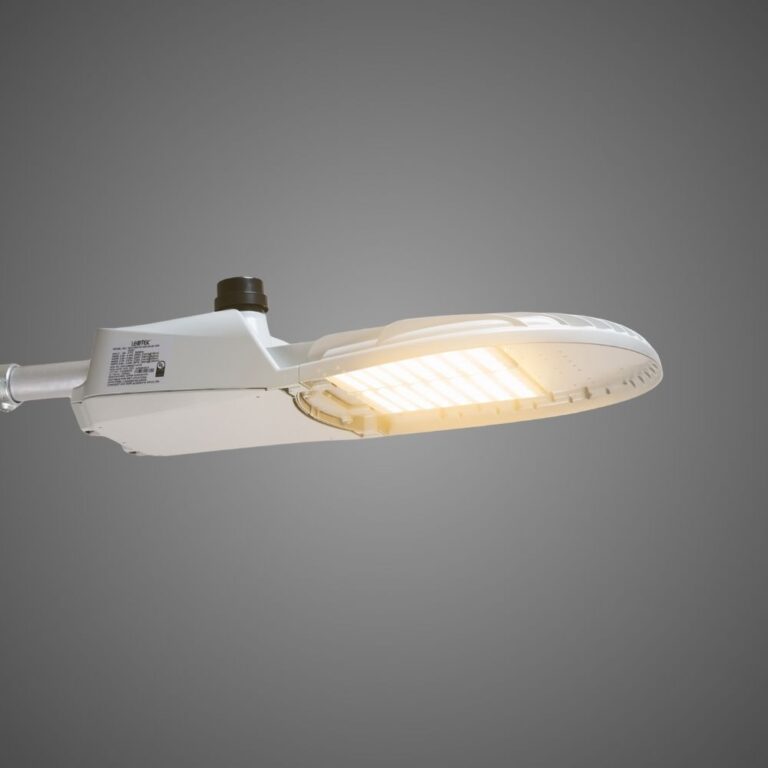
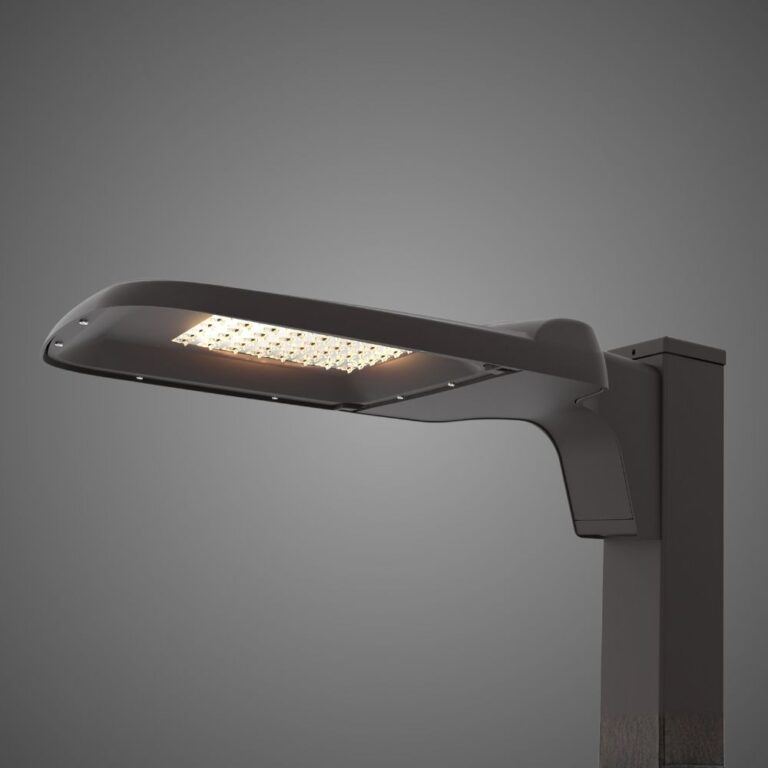
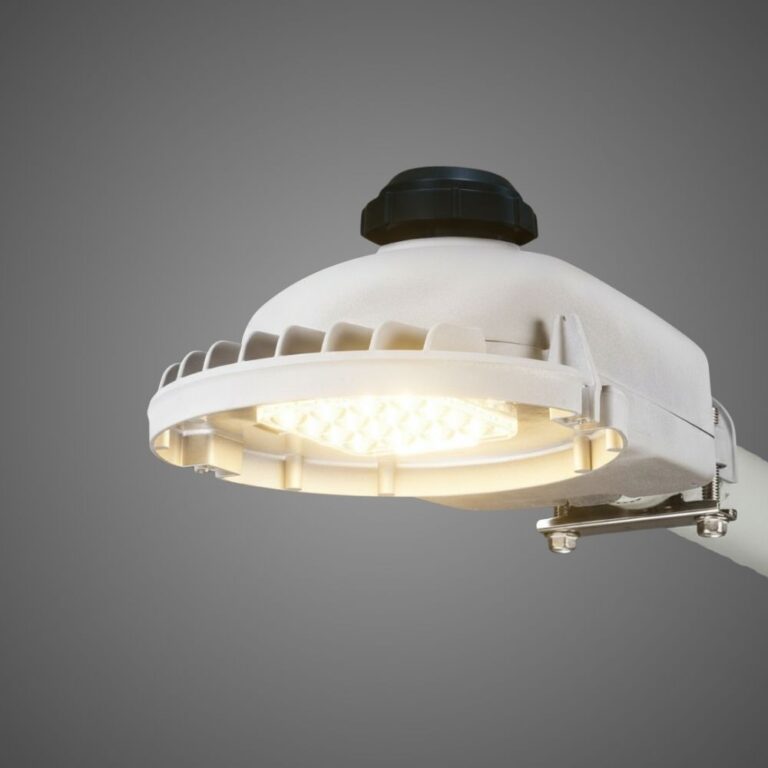
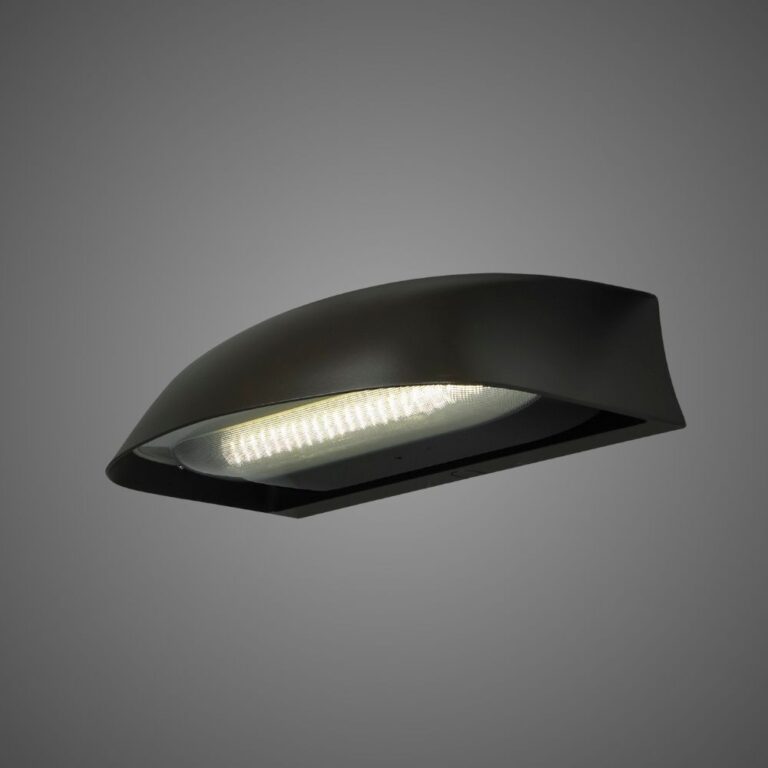
After the project team has defined its site-specific requirements, it can compare ecological approaches such as LEOTEK’s ECOridge ecological lighting. LEOTEK describes the page as using spectrum engineering, blue-light filtering, shielding, monitoring, and adaptive dimming for sensitive habitats. This is a first-party description of the technology page, not proof of species outcomes, certification, or project suitability. For background on the broader issue, see LEOTEK’s explainer on light pollution and its eco-friendly streetlighting considerations.
FAQs
What makes an ecological lighting specification different from a standard outdoor-lighting specification?
It adds a documented habitat or sensitive-receptor baseline, restrictions on where and when light is used, and a verification process for the installed condition. The standard lighting task still needs project-specific engineering criteria; ecological requirements do not replace them.
Can a public project require wildlife-friendly lighting?
It can write site-specific ecological requirements when the responsible agency, environmental review, and applicable jurisdiction support them. Avoid a broad label without measurable requirements. Define the habitat context, required documentation, acceptance process, and authority responsible for resolving conflicts.
Should a specification require amber or long-wavelength light?
Only when the relevant habitat evidence and authority support that requirement for the project. FWC uses long-wavelength sources greater than 560 nm in its wildlife-lighting program, but that program context should not be generalized to every road, park, or public facility.
What should bidders submit for ecological-lighting review?
At minimum, request the proposed configuration, photometric and installation documentation, mounting and shielding details, controls sequence, and commissioning records appropriate to the project. Add spectral documentation only when the specification establishes a project-specific spectral requirement.
Move from intent to a verifiable public-project requirement
An ecological lighting specification is strongest when it makes the right questions answerable: where light is needed, which receptors matter, what the proposed system will do, and how the owner will verify and maintain it. Start with the site and operating purpose, document the constraints, and require evidence at submittal and commissioning.
Final design, permitting, and procurement decisions should remain with the responsible professionals and applicable authorities.
References
- nps.gov, Night Skies resource; accessed July 29, 2026.
- Illuminating Engineering Society, Illuminating Engineering Society standards program; accessed July 29, 2026.
- myfwc.com, Wildlife Lighting program; accessed July 29, 2026.
- U.S. Department of Energy, Solid-State Lighting program; accessed July 29, 2026.
- LEOTEK, product specifications and resources; accessed July 29, 2026.
- LEOTEK, outdoor lighting applications; accessed July 29, 2026.
- LEOTEK, ECOridge ecological lighting; accessed July 29, 2026.
- LEOTEK, light pollution; accessed July 29, 2026.
- LEOTEK, eco-friendly streetlighting considerations; accessed July 29, 2026.